

Parent Engagement After a School Crisis: How Newsletters Rebuild Community Trust
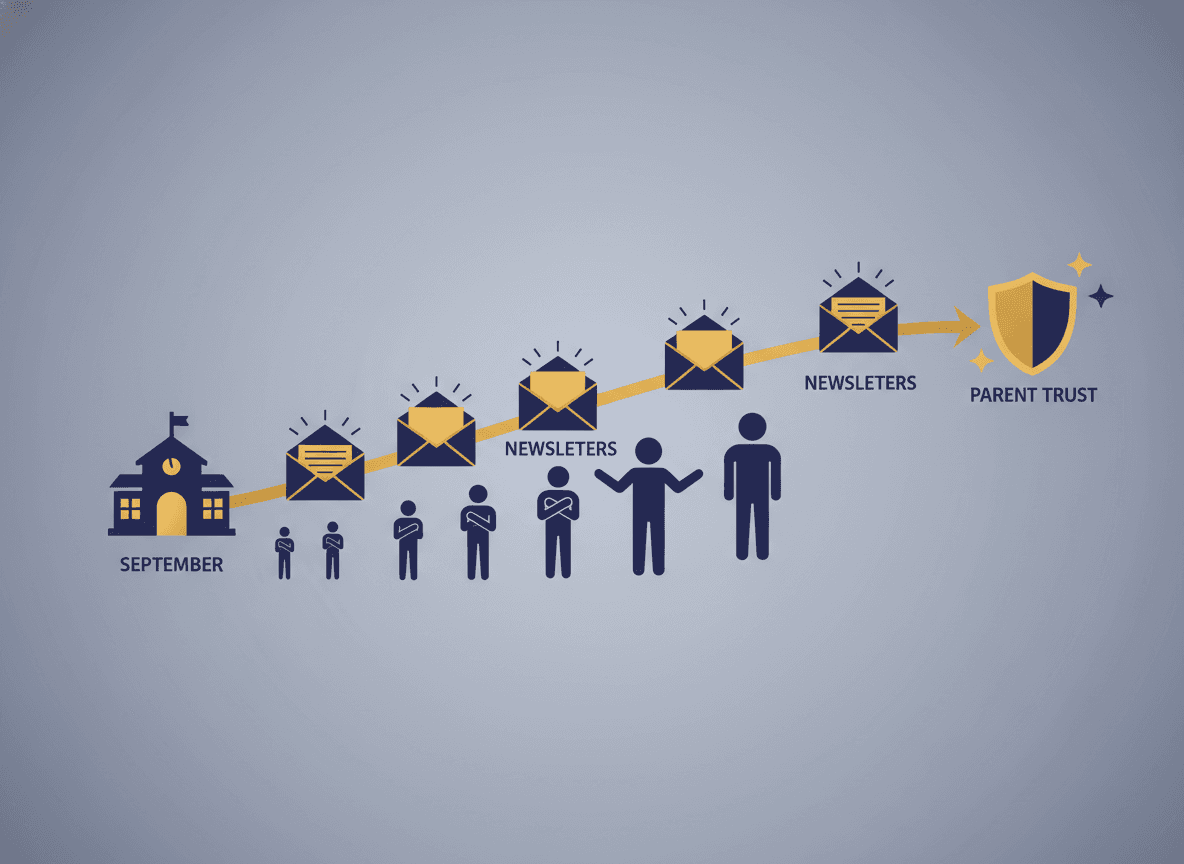
A school crisis, whether a safety incident, a community trauma, a staff loss, or a public controversy, creates a communication environment where everything the school does or does not say is evaluated closely by parents who are worried about their children. The newsletter in the days and weeks after a crisis is not a routine communication. It is a trust document.
Getting it right matters more than getting it out fast, although both matter.
Acknowledge Before You Explain
The first thing a post-crisis newsletter must do is acknowledge what happened, in terms that match the weight of what the community experienced. A newsletter that opens with logistical updates before naming the crisis tells families that the school is managing its message, not communicating with them.
"We want to begin by acknowledging the fear and grief our community has been carrying since [event]. We are not moving past what happened. We are moving through it together, and we want to tell you what that looks like from here."
That kind of opening is not dramatic. It is honest, and it signals that the newsletter is written for families, not for the school's reputation.
Answer the Questions Families Are Asking
After a crisis, parents have specific questions. What exactly happened? What did the school do in response? Is my child safe? What happens next? What can I do? Who can I contact?
A post-crisis newsletter that does not answer these questions leaves families searching for answers elsewhere, often finding incomplete or inaccurate information. Answer the questions directly, in the order families are most likely asking them.
If there are things you genuinely cannot communicate for legal or investigative reasons, say that directly: "We cannot share details about [aspect] while the investigation is ongoing. We will update families as soon as we are able." That honesty about limits is better than silence.
Give Families Tools to Support Their Children
Parents who feel helpless after a crisis are anxious parents. A newsletter that gives families specific, practical guidance on how to support their children at home converts helplessness into action.
"When talking with your child about what happened, follow their lead. Let them ask questions rather than trying to explain everything at once. It is okay to say you do not have all the answers. Reassure them that you and the school are working to keep them safe. If your child is having nightmares, avoiding school, or seems significantly more anxious than usual, contact [school counselor] at [contact]."
Name the Support Resources Available
Counselors, community mental health resources, school social workers, and any special office hours or open-door policies following the crisis should all be named directly with contact information. Do not assume families know these resources exist or how to access them.
Rebuild Normal Communication Intentionally
In the weeks after a crisis, the newsletter gradually returns to regular content. The transition should be acknowledged, not invisible. "As we begin to return to our regular rhythms, we wanted to share this week's classroom update alongside our continued commitment to support our community through this time."
Families who see the transition handled with care trust the school more, not less, than before the crisis. How an organization communicates under pressure reveals its actual values.
Get one newsletter idea every week.
Free. For teachers. No spam.
Frequently asked questions
When should a school send a newsletter after a crisis?
Within 24 hours of the immediate crisis communication, if the situation has stabilized. The crisis notification tells families what happened and what the school is doing immediately. The follow-up newsletter, sent the next day or the day after, provides more detail, addresses questions families are likely asking, explains ongoing support, and begins the process of returning to normal communication patterns. Do not wait longer than 48 hours to send a follow-up if you intend to send one.
What should a post-crisis newsletter say?
Acknowledge what happened without minimizing it. Explain what the school did and is doing in response. Name the support resources available to students and families. Give families specific guidance on how to talk to their children about the incident. Answer the questions families are most likely asking even if they have not yet asked them. Close with a genuine statement of community commitment. Do not fill the newsletter with institutional language. Write like a person.
What should a post-crisis newsletter never do?
Never minimize what happened. Never blame families or students. Never promise things you cannot guarantee. Never include graphic details that could traumatize readers further. Never use the newsletter to deflect accountability. A post-crisis newsletter that reads as defensive damages trust more than almost any other communication misstep.
How do you return to regular newsletter content after a crisis?
Gradually and explicitly. Do not send a post-crisis newsletter on Monday and then a cheerful classroom update on Tuesday as though nothing happened. A transition newsletter that briefly acknowledges the recent difficult period and then introduces regular content with warmth and care is the right bridge. The school community should feel that the transition back to normal is intentional, not abrupt.
How does Daystage support post-crisis newsletter communication?
Daystage allows schools to send newsletters quickly and across all family communication channels simultaneously, which is important in the time-sensitive post-crisis period. The platform's multilingual sending ensures that all families receive the post-crisis communication in their home language, not just English-speaking families.

Adi Ackerman
Author
Adi Ackerman is a former classroom teacher and curriculum writer with 8 years in K-8 schools. She writes about school communication, parent engagement, and what actually works in real classrooms.
More for Parent Engagement
School Newsletter Automation: What You Can Set and Forget (And What You Shouldn't)
Guides · 7 min read
Video in School Newsletters: How to Use It Without Creating More Work
Parent Engagement · 5 min read
How to Communicate School Schedule Changes to Families Without Confusion
Parent Engagement · 5 min read
Ready to send your first newsletter?
3 newsletters free. No credit card. First one ready in under 5 minutes.
Get started free