
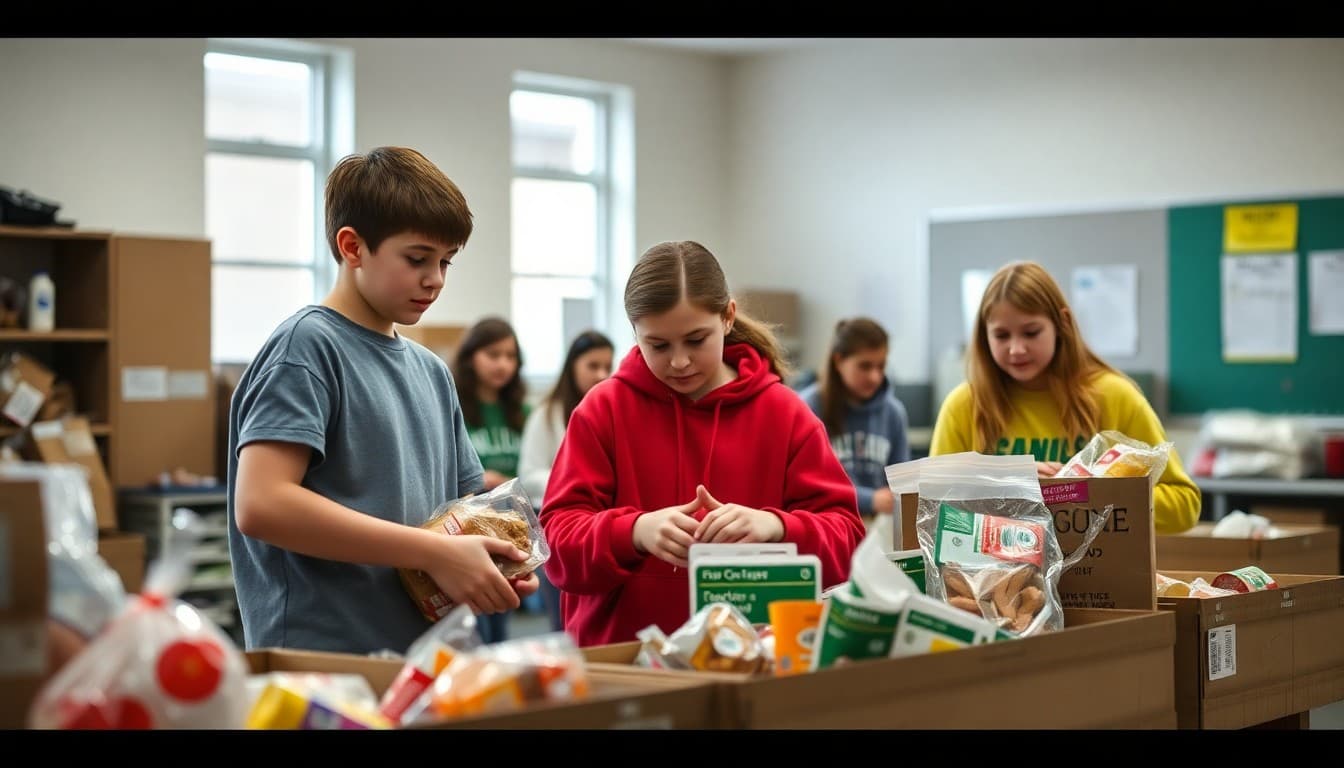
Service Club Newsletter: Communicating Community Impact to Middle School Families
Middle school service clubs sit at the intersection of character development, community connection, and civic education. When run well, they give students their first experience of being genuinely useful to people outside their immediate community, which is one of the most motivating experiences adolescents can have. When their families understand what the club is doing and why, the service experience extends beyond the school and becomes part of the family's values rather than just one more activity on the schedule.
What the Club Is Working On Right Now
Every service club newsletter should lead with the specific current project. Not “we are working to serve the community” but: “This month, service club is collecting non-perishable food donations for the [community food bank name]. Our goal is 500 pounds by November 15th. Collection bins are in the main lobby and the cafeteria entrance. Last week we collected 87 pounds in our first week.” Specific project description with a concrete goal and a current progress report makes the project real and motivates participation. Families who see a specific goal and a current status can talk with their student about the project specifically rather than having a generic conversation about helping people.
Volunteer Event Logistics
Service events that occur outside school hours require careful logistical communication to maximize attendance. Include the date, time, location, what students should bring, what they will do, how long they should expect to be there, and the transportation situation. For events at community partner organizations like food banks or animal shelters, explain the specific organization and what students will be doing on-site. Families who understand exactly what the experience involves are more likely to arrange transportation and sign the permission form than families who receive a vague request to come volunteer somewhere on Saturday morning.
Impact Reporting: Showing the Work Adds Up
One of the most motivating elements of a service club newsletter is cumulative impact data. How many volunteer hours has the club served so far this year? How many pounds of food has the food drive collected? How many families have benefited from the school supply drive? These numbers make the work feel significant rather than symbolic. A club that has served 340 hours by November has done something real. Students who see these numbers reported regularly understand that their contribution accumulates into meaningful impact. This is the kind of concrete evidence of efficacy that motivates continued engagement more effectively than any inspirational message about the importance of service.
Collection Drives and How Families Can Participate Without Attending Events
Not every family can participate in service events that require travel, time away from work, or weekend availability. Collection drives are the most accessible form of participation because they allow families to contribute in their own time and in ways that fit their circumstances. A food drive, a clothing drive, a book drive, a hygiene product collection: all of these give families a low-barrier way to be part of the service project without attending a physical event. The newsletter should make the participation path as simple as possible: here is what we are collecting, here is where to bring it, here is the deadline. Clear and specific makes it happen.
Student Reflection and Voice
Include a student quote or a brief student reflection in each newsletter. “When we helped set up the beds at the shelter, I realized how many people in our town don't have a place to sleep. I thought I knew what poverty was from school, but being there made it real.” A student reflection like that communicates the purpose of the service program more effectively than any adult explanation. It also signals to other students reading the newsletter that service club produces genuine experiences, not just resume lines. Real student voice from real experiences is the most persuasive advertisement for any program.
Connecting Service to Academic Learning
Service club experiences are most powerful when they connect to what students are learning in their content classes. A service club that volunteers at an environmental restoration project while the science class studies local ecology is reinforcing classroom learning through experience. A club that collects books for a literacy organization while the English class reads about educational access is making a tangible connection. When the newsletter draws these connections explicitly, families see service club as part of a larger educational purpose rather than an optional add-on. Daystage makes it easy to send these connections as part of the club newsletter alongside the logistics and impact data, keeping families engaged with both the practical and the meaningful dimensions of the service work.
Get one newsletter idea every week.
Free. For teachers. No spam.
Frequently asked questions
What should a service club newsletter include?
Cover what the club is currently working on and its connection to the community, the schedule of upcoming service events with any volunteer logistics families need to know, how volunteer hours are tracked and reported, any school supplies or donations the club is collecting, the cumulative impact of this year's service work so far (hours served, pounds collected, dollars raised), and how families can support service projects even if they cannot attend events in person. Include a brief student voice section where a club member shares what the service experience meant to them.
How do you explain the value of service to middle school families?
Research on adolescent service learning shows that students who do meaningful service work develop higher empathy, stronger civic identity, and better academic motivation. Service also connects students to the community beyond their school, which is particularly valuable in middle school when students are forming their identity and sense of purpose. Frame service club not as resume-building or community service hours for high school, but as an opportunity for students to discover what they care about and experience the satisfaction of making something better for someone else. That framing resonates more than an achievement-focused pitch.
How do you track volunteer hours for middle school service club?
A simple spreadsheet or a Google Form submitted after each service event is sufficient for most middle school programs. Record student name, event or project name, date, and hours served. For students applying to high school programs that ask for community service records, a year-end summary with this data is easy to generate from the spreadsheet. Some schools use service learning management apps, but a simple manual tracking system is equally reliable and requires no additional platform cost or learning curve.
How can families support service projects at home?
Ask your student to explain the current service project: what problem is it addressing, who does it help, and what is the goal? This conversation reinforces the connection between the school activity and real community impact. Families can donate to school drives, help transport service project materials, or occasionally participate in community service events alongside their student. The family discussion about why service matters is itself valuable. Students whose families treat service as genuinely important rather than a school requirement develop a service ethic that persists beyond the club.
How does Daystage help service club advisors communicate project updates and volunteer logistics to families?
Daystage makes it easy to send regular service club newsletters with event blocks for upcoming service days, collection drive details with deadlines, and impact reports showing cumulative volunteer hours and project outcomes. Families who receive consistent updates feel connected to the service work and are more likely to participate in drives and donate to collections when they understand the context and the impact.

Adi Ackerman
Author
Adi Ackerman is a former classroom teacher and curriculum writer with 8 years in K-8 schools. She writes about school communication, parent engagement, and what actually works in real classrooms.
More for Middle School
Debate Club Newsletter: Building Family Support for Middle School Argumentation Skills
Middle School · 6 min read
Student Government Newsletter: Communicating Elections, Events, and Leadership to Families
Middle School · 6 min read
Peer Mentoring Program Newsletter: Helping Families Understand Middle School Mentorship
Middle School · 6 min read
Ready to send your first newsletter?
3 newsletters free. No credit card. First one ready in under 5 minutes.
Get started free