
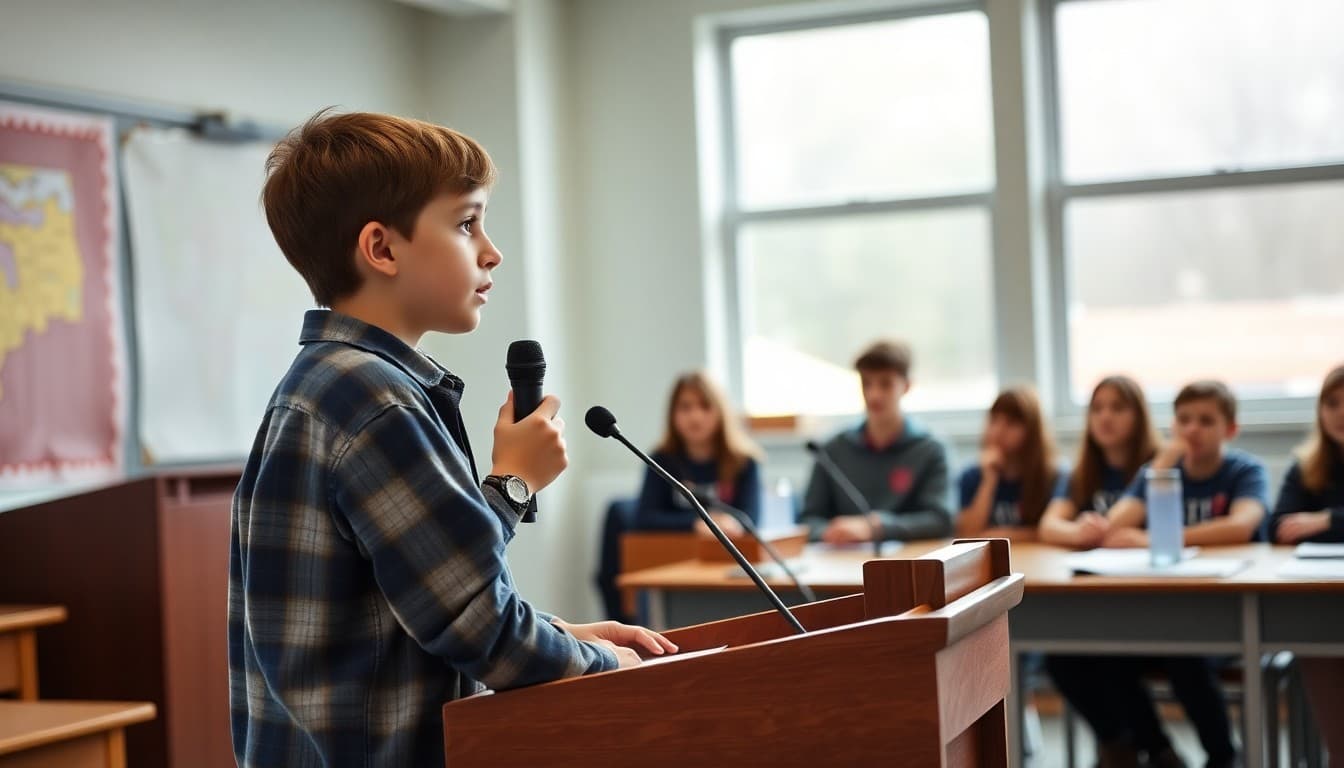
Debate Club Newsletter: Building Family Support for Middle School Argumentation Skills

Debate club is one of the most academically substantive extracurriculars a middle school can offer. The combination of research skills, argument construction, public speaking, active listening, and the ability to respond in real time to unexpected challenges is a complete package of transferable cognitive skills. Families who understand what their student is actually practicing in debate club are more supportive of the time commitment and more capable of providing genuinely useful practice at home.
What Debate Club Actually Develops
A debate club newsletter should be specific about the skills involved rather than using generic language about “communication and critical thinking.” Research skills: students learn to find credible evidence, evaluate source quality, and organize information in support of a specific claim. Argument construction: students practice building a logical case with a clear claim, specific evidence, and explicit reasoning connecting the evidence to the claim. Public speaking: students practice timed delivery, eye contact, and projecting confidence under pressure. Active listening: students must absorb a full argument from the opposing side while simultaneously thinking about their response. Real-time reasoning: students respond to unexpected counterarguments they did not anticipate. This is a complete and specific description that gives families a genuine picture of what their student is doing during club meetings.
The Current Resolution and How Families Can Engage
Debate resolutions are the specific propositions students argue for or against. Include the current resolution in the newsletter. “Students are currently researching both sides of the resolution: 'Resolved: The United States federal government should significantly increase its investment in renewable energy.'” Families who know the resolution can discuss it at home. They can ask their student what evidence supports the affirmative side. They can play devil's advocate by raising arguments for the negative side. They can suggest news articles they encounter that are relevant to the topic. A family dinner conversation about the debate resolution is live research practice in a low-stakes environment. This kind of home engagement is only possible when families know what the topic is.
Tournament Preparation and Logistics
Tournament participation requires significant family coordination. Include tournament dates as far in advance as the schedule is known. Describe the format: arrival time, number of rounds, break rounds for top competitors, and expected return time. Explain what students should bring: evidence files, flowing paper, pens, water, lunch if not provided. Describe the dress code for competitive debate, which typically includes business casual or business professional attire. Families who receive this information early can plan their schedule around tournament days and prepare their student appropriately rather than discovering the logistics the night before.
How Families Can Practice With Their Student
Family practice does not require any debate knowledge. The most useful thing a family member can do is ask hard questions about the argument. After a student presents their case, ask: what is the most damaging piece of evidence the other side has? What would you say if the judge asked whether your evidence is from a biased source? How does your case respond to someone who says the cost of your plan is too high? Can you explain your second contention in simpler language? These questions create exactly the pressure students face in competitive rounds. A student who can answer them at the kitchen table handles similar questions from judges with more composure than a student who only practices with teammates who already know the case.
The Role of the Coach and How Families Communicate With Them
The debate club faculty advisor or coach is the key adult the family should know. Include a brief introduction in the newsletter: the coach's name, their background with debate, and the best way to contact them about tournament logistics or student concerns. Some middle school debate coaches are former competitive debaters who can provide exceptional skill development. Others are enthusiastic English teachers learning the format alongside their students. Either way, families who know who the coach is and how to reach them feel more connected to the program and raise concerns productively when they arise rather than letting problems fester.
The Community Debate Club Creates
Debate clubs create a specific kind of community that many students find nowhere else in school. The combination of intellectual intensity, competition, and the reliance on teammates creates bonds that are different from the social connections in classrooms or athletic teams. For students who feel out of place in the mainstream social environment of middle school, debate club often provides the community where they feel most themselves. Sharing this in the newsletter, especially for families of students who are struggling to find their place socially, positions debate club as a genuine community, not just an activity that looks good on a future resume.
Get one newsletter idea every week.
Free. For teachers. No spam.
Frequently asked questions
What should a debate club newsletter communicate to families?
Explain the format of debate the club practices: Lincoln-Douglas, public forum, or parliamentary style. Describe the current resolution or topic students are researching. Include the meeting schedule and any upcoming tournaments with dates, locations, and what families need to do to support their student's participation. Explain the skills the club develops: research, organized argument construction, public speaking, active listening, and responding to unexpected counterarguments. Include tips for how families can help at home by serving as a practice audience or helping research the resolution topic.
What is the difference between debate club and debate class?
Debate class is a curricular course with grades, regular instruction, and a structured skill progression. Debate club is typically an extracurricular activity that meets after school, is run by a faculty advisor or coach, and often prepares for competitive tournaments. Some schools have both. Some have only one. The newsletter should specify which context this is and what the commitment looks like in terms of meeting frequency, tournament participation, and time outside meetings for research and preparation.
How can families help a student prepare for a debate tournament?
The most useful family support is serving as a practice audience. Ask your student to present their opening argument and then ask them one hard question about their position. You do not need to know anything about the debate topic to ask a challenging question. 'What is the strongest argument against your position?' and 'How do you respond to someone who says your evidence is biased?' are questions any family member can ask. Debaters who practice responding to hard questions from family members handle unexpected judge questions better than debaters who only practice internally.
What are the benefits of debate club for middle schoolers specifically?
Middle school is when students are developing the ability to hold multiple perspectives simultaneously, evaluate evidence quality, and organize complex information into structured arguments. Debate practice explicitly develops all three. Students who debate regularly report higher confidence in academic discussion settings. Research on middle school debate programs consistently shows benefits in ELA performance, particularly in writing and speaking. The public speaking component also directly addresses the social anxiety that many middle schoolers experience, building genuine confidence through practice in a supportive team environment.
How does Daystage help debate coaches communicate with families about tournaments and practice schedules?
Daystage is well-suited for debate club communication because tournament schedules and preparation deadlines are specific and time-sensitive. The event block feature lets coaches include tournament dates with times and locations in a format families can add directly to their calendar. Families who receive regular newsletters from the debate coach stay engaged with the program schedule throughout the year.

Adi Ackerman
Author
Adi Ackerman is a former classroom teacher and curriculum writer with 8 years in K-8 schools. She writes about school communication, parent engagement, and what actually works in real classrooms.
More for Middle School
Student Government Newsletter: Communicating Elections, Events, and Leadership to Families
Middle School · 6 min read
Socratic Circles Newsletter: Preparing Middle School Families for Discussion-Based Learning
Middle School · 6 min read
Service Club Newsletter: Communicating Community Impact to Middle School Families
Middle School · 6 min read
Ready to send your first newsletter?
3 newsletters free. No credit card. First one ready in under 5 minutes.
Get started free