
Science Fair Prep Newsletter for Middle School Families
Science fair season creates anxiety in every household. Parents worry about doing too much. Students worry about doing too little. Teachers worry about both. A newsletter that sets clear expectations from the start, explains what the scientific method requires in plain language, and draws a clear line around what family support should and should not look like gives everyone permission to engage productively. Here is what families need to know to help their student through a successful science fair project without accidentally doing it for them.
The Science Fair Timeline
Science fair projects work best when each phase is given adequate time. The topic selection and question development phase, which typically takes one to two weeks, sets the quality ceiling for everything that follows. Students who choose a genuinely interesting question they can actually investigate produce more motivated work. Background research typically takes one week. Hypothesis and procedure development takes a few days. The experiment phase, including running at least three trials to produce reliable data, is the longest phase and should not be rushed. Data analysis and conclusion writing typically take one to two weeks. The display board is usually assembled in the final days before the fair. Having this timeline visible helps families support appropriate pacing rather than scrambling at the end.
Choosing a Good Science Fair Question
The best science fair questions have a few characteristics. They are answerable through an experiment the student can actually conduct in the available time with accessible materials. They have a measurable outcome that can be compared between conditions. They are genuinely interesting to the student, which matters more than it seems because students spend weeks on their project and bored students produce worse work. Questions that start with "how does [variable] affect [measurable outcome]" are almost always testable. Questions that start with "what is the best" or "which is better" need to be refined into specific measurable comparisons before they work as scientific questions.
The Scientific Method Is Not Optional
Every middle school science fair requires the scientific method, and judges evaluate projects on whether they actually followed it. This means a clearly stated hypothesis in the form "if [independent variable], then [dependent variable], because [reasoning]." It means a controlled experiment where only one variable changes between conditions. It means at least three trials to produce averages rather than single data points. It means data presented in tables and graphs rather than described in paragraphs. It means a conclusion that interprets the results in terms of the hypothesis and does not just summarize what happened. Students who understand the scientific method and apply it rigorously, even if their results are inconclusive, score significantly better than students with dramatic results and poor experimental design.
The Display Board
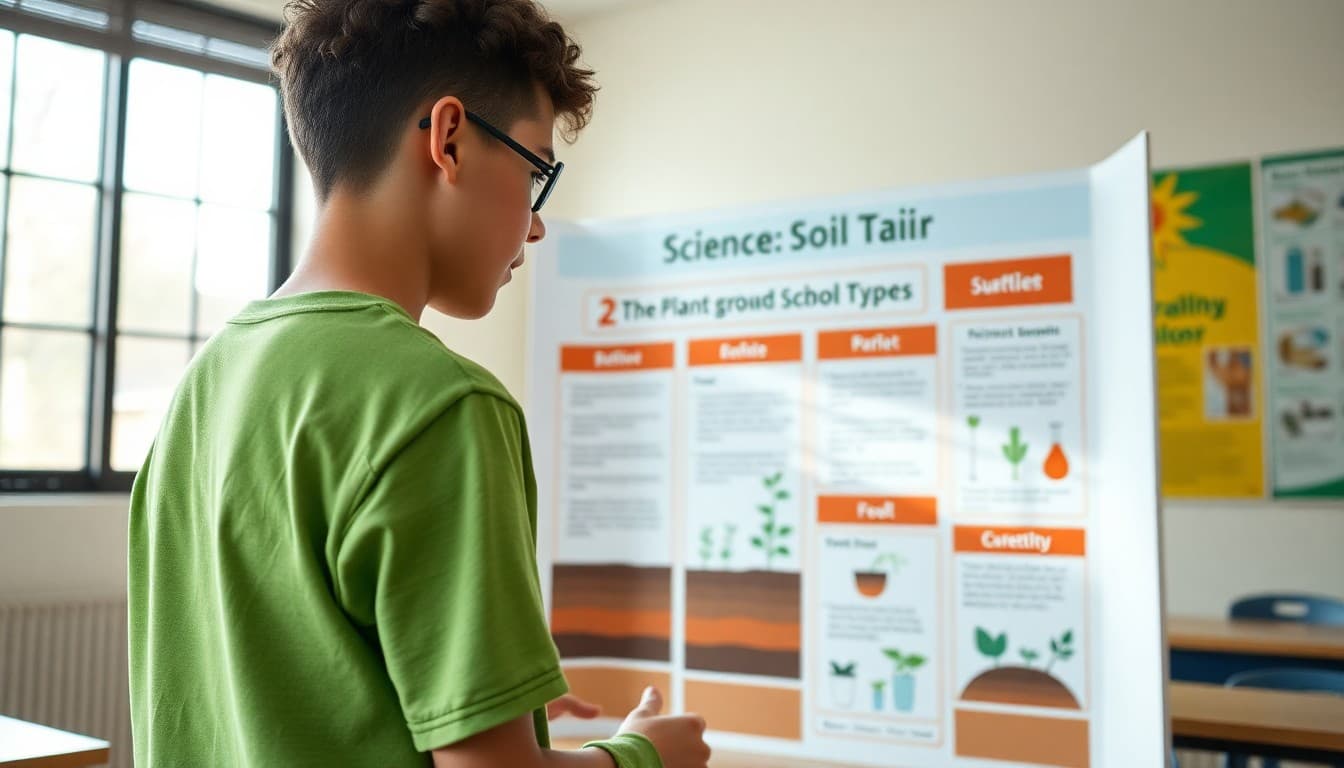
Display board requirements vary by fair and school. The newsletter should specify the size, required sections, and any formatting guidelines. Common required sections include Purpose, Hypothesis, Materials, Procedure, Results (including graphs and data tables), Conclusion, and References. Photos of the experiment are usually allowed and improve visual interest. Text should be readable at arm's length. Graphs should have labeled axes, titles, and units. The display board is a communication tool, not an art project. Clear, accurate, well-organized presentation matters more than decorative elements.
What Family Support Should Look Like
The clearest test for appropriate family support is whether the work product demonstrates your student's thinking or yours. Helping your student brainstorm topic ideas is appropriate. Choosing the topic for them is not. Driving them to a hardware store to buy materials is appropriate. Designing the experiment to make the results more impressive is not. Helping them organize their board layout is appropriate. Writing their conclusion is not. When families cross this line, even with good intentions, they deprive their student of the learning experience and submit work that does not represent their student's abilities. Judges notice when an eighth-grade conclusion is written at a graduate level. So do teachers. The most common science fair grade penalty is for work that clearly was not done independently.
Get one newsletter idea every week.
Free. For teachers. No spam.
Frequently asked questions
What are the components of a middle school science fair project?
A complete science fair project includes a question or problem statement, background research, a hypothesis, a procedure with controlled and independent variables, data collection with at least three trials, analysis of results, and a conclusion that connects back to the hypothesis. The display board organizes this information visually. At the fair, students may also present their project verbally to judges.
When should families start helping their student choose a topic?
Topic selection should happen as early as possible, ideally in the first week of the assignment window. Good science fair topics are questions that can be answered through an experiment the student can actually conduct with available materials. Topics that require purchased lab equipment, long grow times that exceed the project timeline, or statistical data the student cannot collect independently should be steered toward more feasible questions.
What is the most common mistake in middle school science fair projects?
Doing a demonstration rather than an experiment. A demonstration shows that something works. An experiment tests a question with a controlled variable. Dissolving sugar to make rock candy is a demonstration. Testing whether sugar crystal size changes based on concentration or cooling rate is an experiment. Judges evaluate experimental design, and projects without a testable hypothesis and controlled variables score poorly regardless of how polished the display board is.
How much can parents help with a science fair project?
Parents can help with materials, transportation for research, reading background sources aloud or together, and helping organize the display board layout. They should not conduct the experiment, analyze the data, write the conclusion, or make significant design decisions. Judges can often tell when a parent did substantial portions of the work and the project loses credibility. More importantly, the student loses the learning.
How does Daystage help schools communicate about science fair timelines and expectations?
Daystage lets teachers send a detailed science fair newsletter with the full project timeline, display board requirements, judging criteria, and family guidance in one organized place. A Daystage newsletter at the start of science fair season sets the right expectations for everyone from day one.

Adi Ackerman
Author
Adi Ackerman is a former classroom teacher and curriculum writer with 8 years in K-8 schools. She writes about school communication, parent engagement, and what actually works in real classrooms.
More for Middle School
Ready to send your first newsletter?
3 newsletters free. No credit card. First one ready in under 5 minutes.
Get started free