

Math Competition Newsletter: Preparing Middle School Families
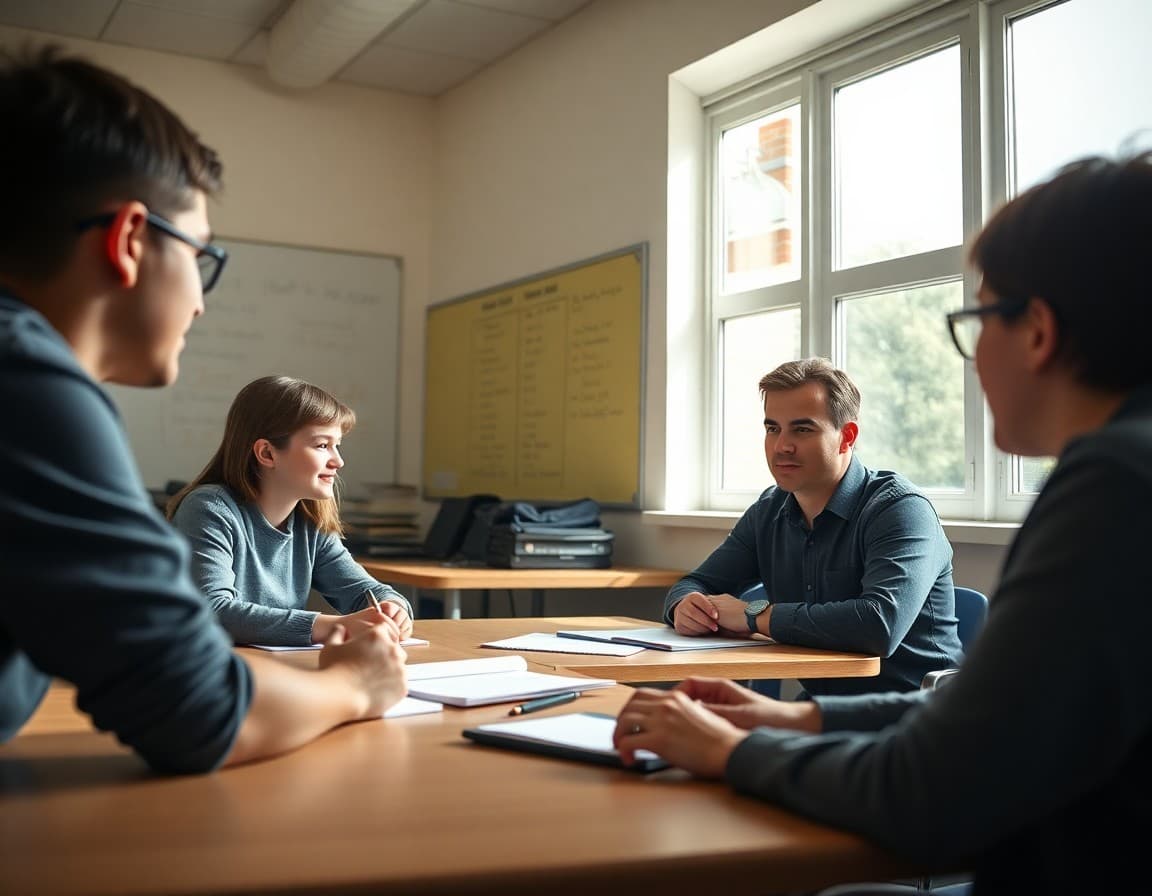
Math competitions are one of the most valuable enrichment experiences available to mathematically gifted middle schoolers. They develop problem-solving skills that go well beyond standard curriculum, provide a community of peers who share a passion for math, and introduce students to a level of mathematical depth that often shapes their academic trajectory through high school and college. A newsletter that prepares families for the competition experience, frames it appropriately, and prevents the kind of pressure that derails students who are actually ready helps everyone involved.
What Makes Competition Math Different
Competition math problems are designed to reward creative thinking rather than memorized procedures. A student who has memorized every formula in the 8th-grade curriculum will still find many competition problems challenging because the problems require finding a non-obvious path to the answer. The most important skill in competition math is not knowing more facts. It is being comfortable with uncertainty, willing to try multiple approaches when the first does not work, and able to reason carefully from principles to conclusions. Students often find that the skills they develop through competition math improve their performance in classroom math as well, because the deeper understanding they gain makes standard curriculum problems feel more tractable.
The Practice Commitment
Math competition preparation works best as a consistent practice rather than intensive review before the event. Students who work through fifteen to twenty competition problems per week for two months before a competition typically outperform students who attempt to cram in the final week before. The improvement in competition math comes from developing familiarity with problem types, building a repertoire of solution strategies, and developing the patience to work through a hard problem without giving up. These are all outcomes of consistent practice over time and cannot be replicated through last-minute review. If your student is participating in the math team, supporting the regular practice schedule matters more than what they do in the week before the competition.
Competition Day Logistics
Math competitions typically involve students arriving at a testing location, completing individual rounds of problems under timed conditions, and possibly competing in team rounds. The specific format of the competition in this newsletter will be described with the relevant logistics: arrival time, location, what students should bring, whether families can stay, and when results or scores will be communicated. Students should arrive having slept well and eaten breakfast. Mental performance under timed pressure is significantly affected by basic physical factors that are entirely within the family's control on competition morning.
When Results Are Not What the Student Hoped For
Math competitions are challenging by design, and most students do not achieve their best possible score on their first competition. Many students who go on to perform at the highest levels of mathematical competition did not win their first school-level event. The response to a disappointing result sets the stage for whether the student keeps competing. Students who hear "you worked hard and now you know what to work on next" stay in the game. Students who hear "I thought you were good at math" often do not come back. The willingness to compete again after a difficult result is itself the most important mathematical disposition: persistence in the face of a hard problem. How families frame competition results either reinforces or undermines that disposition.
Get one newsletter idea every week.
Free. For teachers. No spam.
Frequently asked questions
What math competitions are available for middle schoolers?
MATHCOUNTS is the most prominent middle school math competition in the US, with school-level competitions feeding into chapter, state, and national events. AMC 8 is an individual competition for students up to 8th grade. Math Olympiad for Elementary and Middle Schools (MOEMS) runs monthly contests throughout the school year. Many states and districts also have their own competitions. The newsletter should name the specific competition and explain its format.
What types of problems appear in middle school math competitions?
Competition math problems are typically harder than grade-level curriculum problems and require creative problem-solving rather than formula application. They often involve number theory, geometry, algebra, probability, and combinatorics at levels deeper than the standard curriculum. Students benefit from exposure to competition problem types well before the event, which is why most math teams hold regular practice sessions.
How should students prepare for math competitions?
Regular practice with competition-style problems is the most effective preparation. Resources like MATHCOUNTS school handbooks, Art of Problem Solving (AoPS), past AMC problems, and Alcumus (the AoPS practice platform) provide excellent competition-level practice. Consistent practice over weeks or months produces more improvement than intensive cramming in the days before a competition.
How can families support without adding pressure?
Express genuine interest in the math problems without making performance the focus of conversation. Ask what interesting problems they worked on recently. Celebrate the preparation effort rather than predicting outcomes. Before the competition, focus on rest, food, and a positive mindset rather than last-minute review. After the competition, ask what problems they found interesting or difficult rather than leading with how they placed.
How does Daystage help schools communicate about math team activities and competitions?
Daystage lets math teachers and coaches send detailed competition newsletters with schedules, preparation resources, and logistics so families have everything in one place. Regular Daystage updates keep families connected to the preparation process.

Adi Ackerman
Author
Adi Ackerman is a former classroom teacher and curriculum writer with 8 years in K-8 schools. She writes about school communication, parent engagement, and what actually works in real classrooms.
More for Middle School
Ready to send your first newsletter?
3 newsletters free. No credit card. First one ready in under 5 minutes.
Get started free