
Class President Election Newsletter: What Middle School Families Need to Know

Class president elections are one of the most memorable events in a middle school year. For students who run, it is often the first time they put themselves forward publicly for a leadership role and take the full risk of a public vote. For families, the experience brings its own mix of pride, anxiety, and aftermath management depending on the outcome. A newsletter that explains the process and sets realistic expectations for both candidates and voters helps families support their student well.
What the Class President Role Actually Involves
One of the most useful things a newsletter can do before elections is describe the role honestly. Many students run for class president with a Hollywood idea of what it means: giving speeches, making big decisions, being important. The actual role in most middle schools involves attending student council meetings, helping plan class-level events, communicating between students and administration, and following through on commitments made during the campaign. It requires reliability and execution more than charisma. Students who understand this before running are better prepared for what the role actually requires and less disappointed by the gap between the idea and the reality.
The Campaign Process and Its Limits
Middle school election campaigns are usually brief and school-supervised. Describe the specific campaign practices your school permits: are posters allowed? Are students allowed to give treats or gifts to voters (most schools prohibit this)? How long is the campaign period? Is there a formal debate or question-and-answer session alongside the speeches? Setting these parameters clearly in the newsletter prevents students from doing things that get their campaign disqualified and prevents families from helping their student campaign in ways that are not permitted.
The Speech and How Families Can Help
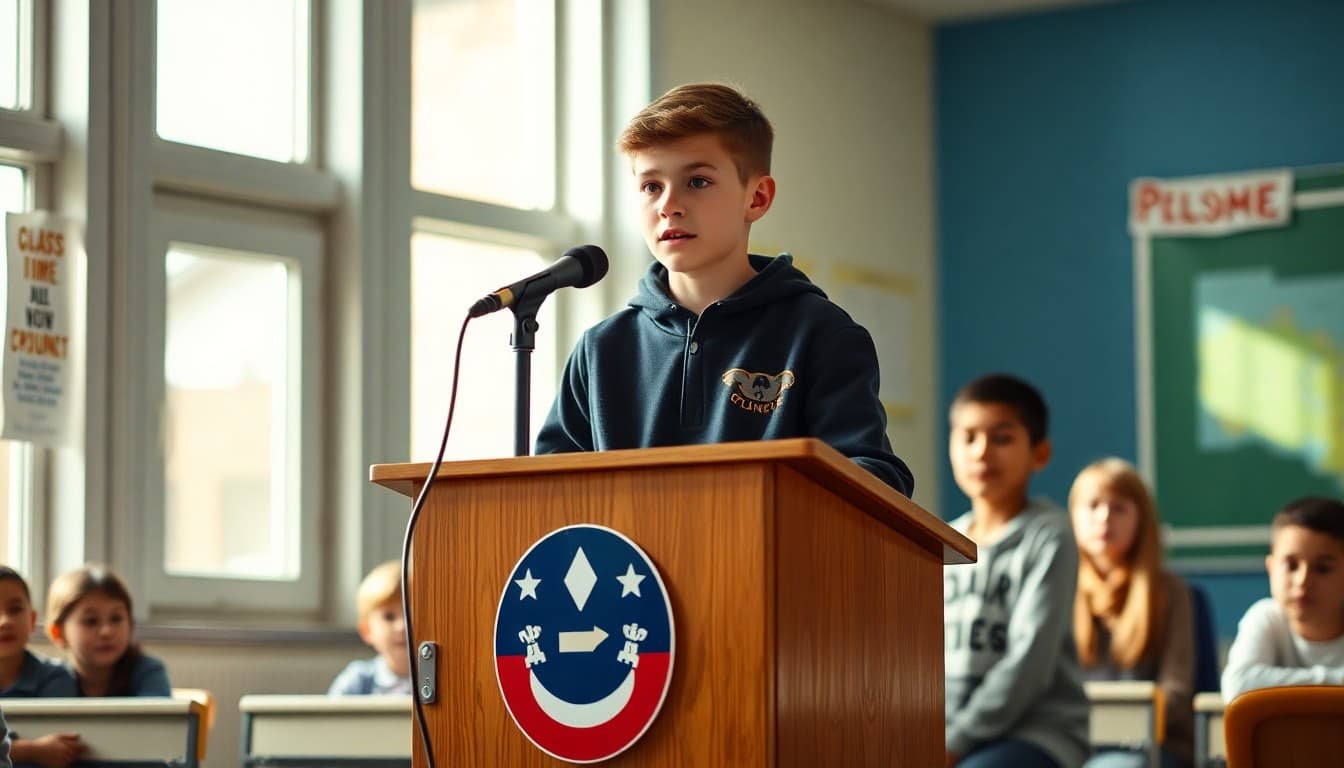
The campaign speech is the centerpiece of most middle school elections. Families can provide significant help in speech preparation without writing the speech for their student. Ask the candidate: what is the most important thing you want to change or create? Can you say it in two sentences? What is one specific thing you will do in the next month if you are elected? Then help them say those things in their own words and practice it until the delivery feels natural. A student who has practiced their speech ten times at home speaks with more confidence than a student who reads it for the first time in front of their grade. The confidence comes from preparation, not from personality.
How the School Handles the Vote
Explain the voting mechanics specifically so families know what to expect. Is voting by show of hands, paper ballot, or digital form? Who counts the votes? When are results announced? Is the margin of victory shared or only the winner announced? These details matter to students and families who are in the waiting period after the vote. Schools that announce results at the end of the day leave students in suspense for hours. Schools that announce results immediately after voting move through the emotional arc more quickly. Neither is wrong, but families who understand the process can help their student manage the wait.
The Outcome: Winning, Losing, and What Comes Next
Address the outcome directly in the newsletter rather than waiting until after the election to have the conversation with families. Both winning and losing are significant experiences that deserve acknowledgment. For students who lose: losing a public vote is a skill that very few people practice and many adults have never experienced. The students who run and do not win have taken a risk that most of their classmates were not willing to take. That matters regardless of the result. For students who win: the election is the beginning of the work, not the reward. The students who voted for you expect follow-through. The newsletter after elections should address both groups with genuine acknowledgment of the experience.
Other Leadership Paths When Class President Is Not the Outcome
A newsletter about class president elections should also remind families that class president is one of many leadership paths available in middle school. Students who run and do not win are candidates for other officer positions, club leadership roles, advisory leadership, and informal peer influence. The experience of running, practicing public speaking, and developing a platform are skills that transfer to every future leadership context regardless of the outcome of this specific election. Frame the election as an experience rather than a destination, and families will help their student carry the same framing.
Get one newsletter idea every week.
Free. For teachers. No spam.
Frequently asked questions
What should a class president election newsletter include?
Include the positions available and what each one actually does. Explain the eligibility requirements: grade level, academic standing, or other criteria. Describe the timeline: when candidates can declare, when speeches are delivered, when voting happens, and when results are announced. Explain what the campaign process looks like and what is and is not permitted. Provide contact information for the faculty advisor. Include a brief section for families on how to support their student whether they are running, voting, or cheering from the sidelines.
How do you support a student who is running for class president?
Help them develop a campaign message that is specific and realistic. 'I want to make lunch more fun' is weaker than 'I want to start a monthly theme lunch day where students can vote on the theme each month.' Specific proposals give classmates something real to vote for. Help them practice their speech until it feels natural, not memorized. Remind them that the outcome of a middle school election does not define them and that running, regardless of the result, is a valuable experience. The student who runs and loses learns something important about public vulnerability and resilience that the student who does not run never encounters.
How do you handle it when a student is disappointed after losing an election?
Acknowledge the disappointment directly without minimizing it. Losing a public vote in front of your peers is genuinely hard. Help the student identify what they are proud of from the campaign process: speaking in front of the school, the specific ideas they proposed, the courage it took to put themselves forward. Remind them that class president is not the only leadership opportunity available. Advisory leadership roles, club officer positions, and informal peer leadership are all real options. Most importantly, help them see the loss as a single event rather than a judgment about their worth or future.
What qualities make a good middle school class president?
The most effective middle school class presidents are students who listen well, follow through on commitments, communicate clearly, and understand that the role is about serving their class rather than gaining status. Academic ability matters less than reliability and genuine interest in making the school better for others. Students who ran because their friends told them to or because they wanted the title often struggle with the responsibilities. Students who have a specific thing they want to improve and who are willing to do the unglamorous committee and planning work that class president involves tend to produce more meaningful outcomes.
How does Daystage support class president election communication for families?
Daystage lets teachers and faculty advisors send timely newsletters with election dates, candidate information, and voting reminders. The event block feature is especially useful for election newsletters: the speech day, voting day, and results announcement can all be included as event blocks with dates and times, giving families and students a clear timeline at a glance.

Adi Ackerman
Author
Adi Ackerman is a former classroom teacher and curriculum writer with 8 years in K-8 schools. She writes about school communication, parent engagement, and what actually works in real classrooms.
More for Middle School
Student Government Newsletter: Communicating Elections, Events, and Leadership to Families
Middle School · 6 min read
Peer Mentoring Program Newsletter: Helping Families Understand Middle School Mentorship
Middle School · 6 min read
Advisory Period Newsletters: Keeping Families Informed About This Unique Class
Middle School · 6 min read
Ready to send your first newsletter?
3 newsletters free. No credit card. First one ready in under 5 minutes.
Get started free