
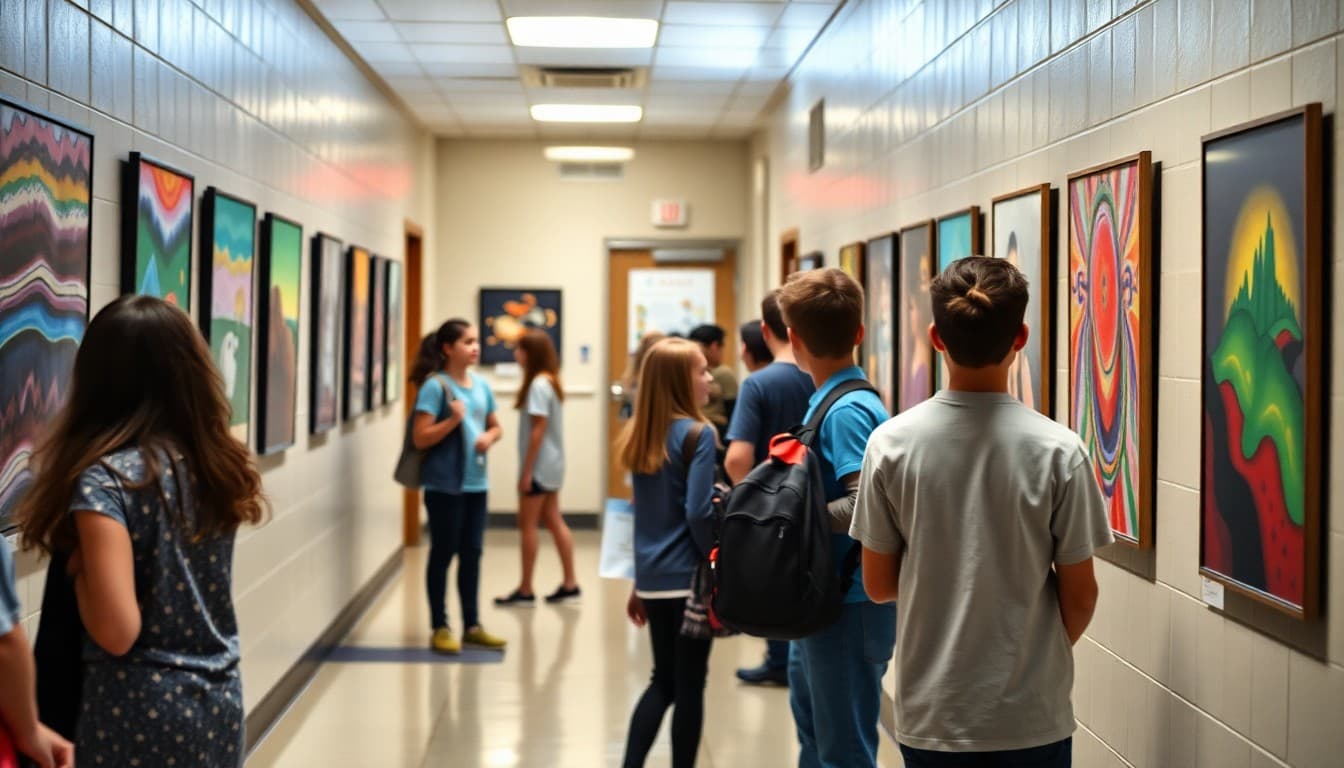
Art Gallery Show Newsletter for Middle School Families
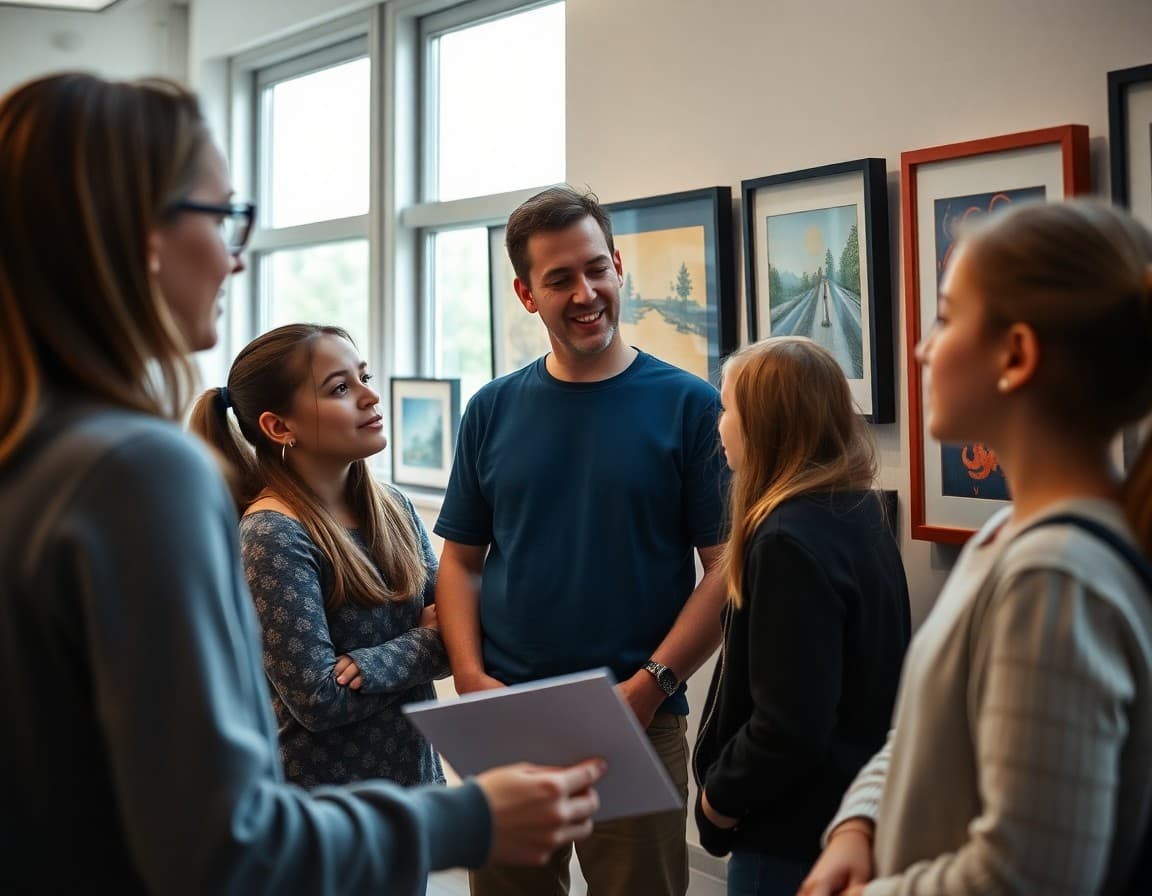
An art exhibition treats student work with the respect it deserves. When a student's drawing, painting, sculpture, or design is displayed on a gallery wall with a label, it communicates to that student that what they made has value beyond the grade it earned. A newsletter that invites families to the exhibition, explains what they will see, and prepares them to engage meaningfully with student artwork maximizes the impact of the show on the students who worked hardest to create it.
What Students Made
The exhibition represents work from multiple units or a single intensive project, depending on the show's focus. Describe what students created: the medium or media used, the concepts or themes they explored, and what skills they developed in the process. A family member who arrives knowing that students were exploring the relationship between positive and negative space in their linoleum prints, or that the clay sculptures were inspired by ancient cultural artifacts they researched in social studies, engages with the work at a deeper level than one who sees it as simply "stuff the art class made." The newsletter is the artist statement for the show as a whole.
Why Student Art Shows Matter
Art shows serve a specific developmental purpose beyond displaying finished work. The process of selecting work for exhibition, preparing it for display, and standing in a gallery space with the knowledge that people are looking at and responding to what you made is a qualitatively different experience from turning in an assignment for a grade. Students who have their work exhibited publicly experience the satisfaction of craft meeting audience in a way that motivates continued development. The family's role in this experience is significant: a student whose family attends the show and spends genuine time with the work comes away from the experience with a stronger sense that their creative expression has value to the people who matter to them.
How to Look at Art With Your Student
Many adults feel uncertain about how to talk about visual art, especially abstract or conceptual work. The most useful approach is to share your genuine observations rather than pretending to expertise you do not have. "I notice that you used dark colors in the background and lighter ones in the foreground, and it makes the subject stand out" is a more useful observation than "I think this is beautiful." Asking the student to explain their choices, "why did you decide to use this technique here?" opens a conversation that often reveals sophisticated thinking families did not know their student was capable of. The goal is not art criticism. It is showing genuine curiosity about your student's creative process.
Exhibition Logistics
The exhibition is open to families during [specific dates and times]. The gallery is located in [specific location in the school building]. Students will be present during [opening event details]. Work will be displayed until [end date]. [Whether students take work home and when]. All families are invited regardless of whether their student's work is included in this specific show, though [describe inclusion criteria or whether all student work is shown]. Parking is available in [describe parking situation]. If you have any questions about a specific piece or the program, the art teacher [name] is available at [contact information].
Get one newsletter idea every week.
Free. For teachers. No spam.
Frequently asked questions
What should an art gallery show newsletter include?
Cover the opening date, time, and location. Explain what types of work are displayed and what artistic concepts or techniques students explored. Describe how students selected their work for exhibition. Include any artist statements or gallery labels students created alongside their work. Mention whether the work can be taken home or remains on display. A photo of a student preparing their work can make the newsletter more compelling.
How do students select which work to display in an art show?
Most art teachers guide students through a portfolio review process where they assess their work against the learning objectives of the unit, consider which pieces best represent their artistic growth, and make a curated selection. This process itself teaches curatorial thinking and self-assessment skills. Students who understand why their displayed piece was chosen feel more ownership over the exhibition.
What should families say when they look at student artwork?
Ask questions rather than simply evaluating. 'What were you thinking about when you made this?' 'Is there anything you would do differently?' 'What part of the process was most interesting to you?' These questions signal that you are interested in the student's experience and thinking rather than just the finished product. Avoid generic 'I love it' without specific observation, and absolutely avoid negative comparative comments.
How long is the art exhibition typically on display?
School art exhibitions vary from single-evening events to multi-week displays. The newsletter should specify exactly when the work will be on display and when families can come to see it. If there is a formal opening night with students present, that date is different from the ongoing display period and both should be mentioned.
How does Daystage help art teachers communicate about student exhibitions?
Daystage lets art teachers send a visually oriented newsletter with photos of student work, exhibition details, and viewing instructions. A Daystage newsletter is a natural fit for an art show announcement because the platform supports images that show the work and make families want to attend.

Adi Ackerman
Author
Adi Ackerman is a former classroom teacher and curriculum writer with 8 years in K-8 schools. She writes about school communication, parent engagement, and what actually works in real classrooms.
More for Middle School
Ready to send your first newsletter?
3 newsletters free. No credit card. First one ready in under 5 minutes.
Get started free