
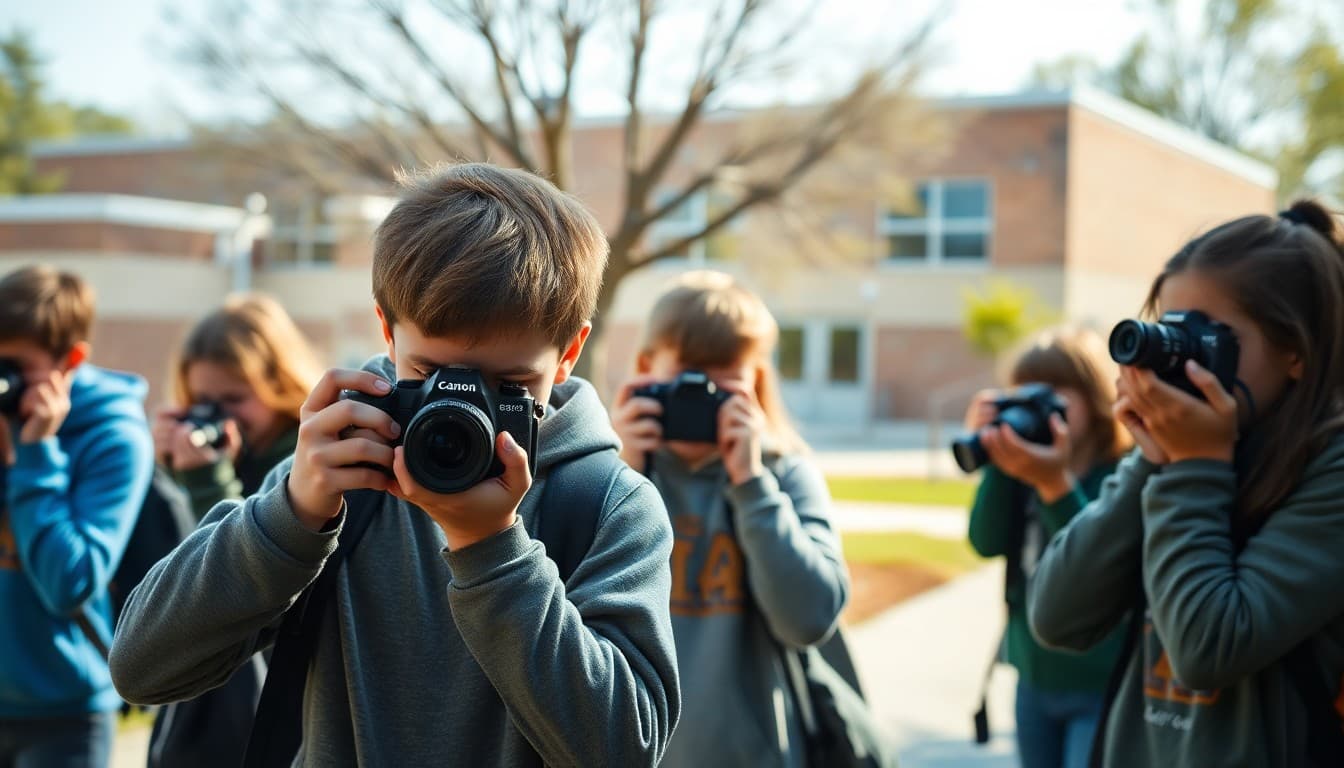
Photography Club Newsletter for Middle School Families

Photography is one of the most accessible visual arts forms because nearly every student already has a capable camera in their pocket. Photography club transforms casual phone photography into deliberate visual communication. Students who learn to see the world through the frame, to think about what to include and exclude, how light falls, and what story a single image can tell, are developing a visual literacy that enriches everything from how they read media to how they eventually present their professional work. A newsletter that communicates this depth of learning, and shares student work, gives the program the recognition it deserves.
What the Club Is Working On
Describe the current focus of the photography club in specific terms. Are students working on portraiture? Landscape and environment? Documentary storytelling? Abstract or experimental image-making? Each focus develops specific skills and produces work with its own visual vocabulary. A newsletter that names the current unit and what students are learning to see and capture makes the program tangible for families. Including one or two student photographs in the newsletter with a brief explanation of the technique or intention behind them is one of the most compelling things you can put in any photography club newsletter.
Composition: Learning to See Before Shooting
The most important photography skill is not technical. It is learning to slow down before pressing the shutter and evaluate what you are seeing in the frame. The rule of thirds, the principle that placing the subject off-center at one of the thirds of the frame creates more visual interest than centering, is one of the first composition principles students learn. Leading lines, elements in the scene that naturally draw the viewer's eye toward the subject, are another. Foreground interest, using elements in the near distance to create depth, is a third. Students who internalize these principles see visual opportunities in ordinary environments that they would have walked past before they started paying attention this way. This change in perception is one of the most lasting things photography education provides.
Ethics in Photography
A complete photography education addresses the ethical dimensions of the practice alongside the technical and aesthetic ones. Taking photographs of people in public, photographing in private spaces, consent and how to ask for it, and the responsibilities involved in representing others visually are all topics a good photography program covers. Students who understand that a photograph is an act of representation with potential consequences are better photographers and better citizens of the visual world. Including a mention of this dimension in the newsletter signals to families that the program is teaching more than camera skills.
How to Support a Photography Student at Home
Families can support a student in photography club in several practical ways. Take interest in the photographs they are making. Ask what they were trying to capture and whether the image does what they intended. Give them genuine time to photograph things at home or in the neighborhood. Avoid immediately editing their photographs or applying filters without asking, which often undermines the deliberate choices they made. If your family is traveling, encourage them to bring their camera and practice documentary storytelling rather than just snapshots. The most useful phrase you can say when they show you a photograph they are proud of is "tell me what made you take this one."
Get one newsletter idea every week.
Free. For teachers. No spam.
Frequently asked questions
What do students learn in a middle school photography club?
Students learn composition principles like the rule of thirds, leading lines, and framing. They learn about light direction and quality, how to tell a story through a single image, basic camera settings if using more than phone cameras, and post-processing basics including cropping and color adjustment. Many clubs also teach the ethics of photography including consent and the responsibilities of representing people visually.
What equipment do students use in photography club?
This varies by program. Some clubs use school-owned DSLR or mirrorless cameras. Others work primarily with smartphones, which is increasingly the approach since phone cameras rival dedicated cameras for most student photography needs. The newsletter should describe what equipment students use and whether students need to bring their own phones or devices.
How do students share their photography work?
Photography clubs typically display work in the school, submit to student publications like the yearbook or newspaper, enter photography contests, create online portfolios on platforms like Google Sites or Adobe Spark, or post to a private class page. The newsletter should describe the specific sharing opportunities available and any public display events families can attend.
What photography contests are available for middle school students?
Scholastic Art and Writing Awards includes photography. Many local and state organizations run youth photography contests. National Geographic and Audubon Society run wildlife and nature photography contests open to students. Photography contests provide an authentic external audience for student work and the experience of evaluating your work against professional criteria.
How can Daystage help photography programs share student work with families?
Daystage newsletters with high-quality image blocks are a natural fit for sharing photography club work. A newsletter featuring selected student photographs alongside brief explanations of the techniques or concepts they demonstrate gives student work an audience that extends beyond the classroom.

Adi Ackerman
Author
Adi Ackerman is a former classroom teacher and curriculum writer with 8 years in K-8 schools. She writes about school communication, parent engagement, and what actually works in real classrooms.
More for Middle School
Ready to send your first newsletter?
3 newsletters free. No credit card. First one ready in under 5 minutes.
Get started free