

Middle School Awards Newsletter: What to Tell Families About Recognition Ceremonies and Award Criteria
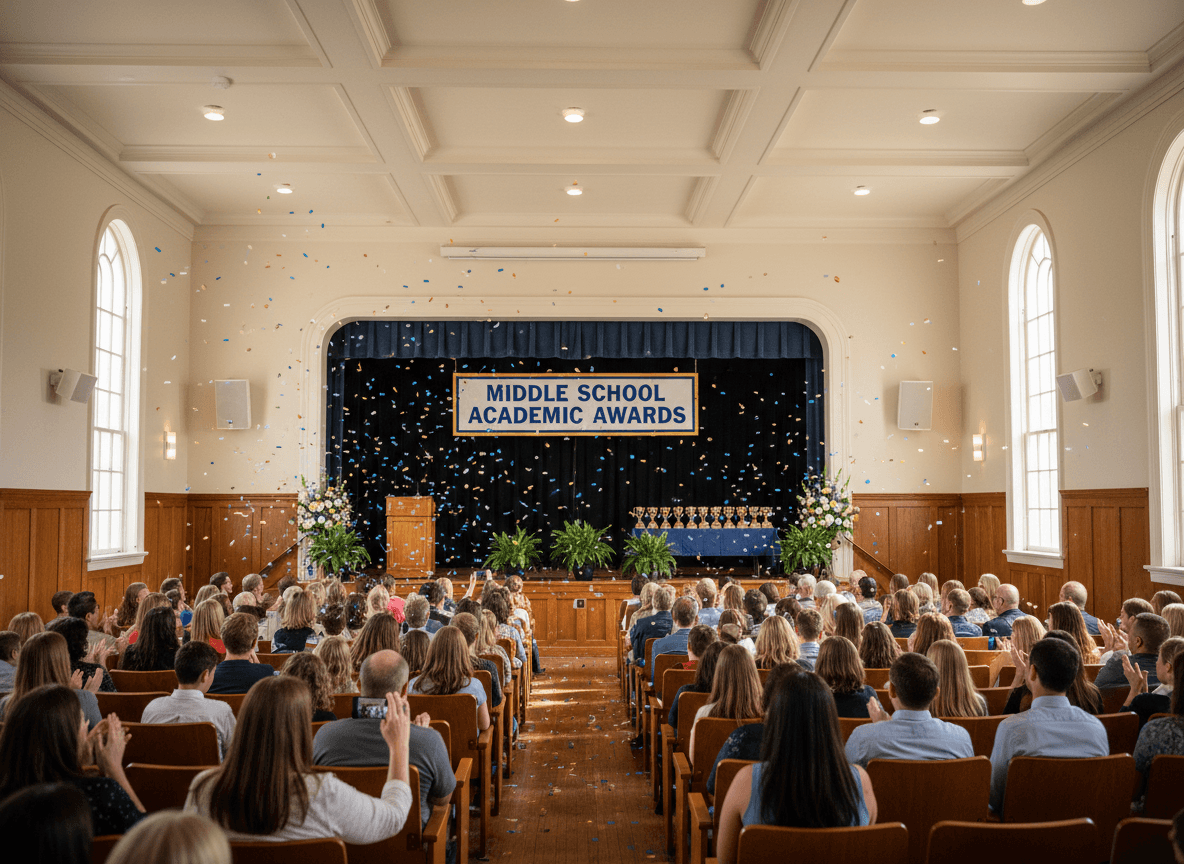
Middle school awards assemblies serve two functions that are easy to conflate but worth keeping separate. The first is recognition: honoring students who have achieved something meaningful. The second is community: giving the entire student body a shared experience that reinforces what the school values. When the newsletter communicates both functions clearly to families, the event lands better and the recognition carries more weight.
A well-crafted awards newsletter does more than list the date and time. It explains what is being recognized, how students are selected, what families can expect, and why this event matters for the students who are there regardless of whether they receive an award.
Announcing the Event With the Right Logistics
Start with the practical information families need to decide whether to attend and to plan accordingly. Date, time, location, and expected duration are the basics. Add any relevant details: is the event held in the gymnasium or the auditorium? Is seating general admission or reserved? Are tickets required? If families need to park off-site or enter through a specific door, say so.
Middle school families navigate multiple school events and busy schedules. The more specific the logistics, the fewer follow-up calls the main office receives. A newsletter that answers the five most predictable questions before families ask them is one of the most effective things you can send.
Explaining What Will Be Recognized
List every award category and provide a brief description of each. Do not assume families know what honor roll means at your school. Is it based on GPA alone? On all subjects or only core subjects? Is there more than one level? The same clarity applies to every category: citizenship awards, improvement awards, attendance recognition, subject-specific honors, and any special designations your school uses.
If any categories are new this year, highlight them and explain why the school added them. If categories have changed, note what is different. Families who attend expecting a particular category of recognition and discover it has been replaced without notice feel blindsided, which is avoidable with one sentence in the newsletter.
How Students Are Selected for Awards
Describe the selection process as specifically as you can. Academic awards with objective criteria like GPA thresholds are straightforward to explain. Teacher-nominated awards require a bit more description because families will want to understand what teachers are looking for. If citizenship awards are based on observable behaviors like kindness, responsibility, and respect for community, describe those behaviors. If improvement awards recognize students who showed significant growth from one grading period to another, explain how growth is measured.
Transparent criteria serve the school's interest as well as families'. Students who know what honor roll requires work toward it with more focus. Students who understand what a citizenship award means are more likely to exhibit those behaviors because the recognition is visible and connected to something specific.
What Families of Non-Recognized Students Should Know
Every awards assembly has more students not receiving awards than receiving them. Most of those students are fine with this. But some families feel anxious on their student's behalf, and some students feel left out when peers around them are being called forward. Address this directly in the newsletter without being condescending about it.
Let families know that the assembly is a community event, not just a recognition event. Students who are not receiving awards this time are still part of the community that values achievement, growth, and good character. Many schools find ways to involve the full student body in recognizing peers, through applause, through written nominations, or through other participation structures. If your school does any of this, describe it. It matters for how families frame the event for students who are watching from the audience.
Photography and Social Media at the Event
Families will take photos. Some will share them on social media. Your school may have a policy about both. State the policy clearly in the newsletter so families are not surprised or embarrassed at the event. If photography is welcome but families should avoid capturing other students, say so. If the school is filming the event and will share the recording, mention that. If there are any restrictions on photography during specific portions of the program, describe them.
Photography and social media are two of the most consistent sources of friction at school events. Addressing them in advance is one of the easiest ways to prevent avoidable conflict on a day that is otherwise celebratory.
After the Assembly
Let families know what happens after the assembly ends. Do students return to class? Is there a reception? Are families invited to meet with teachers? If families are expected to leave promptly after the event, say so so they can plan accordingly. If there is time for families to take photos with recognized students after the program, note where that happens.
A brief follow-up newsletter after the event is a thoughtful addition. Congratulating all recognized students by name or category in writing gives the recognition permanence beyond a single morning. It also keeps families who could not attend informed, and it gives students something to share with extended family who were not present.
Connecting Awards to School Values
Close the pre-event newsletter by connecting the recognition ceremony to what the school stands for. The awards assembly is one of the most visible expressions of what the school actually values. When that connection is made explicit, the event carries more meaning for students who receive awards, for students who are watching, and for families in the audience.
Get one newsletter idea every week.
Free. For teachers. No spam.
Frequently asked questions
Should I tell families in advance whether their student will receive an award?
This depends on your school's approach. Some schools notify families of specific awards in advance so parents can plan to attend the ceremony. Others keep awards confidential until the assembly to preserve the surprise and ensure all families attend regardless of whether their student is recognized. Whatever your school's approach, state it clearly in the newsletter so families are not caught off guard. If notifications go home to award recipients only, mention that families who have not received a notification may still want to attend because multiple categories of recognition are given.
How do I explain award criteria fairly to families whose students were not recognized?
Be specific and transparent about how awards are determined. If honor roll has a defined GPA threshold, state it. If citizenship awards are selected by teachers based on specific observable behaviors, describe those behaviors. If attendance awards require zero unexcused absences, say so. Families who understand the criteria are better positioned to help their student work toward recognition next time, and they are less likely to feel the process was arbitrary or unfair. Vague criteria invite more complaints than transparent ones.
What logistics should the awards newsletter cover for families who plan to attend?
Include date, time, location, and expected duration. Note where families should enter and where they should sit. If the auditorium has limited seating, say so and clarify whether tickets or reservations are required. Mention any photography policies. Let families know whether there will be a reception afterward or whether the event ends with dismissal. If students return to class after the ceremony, note that too. Logistics matter more than families expect, and covering them in the newsletter prevents the avoidable confusion that creates a poor first impression of an otherwise meaningful event.
How do I communicate recognition categories that go beyond academic achievement?
Many schools recognize students for improvement, effort, citizenship, community service, or growth in specific areas. These categories matter enormously, and they deserve the same clear explanation as academic honor roll. Describe what each category means, what teachers look for when nominating a student, and why the school believes recognizing these qualities matters for the whole student body. Families whose students struggle academically often feel excluded from recognition events. A clear description of multiple recognition categories signals that the school values more than grades.
How does Daystage help schools communicate about awards assemblies to families?
Daystage lets schools send a polished, event-focused newsletter that includes all the key logistics alongside a description of award categories and criteria. A well-formatted awards newsletter that arrives one to two weeks before the ceremony gives families enough time to arrange attendance and to prepare for the conversation with their student afterward. Schools that use Daystage can also follow up with a brief post-event newsletter that shares highlights and congratulates recognized students.

Adi Ackerman
Author
Adi Ackerman is a former classroom teacher and curriculum writer with 8 years in K-8 schools. She writes about school communication, parent engagement, and what actually works in real classrooms.
More for Middle School
Middle School Dance Newsletter: How to Communicate Logistics, Dress Code, and Conduct Expectations to Families
Middle School · 5 min read
Middle School 8th Grade Trip Newsletter: Communicating Logistics, Costs, and Educational Purpose to Families
Middle School · 7 min read
Middle School Electives Newsletter: Communicating Course Options, Sign-Ups, and Value to Families
Middle School · 6 min read
Ready to send your first newsletter?
3 newsletters free. No credit card. First one ready in under 5 minutes.
Get started free