

Dual Language Magnet School Newsletter: Bilingual Program Updates
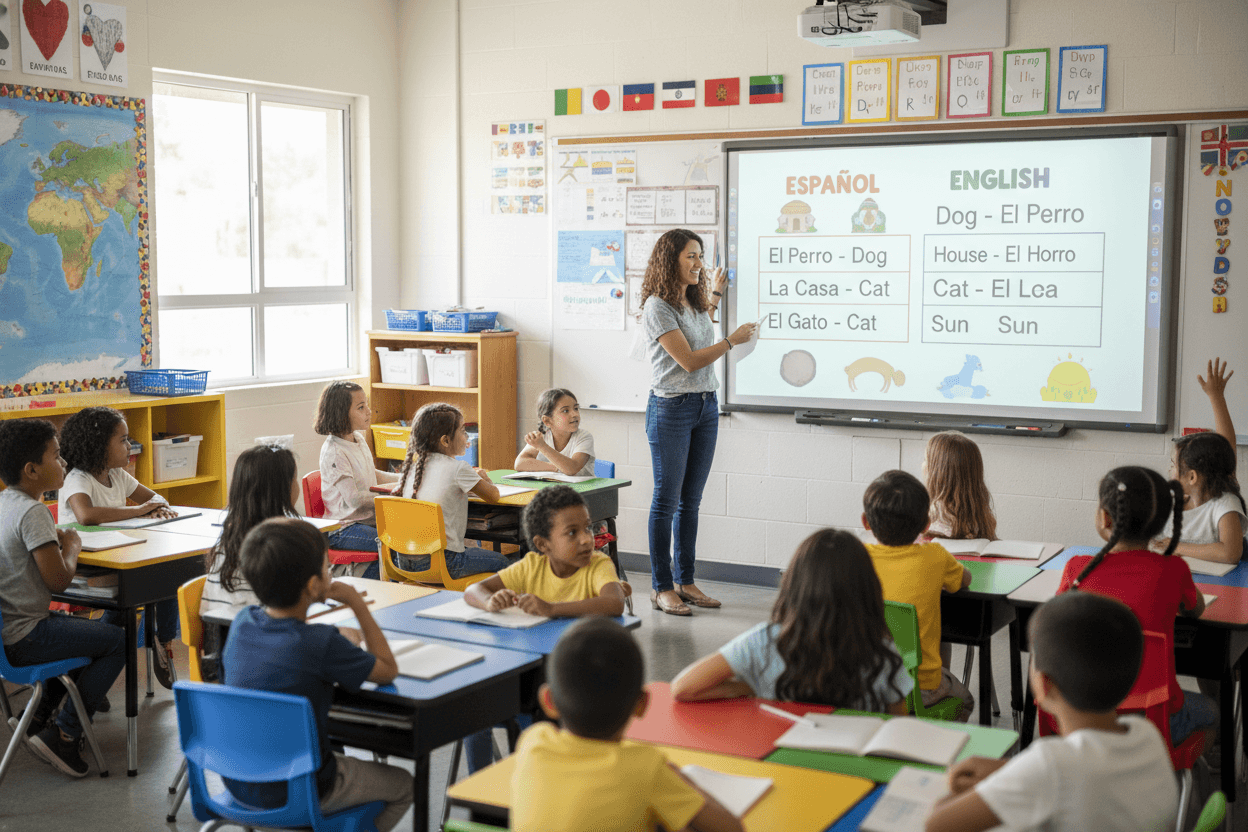
A dual language magnet school sends a message to families from the moment they walk through the door: both languages matter here, both cultures are valued, and bilingualism is a strength worth building deliberately. The newsletter needs to carry that same message every time it lands in a family's inbox.
Coordinators who treat bilingual newsletters as a translation obligation rather than a communication opportunity miss what makes dual language programs distinctive. The newsletter is not just a delivery mechanism for dates and announcements. It is a living demonstration of what the program values.
Write in both languages with equal depth
The foundational rule for dual language newsletter writing is that both languages receive equal treatment. This means a full translation of the complete newsletter, not a summary paragraph at the bottom in the partner language. Families who speak the partner language as their primary home language deserve the same level of detail and the same quality of writing as English-speaking families.
If writing and translating a full newsletter every week feels unsustainable, consider a biweekly schedule that allows time for both versions. Quality and equity matter more than frequency when the alternative is a newsletter that signals one language is the real one and the other is secondary.
Explain the program model at every opportunity
Many families enrolled in dual language programs do not fully understand how the model works. The 90/10 model, the 50/50 model, the research behind the silent period, the difference between additive and subtractive bilingualism: these concepts are not common knowledge even among families who actively sought out a dual language school.
Each newsletter can carry a brief "how it works" sidebar that addresses one aspect of the model. Over a school year, these accumulate into a thorough family education that reduces confusion and builds support for program decisions that might otherwise feel counterintuitive, like the amount of time spent in the partner language in early grades.
Report on both language tracks with equal specificity
When describing student learning, give equal coverage to English instruction and partner language instruction. If you describe a unit on narrative writing in English, describe a unit in the partner language at the same level of detail. Asymmetric reporting trains families to expect that English instruction is the real academic work and the partner language is supplementary.
Use accurate academic language when describing instruction in the partner language. If students are working on reading comprehension in Spanish, name the reading strategies they are using. If students are writing expository texts in Mandarin, describe what that looks like at their grade level. Specificity demonstrates that both language tracks are equally rigorous.
Address language anxiety directly
English-speaking families who enrolled in a two-way immersion program often worry about whether their child is falling behind in English literacy. Partner-language-speaking families sometimes worry that their child's English development will be delayed by program requirements. Both anxieties appear in the newsletter comment box and in coordinator inboxes throughout the year.
Build a regular newsletter section that shares assessment data and addresses these anxieties with evidence. "Here is what our benchmark data shows at this point in the year" is more reassuring than repeated assurances that the program works. Families trust data more than they trust advocacy.
Celebrate bilingual milestones specifically
Dual language newsletters should celebrate language milestones the way other schools celebrate reading levels or math benchmarks. A student who writes their first full sentence independently in the partner language, a class that performs a skit in both languages, a student who translates for a new family at pickup: these moments should appear in the newsletter by name.
Specific celebrations reinforce what the program values. Generic praise ("students are making great progress in both languages") does less to build program culture than a real story about a real student navigating two languages in a real moment.
Engage families who do not speak the partner language
One of the most common points of disconnection in two-way immersion programs is the English-speaking family who cannot support their child's partner language development at home because they do not speak it themselves. The newsletter can bridge this gap.
Include a brief partner language feature in each newsletter: a vocabulary list from the current unit, a short song or rhyme students are learning, a reading recommendation in the partner language. These give monolingual English families something tangible to engage with at home and signal that the school understands their position and is actively trying to include them.
Use cultural content intentionally
Dual language programs that are genuinely intercultural, not just bilingual, use the newsletter to reflect the cultural knowledge embedded in both program languages. Upcoming cultural holidays, historical context behind the partner language literature students are reading, an event celebrating a cultural tradition from the partner language community: this content tells families that the program takes both cultures seriously, not just both languages.
Cultural content should come from authentic sources and be reviewed by educators who speak the language natively. Generic cultural coverage that relies on stereotypes or surface-level representation undermines the integrity of a program built on genuine bilingualism.
Get one newsletter idea every week.
Free. For teachers. No spam.
Frequently asked questions
Should dual language magnet newsletters be written in both languages?
Yes, and the two-language format should be consistent and not an afterthought. The bilingual newsletter itself models the program's commitment to both languages. Translate the full content, not just a summary. Families who speak the partner language as their home language deserve the same depth of information as English-speaking families.
How do you address families who are nervous about their child falling behind in English?
Address this concern directly in the newsletter, not just at orientation. Briefly explain the research on dual language acquisition and note that students in well-implemented dual language programs consistently perform at or above grade level in both languages by the end of the program. Regular academic progress updates in the newsletter reinforce this over time.
What language should be used for instruction updates in a 50/50 dual language program?
Report on instruction in both languages with equal depth. If the newsletter describes what students are learning in English Language Arts, include the same level of detail for instruction in the partner language. Asymmetric reporting signals to families that one language is primary, which undermines the program's bilingual philosophy.
How do you engage families who do not speak the partner language?
English-speaking families in a two-way immersion program often feel disconnected from the partner language instruction their child is receiving. Include brief student-facing content in the partner language (a song, a phrase, a short reading) that families can explore at home. This invites monolingual English families into the bilingual experience rather than making them spectators.
How does Daystage help dual language magnet schools send bilingual newsletters?
Daystage supports multilingual newsletter content so coordinators can format English and partner language content in a single, clean newsletter without needing separate email campaigns. This keeps the communication unified and makes it easier to maintain consistent bilingual outreach across the school year.

Adi Ackerman
Author
Adi Ackerman is a former classroom teacher and curriculum writer with 8 years in K-8 schools. She writes about school communication, parent engagement, and what actually works in real classrooms.
More for Magnet & IB
Ready to send your first newsletter?
3 newsletters free. No credit card. First one ready in under 5 minutes.
Get started free