
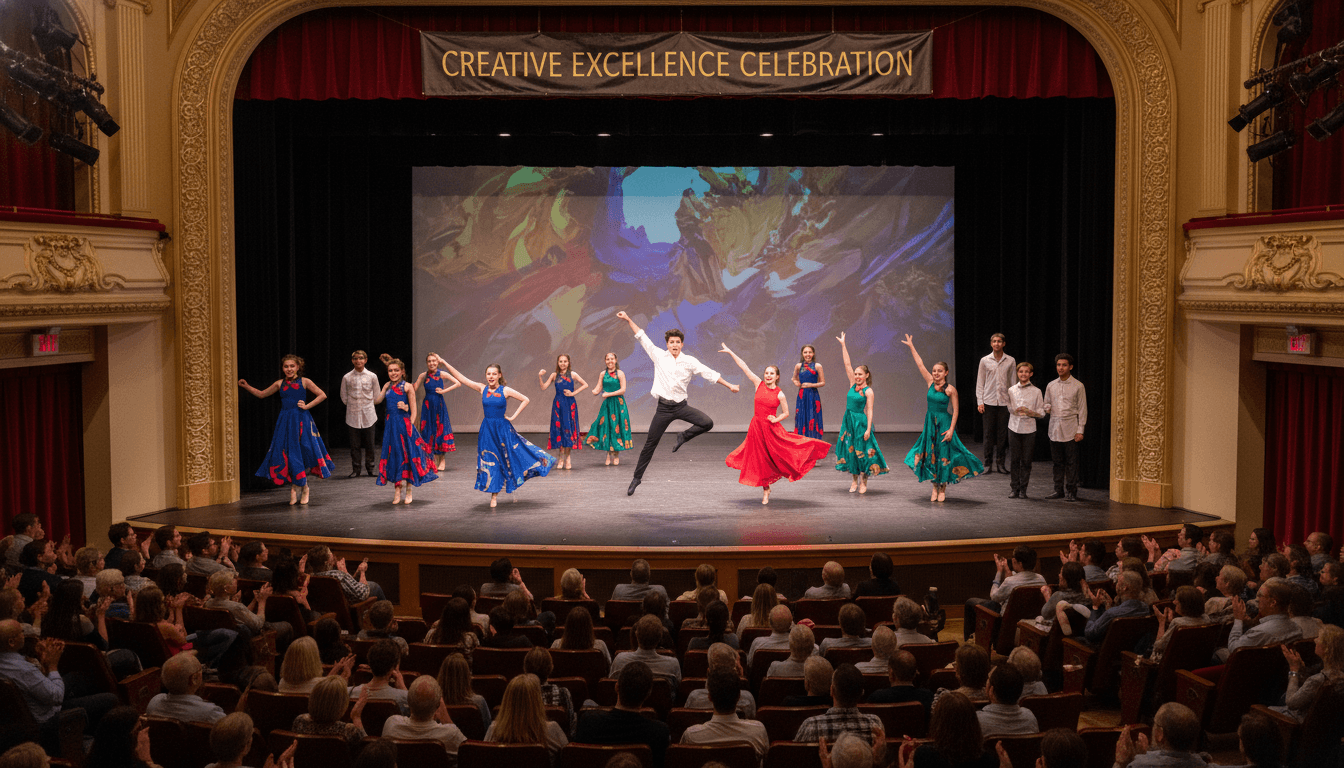
Arts Magnet School Newsletter: Celebrating Creative Excellence
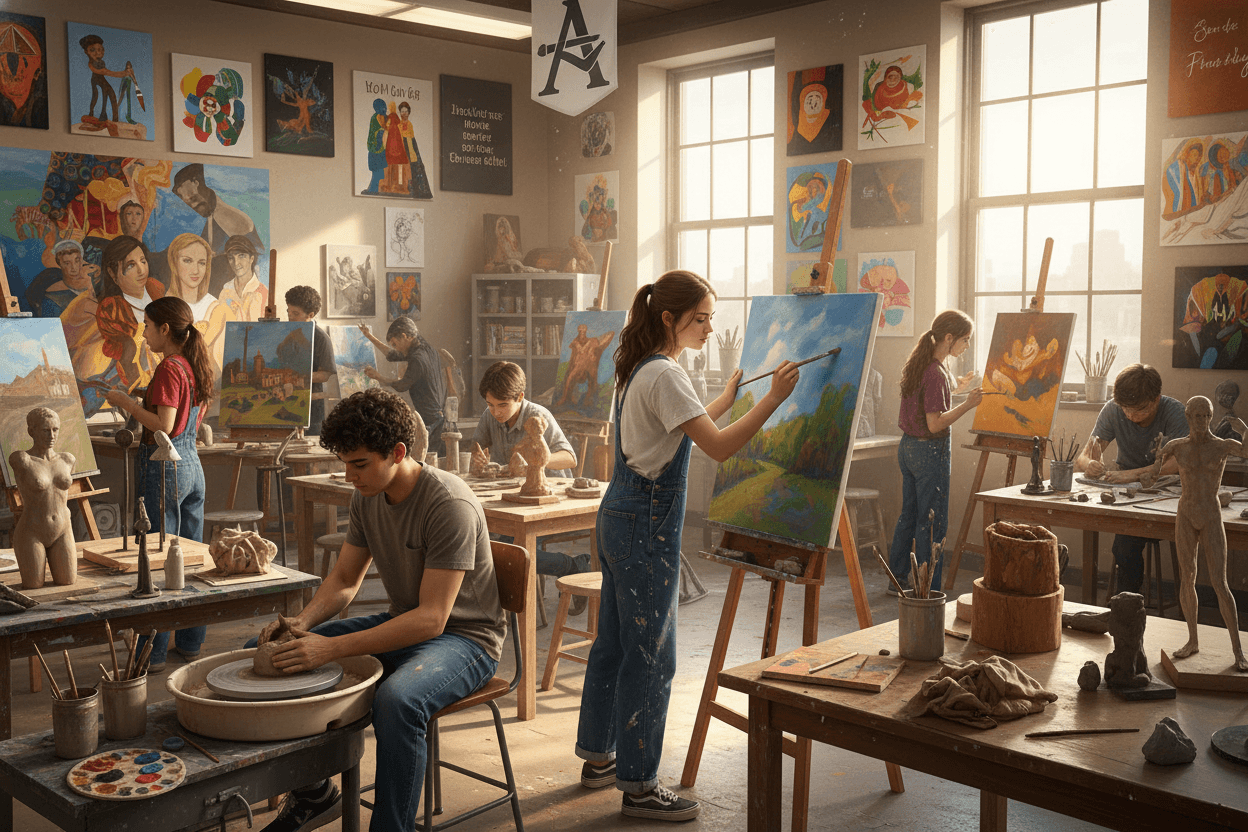
An arts magnet school newsletter carries a responsibility that most other school newsletters do not: it has to demonstrate, through its writing, that the program values quality and craft. Arts families are perceptive audiences. A newsletter that is generic, rushed, or filled with event listings without context sends a message about the program even if the words say something different. A newsletter that is specific, evocative, and genuinely interested in student creative development tells families that the program means what it says about excellence.
This guide covers what to include in an arts magnet school newsletter, how to write about creative work for a general parent audience, and how to structure communication that celebrates student achievement across multiple disciplines.
Open with a student creative milestone that happened this month
Every arts magnet newsletter should open with something specific that a student or group of students accomplished in the current month. Not a scheduled event that is coming up, but something that already happened and deserves recognition. "This month, the advanced theater ensemble performed their original devised piece 'Groundwater' for a panel of professional theater artists from the city. The piece, developed collaboratively over eight weeks from personal stories the students gathered from their families, received a standing ovation and feedback that one visiting director described as 'the most emotionally honest work I have seen from a student ensemble in fifteen years.'" That opening tells a family, in one paragraph, what kind of program their student is in.
Describe student work in progress, not just upcoming events
Newsletter readers in arts programs want to know what is happening in the rehearsal room, the studio, and the practice space, not just when the next performance is. Describe current student work in enough detail that families feel connected to the process. "The sophomore visual arts cohort is currently in the middle of a six-week unit on documentary photography. Students selected a subject from their own neighborhood and are spending the unit capturing a photo essay that tells a specific story. The work so far is unlike anything this cohort has produced before, with a rawness and specificity that reflects what happens when students are given a genuinely open brief." Families who feel connected to the process are more invested in the public outcome.
Cover auditions and honor program results with depth
Arts students audition. Some advance, some do not. The newsletter should cover audition processes and results in a way that honors the courage required to audition while celebrating the students who were selected. "Eight of our students auditioned for the Regional Honor Orchestra this year. Three were selected: violinist Priya Mehta, cellist Thomas Osei, and percussionist Mei-Lin Zhang. This is the most students our program has placed in the honor orchestra in a single year. For the five students who were not selected this cycle, audition season continues through December, and the faculty's recommendation is to request detailed adjudicator feedback and schedule a follow-up coaching session before the next audition opportunity."
Highlight guest artist visits and masterclasses
Arts magnet programs are differentiated in part by the professional artists and arts educators who work directly with students. These visits deserve prominent coverage in the newsletter, including who the guest was, what discipline they work in, and what they worked on with students. "Choreographer and dance educator Rosa Mendez spent two days with the dance department this month, leading masterclasses in contemporary technique for each grade level and providing individual coaching to the senior dance concert soloists. Mendez has been a principal dancer with two major regional companies and currently works as a faculty member at the state university dance conservatory. Students described her class as the most technically demanding session of the year." A named guest, a named credential, and a named student response makes the visit real.
Explain how student work connects to professional practice
Arts parents are often navigating the question of how the arts program prepares their student for a future, whether in the arts or elsewhere. The newsletter can address this without being defensive about it. "The film production course this semester is structured around the same pre-production, production, and post-production workflow that professional film crews use. Students develop budgets, schedule their shoots, direct talent, and deliver a final cut with color grade and sound mix, all within a six-week production window. Whether or not a student pursues film professionally, the project management, collaboration, and deadline skills the process develops are directly applicable to any professional context." Connecting arts education to broader skills is appropriate and accurate, as long as it is done in addition to, not instead of, making the case for the arts on their own terms.
Provide a complete upcoming events section organized by discipline
Arts families have full calendars and specific interests. A consolidated upcoming events section organized by discipline gives each family what they need without requiring them to scan through irrelevant content. "Theater: Spring Musical auditions January 14-16, production dates March 6-8. Visual Arts: Senior gallery opening February 4, 6-8 PM, open to all families. Dance: Spring concert dates April 24-25, tickets available February 1. Music: All-school winter concert December 18, 7 PM, free and open to the public." Clear, organized, discipline-specific. That section gets bookmarked and referenced through the season.
Recognize the arts faculty who drive student development
Arts magnet faculty are often working professionals who chose teaching over higher-paying industry careers. Their expertise is the program's most significant asset, and the newsletter should recognize them by name and credential. "Our new theater director, Mr. James Okafor, joined the program in September after twelve years directing professional theater in the city, including three productions at the Civic Theater. His first semester with the ensemble has already produced some of the most technically ambitious student work the program has seen." Recognition in a public newsletter signals that the program values its faculty and gives families confidence in the quality of instruction.
Use Daystage to match the newsletter quality to the program's standard
An arts magnet program that sends a plain text email to communicate about student creative excellence is sending an inconsistent message about what the program values. Daystage monthly newsletters give arts magnet coordinators a professional, visually considered format that reflects the program's commitment to quality and presentation. When families receive a newsletter that looks and reads like the program takes communication seriously, it reinforces the message that the program takes everything seriously. The newsletter is an artifact of the program's culture, not just a vehicle for information.
Get one newsletter idea every week.
Free. For teachers. No spam.
Frequently asked questions
What should an arts magnet school newsletter include?
Cover upcoming performances, exhibitions, and audition dates with specific details; feature descriptions of current student projects in each discipline; share results from competitions, festivals, and adjudicated events; highlight guest artist visits and professional development opportunities for students; communicate portfolio and audition requirements for continuing students; and include a section on how to attend or view student work for families who want to be present. Arts families want to know what is happening, when it is happening, and what their student is working toward.
How do you write about student performances in a newsletter without just listing event names and dates?
Describe what the student is doing, not just what they are appearing in. 'Sophomore Isabella Tran will perform the lead role in our spring musical, her first leading role after two years in the ensemble. She spent the fall working with the vocal director on breath support and character development. Families can see her in performance February 21-23 in the school theater.' That description tells the story of a student's growth. 'Isabella Tran is in the spring musical' is a calendar entry.
How do you handle audition results in a newsletter when some students advanced and others did not?
Separate the event coverage from individual placement announcements. The newsletter can report on the audition process and who advanced to final callbacks or was accepted to honor programs, but should frame advancement as one data point in an ongoing development story rather than as a ranking of student worth. 'Fourteen of our students auditioned for the state All-Arts Ensemble; four were selected for the honor choir and two for the honor orchestra. All fourteen students described the audition experience as among the most challenging and growth-producing they have had this year.'
How should an arts magnet newsletter communicate to families of students in different disciplines?
Use clearly labeled sections for each discipline: Theater, Visual Arts, Dance, Music, Film, or whatever disciplines the program offers. This lets families skip to the sections most relevant to their student while still seeing the breadth of the program. Each section should have its own upcoming events list, current project description, and any discipline-specific news. A family whose student is in the visual arts track should not have to read through three sections of dance news to find information about the upcoming gallery opening.
How does Daystage support arts magnet program communication?
Daystage gives arts magnet coordinators a professional newsletter format that matches the program's commitment to quality and presentation. When student work is described in a polished, well-structured newsletter rather than a plain text email, the communication reflects the standard the program holds. Families who receive beautiful, consistent newsletters about their students' artistic work feel that the school takes the arts as seriously as the families do.

Adi Ackerman
Author
Adi Ackerman is a former classroom teacher and curriculum writer with 8 years in K-8 schools. She writes about school communication, parent engagement, and what actually works in real classrooms.
More for Magnet & IB
Ready to send your first newsletter?
3 newsletters free. No credit card. First one ready in under 5 minutes.
Get started free