
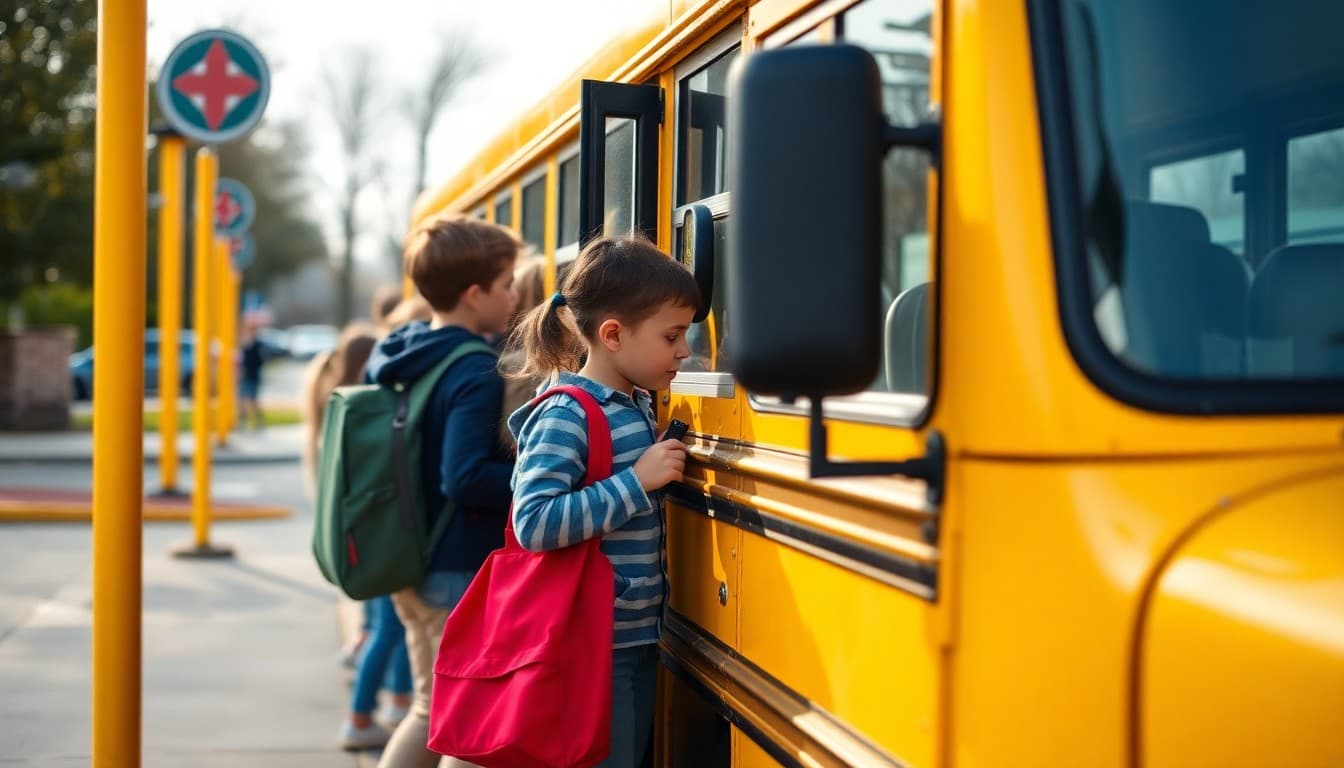
Kindergarten Transition Newsletter: School Bus Safety Tips for Families

For families whose kindergartner will ride the bus for the first time, the bus can be a significant source of pre-school anxiety. A child who has never been on a school bus is navigating a new vehicle, a new adult, new procedures, and a new route, all without a parent. Preparation makes an enormous difference. This newsletter covers what your child needs to know and how to prepare them before the first day.
The information your child must know before riding
There are three pieces of information every kindergartner riding the bus needs to have memorized: their full name, their bus number, and their home address or a phone number for a trusted adult. If your child gets separated, misses a stop, or ends up on the wrong bus, this is the information that gets them home safely.
Practice these specifics in the weeks before school starts. Make it a game. Ask your child to tell you their bus number at random moments. Write it on a card inside their backpack as backup.
Bus stop safety: the highest-risk moment
The time when children are most at risk in the bus system is not on the bus itself but at the bus stop, particularly when crossing the street. Teach your child these specific behaviors: stay back from the curb until the bus has fully stopped and the doors open, never cross in front of the bus until the driver gives the signal, and always look both ways even after the signal.
Practice the bus stop routine before school starts. Walk to the stop. Stand where they will stand. Talk through what to watch for. A child who has rehearsed the behavior makes fewer mistakes under the pressure of excitement and distraction.
On the bus: the basic rules
Kindergartners should know to find a seat and stay in it until the bus arrives at school or home, keep their backpack on their lap or on the floor in front of them, use an indoor voice, and tell the driver if something is wrong. Most buses assign seats for the youngest riders. Find out if yours does.

What to do if things go wrong
Tell your child in advance what the plan is if something unexpected happens: missed stop, wrong bus, no one at the stop. "Stay on the bus and tell the driver." That is the plan. A child who knows the plan is much calmer in a confusing situation than one who has never considered the possibility.
Also make sure the school has your current phone number and knows who is authorized to pick up your child if there is a routing error.
For children who are scared of the bus
Bus anxiety is common in kindergartners and almost always rooted in the unknown rather than in any specific danger. Walk your child past the bus in the parking lot before school starts. If the school offers a bus orientation, attend it. Read books about school bus rides together. Meet the bus driver if possible.
The more concrete and specific your child's picture of the bus experience, the less anxiety they carry into it. Generalized reassurances, "it's fine, you'll be fine," do less work than a specific walkthrough of exactly what the bus looks like, who the driver is, and where they will sit.
Afternoon pickup: have a plan and stick to it
Kindergartners who are met consistently at their bus stop by a familiar adult transition off the bus more easily than those whose afternoon pickup is uncertain. Make the pickup routine the same every day. If someone else is picking up, tell the teacher and tell your child in advance.
Get one newsletter idea every week.
Free. For teachers. No spam.
Frequently asked questions
What does my kindergartner need to know before riding the school bus?
Their full name, their home address, and their bus number. They need to know to stay seated until the bus stops completely, to wait for the driver to signal before crossing the road, and to tell the driver or a school adult if something goes wrong. They should also know where their bus stop is and what the pickup area looks like. Practice these specifics before the school year starts.
What if my kindergartner misses their stop?
Tell your child in advance: if this happens, stay on the bus and tell the driver. The driver will help. This is important information to give before the situation occurs, not after. A five-year-old who knows the plan is far calmer than one who is panicking. Also make sure the school has your current phone number so they can reach you if there is a routing issue.
Is the school bus safe for kindergartners?
School buses are statistically one of the safest forms of transportation for children. The primary risks are at the bus stop and crossing the street, not on the bus itself. Teaching your child to stay back from the curb, wait for the bus to fully stop, and never cross without the driver's signal covers the highest-risk moments.
My kindergartner is scared of the bus. How do I help?
Walk them through what the bus experience looks like in advance. Drive past a bus stop. Look at photos. Talk about who the bus driver is and what their job involves. If the school offers a bus orientation or practice ride before the year starts, take advantage of it. The fear is almost always about the unknown, and specifics are more calming than reassurances.
How does Daystage help teachers send bus safety and logistics information to kindergarten families?
A pre-year newsletter through Daystage can cover bus numbers, stop locations, drop-off procedures, and what to do if something goes wrong, all in one place that families can reference. Getting this information to families before August panic sets in is one of the highest-value newsletters a school can send.

Adi Ackerman
Author
Adi Ackerman is a former classroom teacher and curriculum writer with 8 years in K-8 schools. She writes about school communication, parent engagement, and what actually works in real classrooms.
More for Kindergarten Transition
Kindergarten Transition Newsletter: First Day Tips for Families
Kindergarten Transition · 6 min read
Kindergarten Transition Newsletter: What to Expect in Your Child's Class
Kindergarten Transition · 6 min read
Kindergarten Transition Newsletter: School Supply List and Prep Tips
Kindergarten Transition · 6 min read
Ready to send your first newsletter?
3 newsletters free. No credit card. First one ready in under 5 minutes.
Get started free