
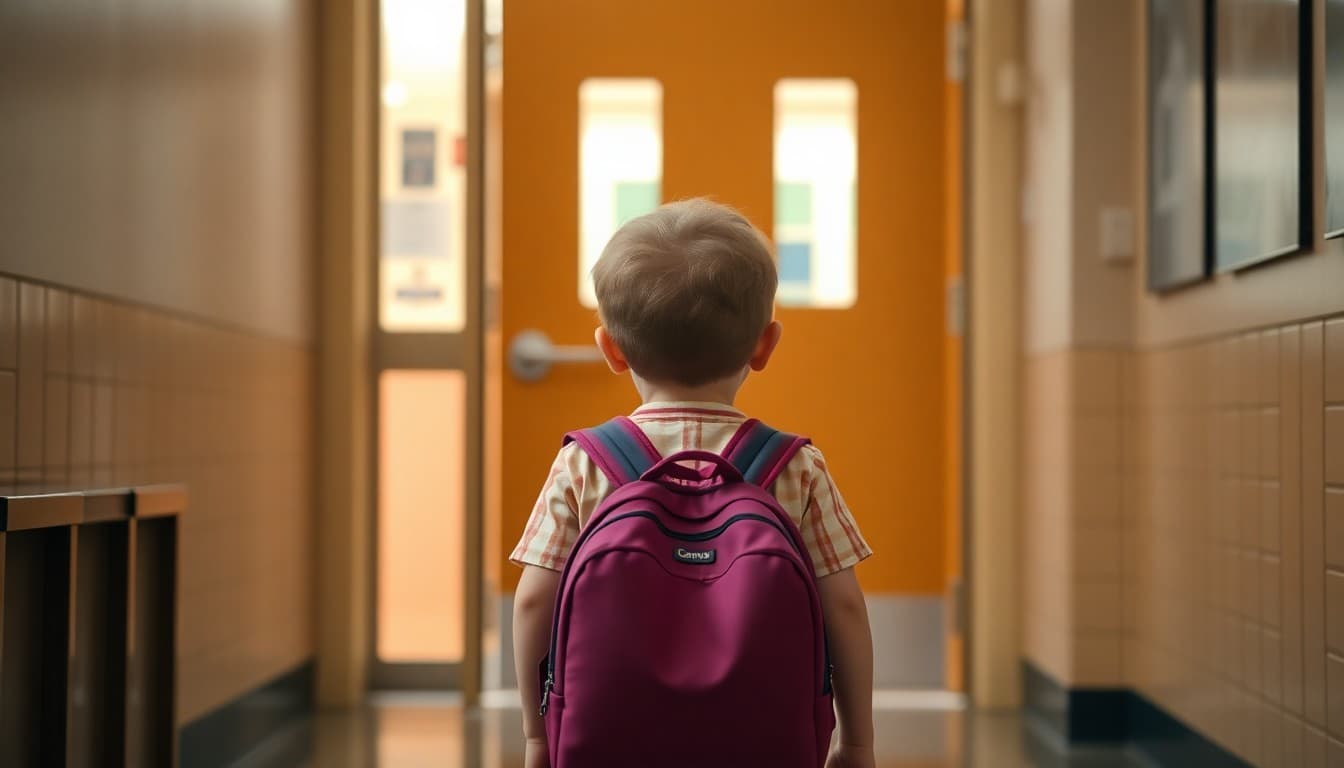
Kindergarten Transition Newsletter: First Day Tips for Families
The first day of kindergarten looms large in family memory for years afterward. For most children, the actual day is more manageable than the anticipation. This newsletter covers the practical moves that make first-day success more likely and the ones to avoid even when they feel instinctively right.
The night before: set up for a calm morning
The morning will be easier if as little as possible needs to be decided or located. Pack the backpack completely before bed. Lay out clothes. Know where the shoes are. If the school requires anything specific, like a label on the lunchbox or a signed form, handle it the night before.
Have a brief, calm conversation about the day. Not a long talk about what kindergarten is like, but a few specific, honest statements. Your teacher's name. Where you will pick them up or where the bus goes. One specific thing you know they will enjoy. Specifics are more comforting than reassurances.
The morning: feed them before everything else
A nervous child may not feel hungry, but getting some food into them before school matters. Keep breakfast simple, fast, and low-stakes. This is not the morning for a new food or a special breakfast that could go wrong. Familiar, easy, and over quickly is the goal.
Build in extra time so the morning does not feel rushed. A rushed drop- off where you are late and stressed is significantly harder for a child than a drop-off where there is a moment to stand at the door, take it in, and say a real goodbye.
At drop-off: confident and quick
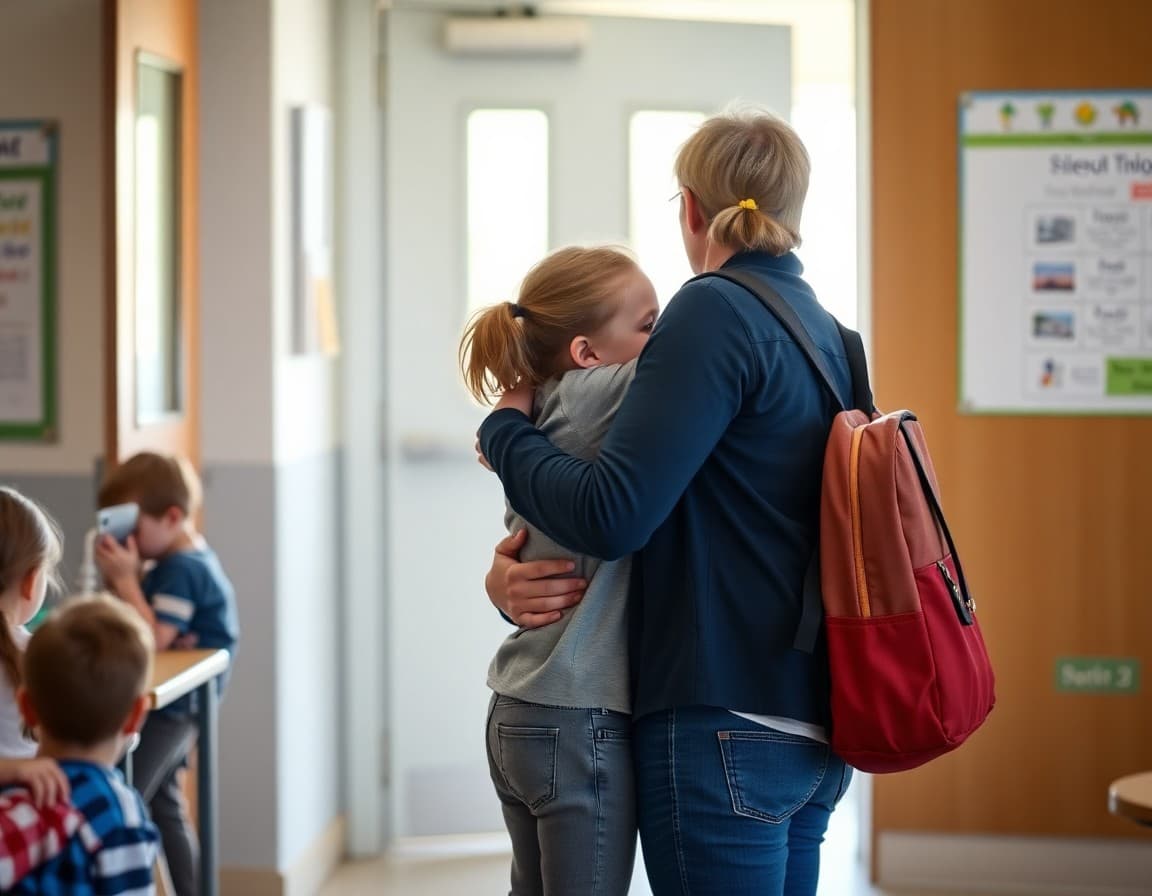
The drop-off protocol matters more than almost anything else on the first day. Walk your child in if the school allows it. Let them see the classroom. If the teacher is available, introduce your child by name and say one specific thing: "This is Marcus. He's been really excited to see the block area." Then say a clear, warm goodbye, tell your child when you will be back or where you will see them next, and leave.
Do not linger at the door. Do not return to check one more time. Every time you come back, you reset the separation and make the next goodbye harder. One real goodbye is always better than five partial ones.

When your child is crying at drop-off
Crying at kindergarten drop-off is so common that most experienced kindergarten teachers see it as a normal first-day marker, not a sign of a problem. Children who cry at drop-off typically settle within five to ten minutes of their caregiver leaving. The prolonged crying most parents imagine usually does not happen.
If you are worried, ask the teacher for a quick text or email after the first hour. Most schools are happy to do this for kindergarten families in the first week. Knowing that your child settled quickly will help you do better at pickup.
At pickup: ask better questions
"How was school?" gets a one-word answer. Instead, try: "What was the funniest part?" or "Did anyone say something surprising?" or "What did you eat for lunch?" Specific questions pull out real responses. Your child processed a lot today. Give them time and a specific opening.
The rest of the first week
The first day is often not the hardest. Day two and three, when the novelty has worn off and the routine is still unfamiliar, are sometimes more challenging. Keep the schedule very consistent, protect sleep, and do not overload the after-school hours in the first week. Your child is doing an enormous amount of cognitive and emotional work. A calm afternoon and an early bedtime do more good than any enrichment activity.
Get one newsletter idea every week.
Free. For teachers. No spam.
Frequently asked questions
What is the most important thing to do on kindergarten drop-off morning?
Say a clear, confident goodbye and leave. Lingering at the classroom door because your child is crying is one of the hardest things to do and one of the most important. Children take their emotional cue from their caregivers. A parent who looks worried, stays too long, or keeps returning to check is communicating that this situation is dangerous. A warm hug, a specific pickup time, and a confident exit tells your child the opposite.
What should I say to my child the night before the first day?
Be honest and specific rather than generically reassuring. "Your teacher is Ms. Chen. She has a reading corner with really good books. You are going to meet kids in your class and one of them might become your friend." Specifics calm anxiety better than broad reassurances like "you are going to love it." Love it is a big promise. A reading corner with good books is something concrete to look forward to.
What if I feel emotional at drop-off?
Your feelings are completely valid, but try to stay regulated in front of your child. A parent who is visibly crying at drop-off creates a context where the child feels they are doing something sad or dangerous by going to school. Process your own emotions in the car on the way home. This is one of the few places where parenting requires emotional containment that can be released later.
My child refuses to get out of the car at drop-off. What do I do?
Ask a staff member or teacher's aide to help. Schools with strong transition protocols will come to the car, greet your child by name, and walk them in. You do not have to handle this alone in the car. If car refusal is a pattern beyond the first week, discuss it with the teacher and consider whether there is a specific fear or concern driving it.
How does Daystage help teachers prepare families for the first day of kindergarten?
A first-day prep newsletter sent through Daystage the week before school can cover drop-off procedures, what happens when a child is upset, what the day looks like, and what to tell your child the night before. Families who are prepared for the first day have a significantly easier time than those who show up not knowing what to expect. That newsletter is one of the highest-impact things a kindergarten teacher can send.

Adi Ackerman
Author
Adi Ackerman is a former classroom teacher and curriculum writer with 8 years in K-8 schools. She writes about school communication, parent engagement, and what actually works in real classrooms.
More for Kindergarten Transition
Kindergarten Transition Newsletter: Is My Child Ready? A Real Guide
Kindergarten Transition · 6 min read
Kindergarten Transition Newsletter: Helping Your Child With Separation
Kindergarten Transition · 6 min read
Kindergarten Back to School Newsletter: The First One You Send
Kindergarten Transition · 7 min read
Ready to send your first newsletter?
3 newsletters free. No credit card. First one ready in under 5 minutes.
Get started free