
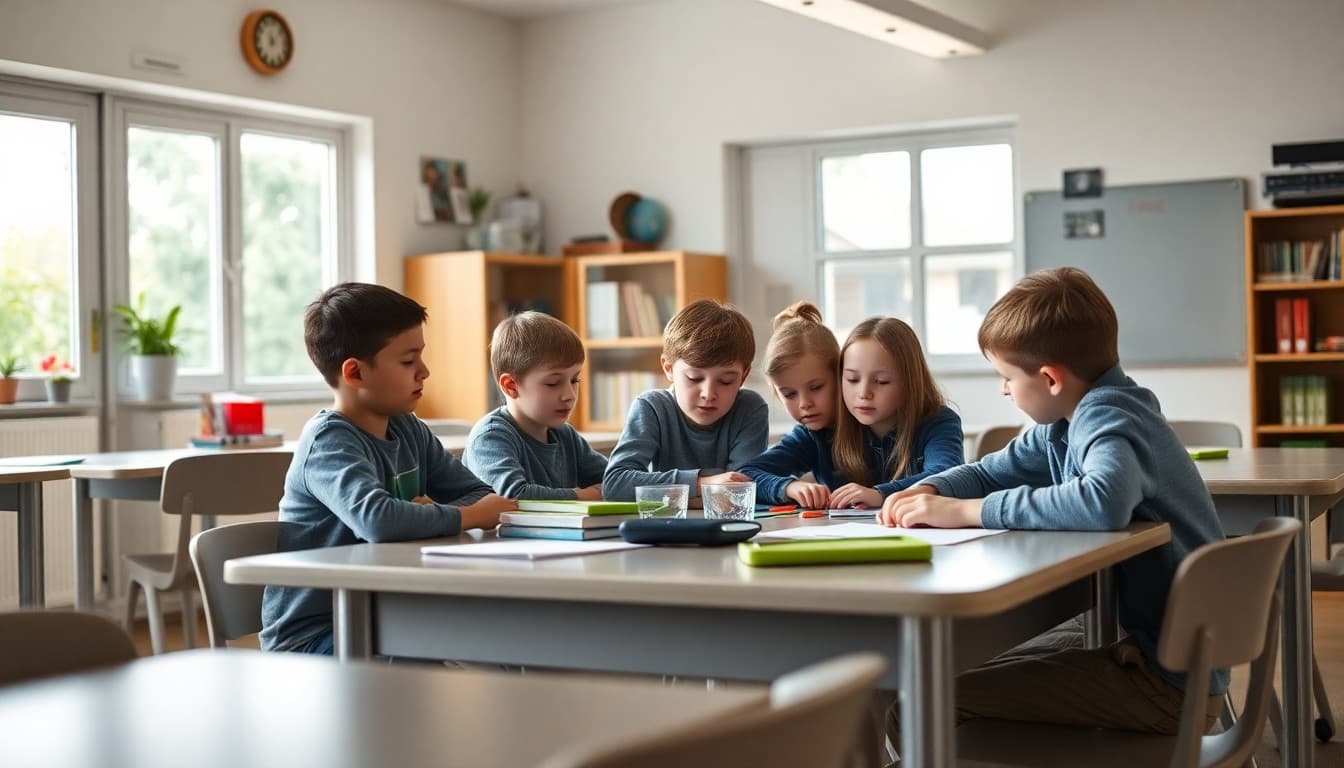
Microschool Newsletter: Updates from Our Small Learning Community
Microschools are one of the fastest-growing forms of alternative education. Small, intentional, often operating in homes or community spaces, they offer a learning environment that cannot exist in a large institution. The newsletter is how microschool families stay connected to the learning happening inside that environment and how guides maintain the trust that makes small schools sustainable.
What families need from a microschool newsletter
Families who chose a microschool over conventional school or pure homeschooling are typically interested in two things: understanding the educational philosophy in practice and seeing evidence that genuine learning is happening. The newsletter is how you demonstrate both.
Generic update newsletters do not satisfy this audience. Parents who invested in a different kind of education want to understand what makes it different. The newsletter is where you show the depth of the inquiry, the quality of the community, and the actual learning that results from the microschool's approach.
Documenting project-based learning
Project-based learning is common in microschools, and it is harder to document than subject-by-subject instruction. The newsletter is where you show what the project is producing: the questions students are wrestling with, the discoveries they have made, the dead ends they have pursued and abandoned, and the work they are most excited about.
A good project documentation entry looks like this: "Our bridges project entered its testing phase this week. Students built three different bridge designs using the same materials budget and tested load capacity. The suspension bridge held the most weight but was also the most difficult to build. Three students decided to rebuild their designs after testing, which led to a longer conversation about engineering iteration than we had planned. We did not finish the scheduled read-aloud because of it, and it was absolutely worth it."
That entry shows the project, the learning, the student agency, and the guide's responsiveness. It is honest about the trade-off (the skipped read-aloud) and confident about the decision. This is the kind of writing that builds parent trust.
Multi-age community documentation
One of the most distinctive features of a microschool is its multi-age community. Documenting the interactions between older and younger students, the peer teaching that happens naturally in mixed-age groups, and the community culture that develops over time shows parents what they cannot observe directly.
Include a brief student spotlight or community moment in each newsletter. A six-year-old explaining something to a four-year-old in their own words. An older student choosing to help a younger one through a difficult problem. A student leading a group discussion about something they have been researching independently. These moments are the evidence of what makes microschool education distinctive.
Explaining pedagogical choices
Parents who chose a microschool are typically interested in educational philosophy. The newsletter is a natural place to explain why you are making specific choices. Not defensively, but with genuine transparency about the thinking behind the instruction.
"We are spending more time on oral narration and less on written output this month, because three students are at a point in their writing development where more production is creating anxiety rather than growth. We want writing to feel like expression, not performance" is the kind of explanation that builds parent confidence rather than anxiety.
Building the microschool community through the newsletter
The newsletter extends the microschool community beyond the school day. Families who read the newsletter regularly feel connected to what is happening even on the days their students are not there. They can ask their children specific questions, extend the learning at home, and feel like participants in the education rather than recipients of a service.
Daystage makes the sending process simple and professional so the guide can focus on the writing rather than the logistics. A microschool that sends a consistently excellent newsletter builds the kind of parent trust that fills enrollment through word of mouth.
Get one newsletter idea every week.
Free. For teachers. No spam.
Frequently asked questions
What is a microschool and how does its newsletter differ from a homeschool newsletter?
A microschool is a small, intentionally designed learning community typically serving six to fifteen students in a single multi-age classroom or learning space. Unlike a homeschool newsletter that documents one family's education, a microschool newsletter documents a shared learning community and serves as the primary communication channel between the guide or teacher and all enrolled families.
What should a microschool newsletter include?
A microschool newsletter should cover the current project or unit of study with specific examples of student work and discoveries, upcoming events or field trips, any schedule changes, individual student spotlights if appropriate, and the reasoning behind current pedagogical choices. Parents who chose a microschool want to understand the educational philosophy, not just get a schedule.
How often should a microschool send a newsletter?
Weekly is ideal for microschools because the learning environment is dynamic and parents need current information to follow up at home. A consistent weekly newsletter sent on the same day each week builds the routine that makes families feel connected to the school.
How does a microschool newsletter document project-based learning?
Project documentation in a microschool newsletter should describe what students are investigating, what questions have emerged, what methods they are using to find answers, and what they have discovered so far. This documentation shows parents the depth of inquiry happening in the classroom and helps them extend the learning at home.
How does Daystage help microschools send newsletters?
Daystage provides microschool guides and directors with a professional newsletter platform that handles subscriber management and formatting. A microschool that sends a consistent, well-written Daystage newsletter builds the parent trust that sustains enrollment and word-of-mouth growth.

Adi Ackerman
Author
Adi Ackerman is a former classroom teacher and curriculum writer with 8 years in K-8 schools. She writes about school communication, parent engagement, and what actually works in real classrooms.
More for Homeschool
Ready to send your first newsletter?
3 newsletters free. No credit card. First one ready in under 5 minutes.
Get started free