

Homeschool Co-Op Newsletter: Activities, Field Trips, and Announcements
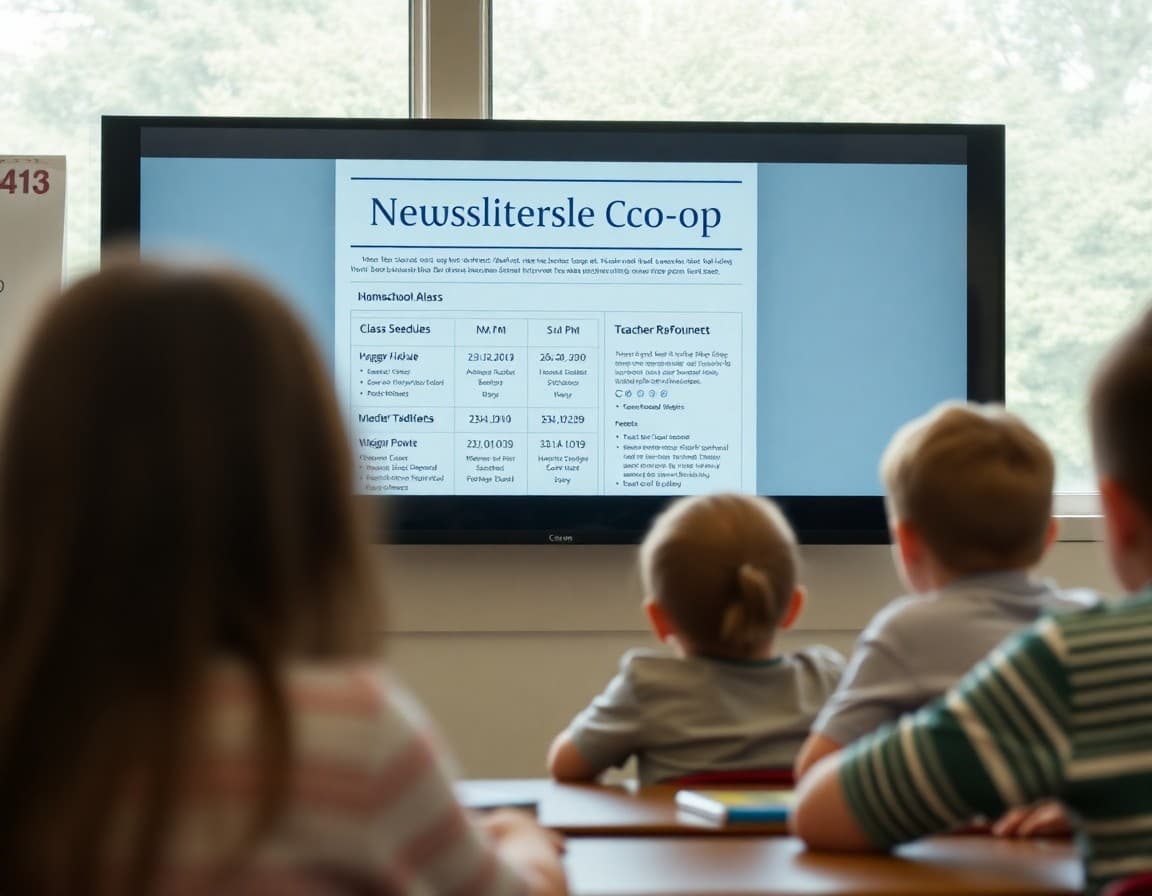
A homeschool co-op is only as good as its communication. Families who feel informed and connected to what is happening in the co-op show up prepared, contribute more, and stay longer. The newsletter is the communication tool that makes all of that possible. Done well, it becomes the document that holds a co-op community together across a school year.
Why co-op newsletters fail
Most co-op newsletter failures come from two sources: they try to cover too much, or they go out irregularly. A newsletter that arrives on Tuesday with this week's schedule is useful. A newsletter that arrives Thursday evening covering material from last week is not. Consistency and timeliness matter more than length.
The second failure mode is asking teachers to contribute long updates. Teachers are already giving significant time to the co-op. A newsletter system that asks them for three sentences rather than three paragraphs gets better results and generates better content.
A format that works for most co-ops
A co-op newsletter that gets read every week has four to five consistent sections. An opening note from the coordinator that covers anything time-sensitive or important for the full group. A class update section with one entry per class. An upcoming events section covering the next one to two weeks. A reminders section for materials, permission slips, or scheduling notes. And optionally, a student spotlight or community recognition.
Families learn where to find each piece of information. The predictable structure means they scan rather than read when they are in a hurry, and they read carefully when the content warrants it.
Collecting class updates efficiently
The class update section requires contributions from teachers. Set up a simple system: send a reminder message to all teachers on the same day each week asking for three to five sentences about what their class covered and one observation worth sharing. Most teachers can write this in five minutes. Those who do not respond get a placeholder: "Chemistry with [teacher name] continues this week. Check with the teacher directly for this session's specific materials."
Over time, teachers who see their contributions published and appreciated become more reliable contributors. The newsletter builds the accountability and recognition that makes the system self-sustaining.
Field trip announcements that get families to actually sign up
Field trip announcements in co-op newsletters fail when they bury the logistics in prose. Put the essential information at the top: date, location, cost, deadline to sign up, and the link or process for signing up. Follow with two to three sentences about why this trip connects to the curriculum. Then include any logistics families need to know.
An example opening for a field trip announcement: "Science Center of New England , Saturday, March 14. Cost $12/student, adults free. Sign up deadline: March 7. Reply to this email to reserve spots." That is all the information needed. Everything else is optional context.
Welcome notes for new families
When a new family joins the co-op, a brief welcome section in the newsletter introduces them to the community. Include the family name, how many children they are bringing, which grades or classes they will participate in, and one sentence about their background. This low-key introduction reduces the awkward first-day introduction dynamic and helps existing families make connections before they meet in person.
Building a consistent sending schedule
The newsletter goes out on the same day at the same time every week. Saturday evening for families who co-op on Mondays. Thursday for families who co-op on Fridays. Whatever day gives families enough lead time to prepare. Once the schedule is established, protect it. A newsletter that sometimes arrives Sunday and sometimes Wednesday trains families to ignore it.
Daystage makes the sending process fast enough that even a busy co-op coordinator can maintain a consistent schedule. Build the template once, update it weekly, and send. The community feels the difference between a co-op that communicates consistently and one that sends occasional blasts.
Using the newsletter to document co-op learning
The class update section, accumulated across a school year, becomes a significant documentation resource for families. Parents who need to document their students' education for portfolio reviews, state assessments, or college applications can reference the newsletter archive to show what instruction they received in co-op classes.
Keep an archive of every newsletter sent. This archive is the co-op's institutional memory and an educational record for every family that participated.
Get one newsletter idea every week.
Free. For teachers. No spam.
Frequently asked questions
What should a homeschool co-op newsletter include?
A co-op newsletter should cover upcoming class schedules, field trip announcements, reminders about materials students need to bring, notes from recent classes or events, and information about new families joining or other community updates. The newsletter serves as the operational communication hub for the group.
How often should a homeschool co-op send a newsletter?
Most homeschool co-ops benefit from a weekly or biweekly newsletter during active periods. The newsletter should arrive in time for families to prepare for upcoming co-op days. A consistent sending schedule helps families build the newsletter check into their routine.
Who should write the co-op newsletter?
Co-op newsletters are typically written by a designated coordinator or administrator, but contributions from teachers and even students can make the newsletter more engaging. A rotating contributor system where each teacher sends a brief update from their class each week gives families a richer picture of what is happening in the co-op.
How do you document learning in a co-op newsletter without being burdensome for teachers?
Ask each teacher for three to five sentences about what their class covered this week and one notable student moment or observation. This is a ten-minute task that produces content worth reading. The newsletter editor assembles these contributions rather than expecting teachers to write full reports.
How does Daystage help homeschool co-ops send newsletters?
Daystage is designed for exactly this kind of regular community communication. Co-op coordinators can build a consistent template, collect contributions from teachers, and send to the full family list in one efficient workflow. The platform handles formatting so the newsletter looks professional without requiring design work.

Adi Ackerman
Author
Adi Ackerman is a former classroom teacher and curriculum writer with 8 years in K-8 schools. She writes about school communication, parent engagement, and what actually works in real classrooms.
More for Homeschool
Ready to send your first newsletter?
3 newsletters free. No credit card. First one ready in under 5 minutes.
Get started free