

Hybrid School Newsletter: Connecting Home and Campus Learning Communities
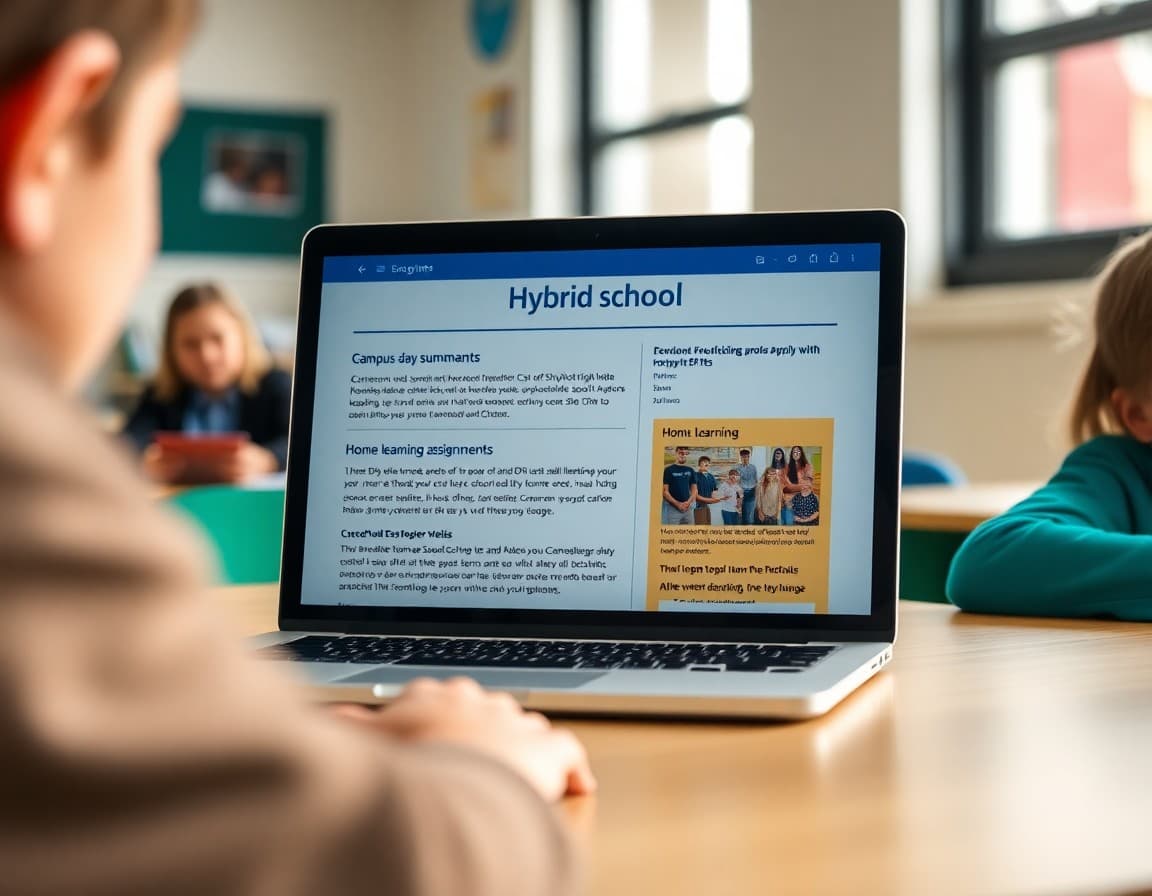
Hybrid schools occupy a growing space between traditional homeschooling and conventional schooling. Students spend two to three days on campus with teachers and peers and the remaining days learning at home under parental direction. The newsletter is the essential bridge between these two environments. Without it, families on home days have no reliable picture of what happened on campus, and the two halves of the education fail to reinforce each other.
The coordination problem hybrid newsletters solve
The fundamental challenge of hybrid education is continuity. Campus teachers teach some subjects. Parents teach others. A student who covers fractions on campus needs to practice fractions at home in a way that reinforces rather than contradicts what the campus teacher introduced. A student who starts a writing project at home needs to know how it connects to what they are working on in campus writing class.
The newsletter is where this coordination happens. Campus teachers describe what they covered and what home learning connects to their instruction. Parents read the newsletter and understand what to reinforce, what to extend, and what to set aside while campus work progresses.
The campus day summary
The campus day summary is the newsletter's most time-sensitive section. It should cover each class taught on the campus days with enough detail that parents can have a meaningful conversation with their student about what happened. Not "we covered chapter 4 in science" but "in science we observed capillary action using carnations in colored water. Students should bring their observation notes home and record what changes they see over the next two days."
The difference between these two entries is whether the parent can follow up intelligently at home. The second entry gives parents exactly what they need to continue the learning.
Home learning guidance that actually connects
Home learning guidance in a hybrid newsletter should explicitly link to what was taught on campus. "Practice two-digit multiplication" is generic. "Practice two-digit multiplication using the partial products method we introduced Thursday on campus. Avoid the standard algorithm for now; we are building place value understanding first" is specific and connected.
Parents who understand the pedagogical intent behind home assignments are far more effective at supporting them than parents who are simply told what to do without understanding why.
Upcoming schedule information and logistics
Hybrid school schedules are often more complex than either pure homeschool or conventional school schedules. Campus days may shift, special events may replace regular classes, and material requirements change week to week. The newsletter is where families get the reliable, current information they need to prepare.
Include a clear list of what students need to bring to campus next week. Materials lists that arrive by email the evening before cause unnecessary stress. A materials section in the newsletter sent three to four days before campus days gives families preparation time.
Community section for a hybrid school community
Hybrid schools often develop genuine community among families who share campus days but may not know each other well. A community section in the newsletter featuring upcoming events, family spotlights, and community building opportunities strengthens the relationships that make hybrid education sustainable over time.
Building the newsletter habit with Daystage
Hybrid school newsletter coordination works best with a consistent platform that makes collecting teacher contributions and sending professionally formatted newsletters a repeatable weekly process. Daystage provides this infrastructure so the program coordinator can focus on content quality rather than technical logistics. The newsletter goes out on time, every week, looking professional and containing everything families need to support their students at home.
Get one newsletter idea every week.
Free. For teachers. No spam.
Frequently asked questions
What is a hybrid school and how does its newsletter differ from a regular homeschool newsletter?
A hybrid school or hybrid homeschool program provides instruction on campus two to three days per week and at home the remaining days. The newsletter must bridge both environments: reporting what happened on campus days, providing guidance for home days, and keeping parents who may not be on campus informed about what their students are doing in both settings.
How often should a hybrid school send newsletters?
Weekly is the standard for hybrid programs. The newsletter typically arrives on the evening before the first campus day of the week or after the last campus day of the previous week. The timing helps families prepare for what is coming on campus or reinforces what happened the previous week.
What should a hybrid school newsletter include?
A hybrid school newsletter should cover what was covered on campus days with enough detail for parents to follow up at home, what home learning assignments connect to the campus work, upcoming campus day schedules and any schedule changes, materials families need to prepare, and community updates about events and co-op activities.
How do hybrid school teachers contribute to the newsletter?
Each campus teacher provides a brief summary of what was covered in their class and what home learning connects to that work. This handoff between campus instruction and home instruction is the core function of the hybrid school newsletter and requires teacher participation to be useful.
How does Daystage help hybrid school programs send newsletters?
Daystage provides the platform for hybrid programs to collect teacher contributions and send a professionally formatted weekly newsletter to all enrolled families. The platform handles subscriber list management and formatting so the program coordinator can focus on content rather than logistics.

Adi Ackerman
Author
Adi Ackerman is a former classroom teacher and curriculum writer with 8 years in K-8 schools. She writes about school communication, parent engagement, and what actually works in real classrooms.
More for Homeschool
Ready to send your first newsletter?
3 newsletters free. No credit card. First one ready in under 5 minutes.
Get started free