

12th Grade Science Unit Newsletter: Connecting Senior Year Labs and AP Content to What Families Need to Know
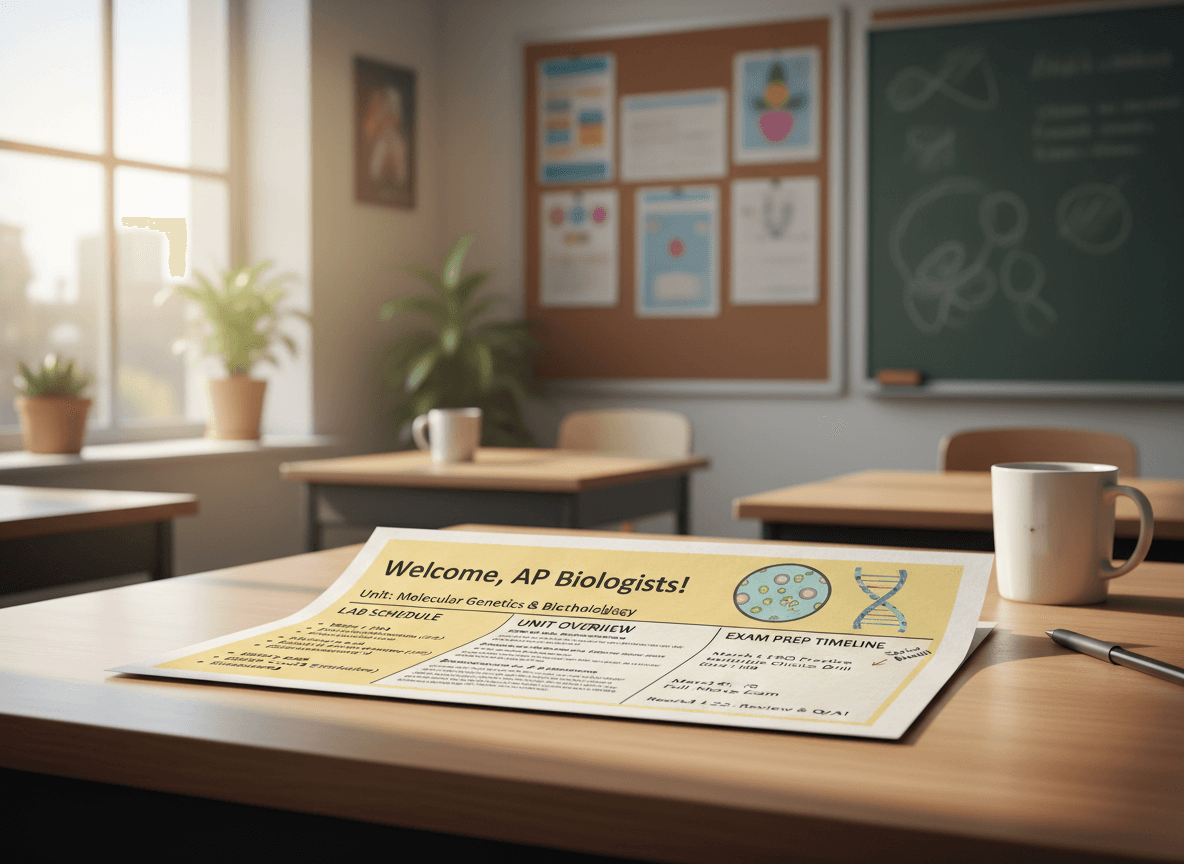
Science communication in 12th grade sits at a unique intersection. Many seniors are in AP Biology, AP Chemistry, AP Physics, AP Environmental Science, or AP Computer Science, taking their most rigorous science courses while also managing a college application process that often depends on how their science performance reads to admissions officers. A science unit newsletter that helps families understand the content and the stakes of that combination is genuinely useful.
This guide covers how to write a 12th grade science unit newsletter that translates curriculum content into family-facing communication, covers lab and assessment logistics, and connects the unit to the AP exam preparation that will pay off in May.
Why Science Communication Matters More in Senior Year
Families of students in science pathways toward college have specific questions that appear in senior year and not earlier. Is the AP exam score worth submitting to a specific college? Does the student need additional lab experience beyond what the class provides? Is a science-related extracurricular or research experience worth pursuing before applications go out?
These are questions that a teacher's newsletter cannot fully answer, but it can lay the groundwork. A family that understands what their student is studying and what the AP exam covers is better positioned to have productive conversations with the school counselor and make informed decisions about the student's post-secondary path.
How to Describe a Science Unit for Non-Scientists
Most parents of 12th graders are not scientists. They may have taken high school biology or chemistry decades ago and remember little of it. Writing a science unit newsletter that is accurate but also accessible requires a deliberate translation effort.
Start with the big question the unit is trying to answer. Rather than "This unit covers enzymatic kinetics and metabolic pathways," try "This unit is about how cells convert food into energy and what happens when that process breaks down." The second version is scientifically simplified, but it gives a non-scientist family something to hook onto. From there, you can layer in the specific vocabulary and AP content without losing them.
Lab Work: What Families Need to Know Before the Week Starts
Laboratory work is the part of science education that most directly requires advance family communication. If students need to wear closed-toe shoes on lab days, that is information a family needs the week before, not the morning of. If a lab involves materials with any odor, staining potential, or that will affect clothing, say so.
For AP labs, there is an additional layer of context worth providing. AP labs are designed to align with the scientific practices the AP exam assesses. Students are not just following a procedure; they are practicing the reasoning and data interpretation skills that appear on free-response questions. Explaining this briefly helps families understand that lab work is not just hands-on fun, it is exam preparation.
AP Exam Alignment: Keep It Simple and Specific
Every unit in an AP science course connects to the AP exam. The unit newsletter is an opportunity to make that connection explicit without overwhelming families with College Board curriculum framework language.
A useful format is: name the unit, name the AP Big Idea or content area it falls under, mention the exam date, and note one or two specific skills the unit develops that appear on the free-response section. For families whose students are applying to science, medicine, or engineering programs, this context matters. It tells them that senior year science is not just transcript filler; it is direct preparation for college-level work.
Connecting Senior Science to Post-Secondary Plans
The most resonant unit newsletters in senior science go one step further and connect the content to what students might encounter after graduation. A genetics unit in AP Biology connects to pre-med coursework, pharmaceutical research, and environmental science careers. A thermodynamics unit in AP Physics connects to engineering, materials science, and energy industries. An electrochemistry unit in AP Chemistry connects to battery technology, environmental monitoring, and materials engineering.
These connections do not require a career counseling degree to make. A brief paragraph noting the real-world applications of what students are learning in a given unit gives families a hook for conversations with their student about what they are actually studying, which often leads to more genuine engagement than asking "what did you learn in school today."
Assessment Calendar and Grade Weight
Every science unit newsletter should include the assessment schedule for the unit. What major tests or quizzes are planned, when they will occur, and what they are worth in the course grade gives families the information they need to help students plan study time.
For seniors managing college application essay revisions, FAFSA paperwork, and a full course load simultaneously, a heads-up that a major exam is coming in three weeks is more useful than a surprise announced in class. Families cannot help students manage time they do not know is committed.
AP Exam Season and the Science Newsletter
As AP exam season approaches in the spring, the science unit newsletter should shift toward explicit exam preparation guidance. This means covering the exam format, the scoring breakdown, what the free-response expectations are, and how to access College Board review materials.
Students who arrive at AP exam week with families who understand the format and the stakes tend to be better prepared. Not because families can help with science content, but because families who understand the significance of the exam create the conditions at home for focused study during the weeks when it matters most. Your newsletter is how that understanding gets built.
Get one newsletter idea every week.
Free. For teachers. No spam.
Frequently asked questions
What should a 12th grade science unit newsletter cover that families actually want to know?
Senior science families most want to know how the unit connects to AP exam content, what lab work is involved and whether there are safety requirements, what major assignments or assessments are coming, and how performance in the unit affects the overall course grade. For students applying to science-related fields in college, families may also want to understand how the content connects to what their student will encounter in college coursework.
How should a science teacher explain AP exam alignment in a unit newsletter?
Without going into dense curriculum language. Most parents do not need a College Board learning objective reference number. They need to understand that this unit covers content that appears on the AP exam, that the work done in class is the best preparation for that exam, and that the exam score in May can earn college credit. A one or two sentence explanation of the unit's exam relevance is sufficient, with a note about the exam date and any review resources available.
How should lab safety or supply requirements be communicated in a science unit newsletter?
Clearly and in advance. If students need safety goggles, specific shoes, or clothing that can get dirty, families need to know before the lab week, not the morning of. If any lab involves materials that students need to bring from home, that should appear as a clearly highlighted list in the newsletter, separate from the descriptive text so it is not missed. Last-minute lab supply surprises cause real friction with families.
How often should a 12th grade science teacher send unit newsletters?
Once per unit is the standard, with units typically lasting three to five weeks. If a unit has a major lab component or a project with significant family implications, a brief mid-unit update can be useful. The start of AP exam preparation season, usually February or March, is a good time for a dedicated exam-prep newsletter regardless of where the class is in the unit sequence.
What newsletter tool works best for 12th grade science unit communication?
Daystage makes it easy to structure a science unit newsletter with clear sections for unit overview, upcoming labs, assessment schedule, and AP exam context. Teachers can include links to College Board AP Classroom resources or specific review videos, and send the newsletter directly to family inboxes at the start of each unit. Regular unit communication builds the kind of parent familiarity with the course that makes the rest of the year's communication easier.

Adi Ackerman
Author
Adi Ackerman is a former classroom teacher and curriculum writer with 8 years in K-8 schools. She writes about school communication, parent engagement, and what actually works in real classrooms.
More for High School
12th Grade Curriculum Overview Newsletter: Helping Senior Families Understand the Final Year Coursework
High School · 6 min read
12th Grade Testing Newsletter: Communicating AP Exams, SAT Retakes, and Senior Assessment Schedules to Families
High School · 6 min read
12th Grade Field Trip Newsletter: Planning Senior Year Trips That Families Will Actually Support
High School · 5 min read
Ready to send your first newsletter?
3 newsletters free. No credit card. First one ready in under 5 minutes.
Get started free