

12th Grade Testing Newsletter: Communicating AP Exams, SAT Retakes, and Senior Assessment Schedules to Families
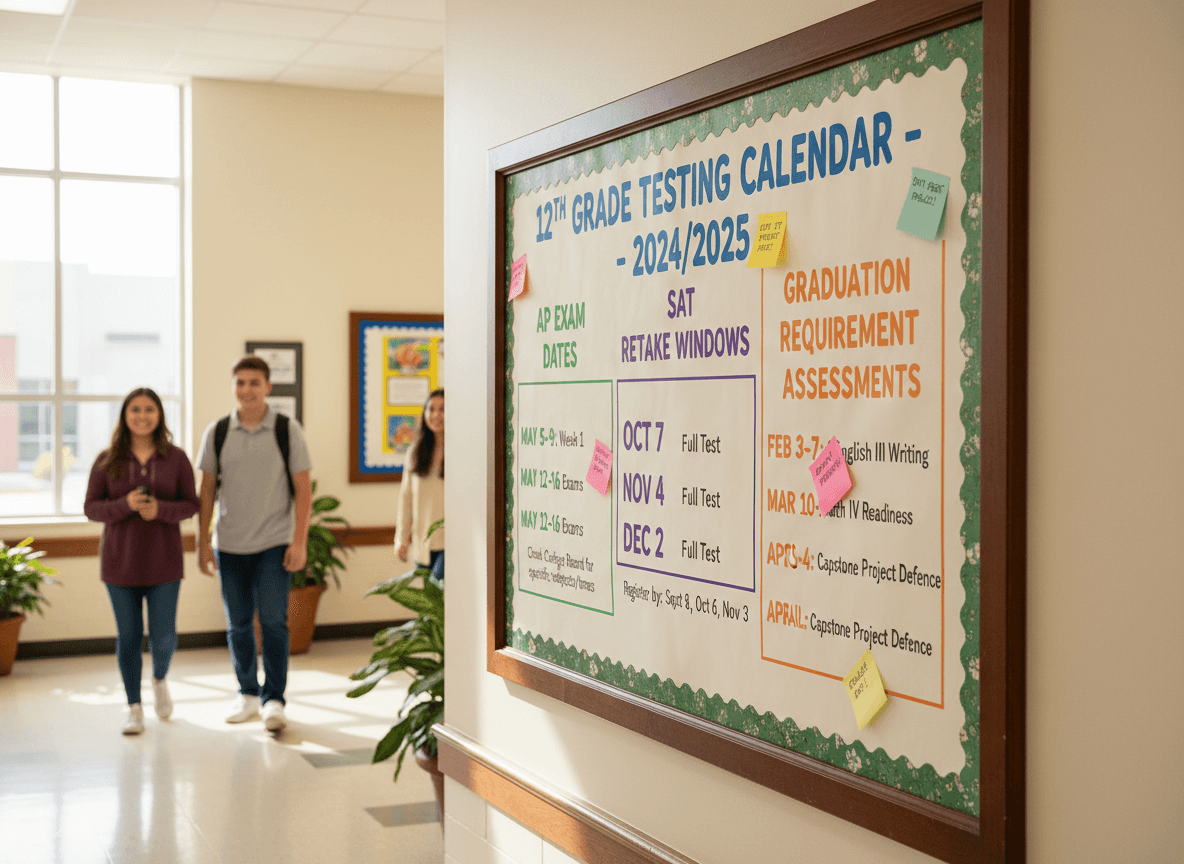
Testing in senior year is not just about AP exams in May. It spans the entire academic year across multiple overlapping systems: fall SAT and ACT retakes, AP registration deadlines in October and November, state graduation assessments in some districts, AP exam week in early May, and score reporting in July. Families who are not proactively informed about this calendar will miss deadlines and make decisions based on incomplete information.
A 12th grade testing newsletter, sent at the right moments throughout the year, keeps families oriented and students on track. This guide covers what to include, when to send it, and how to address the specific testing concerns that come up in senior year.
The September Testing Communication
The first testing newsletter of senior year needs to land in September, when families are paying attention and when the fall testing windows are still open. The key information at this stage includes: whether any students are planning to retake the SAT or ACT in the fall and what the registration timeline looks like, when AP exam registration opens and what the process and costs involve, any school-level or state graduation assessment requirements that apply to seniors, and any PSAT administration planned at the school in October.
AP exam registration is a consistent source of confusion for families. The exams happen in May, but registration typically opens in October and has a deadline in November. Many parents assume they register in the spring, closer to the exam. The consequence of missing the fall registration window is typically a late testing fee or, in some cases, an inability to test at the school site. One clear sentence in your September newsletter prevents this.
SAT and ACT Retakes in Senior Fall
Some seniors use the fall semester to make one more run at a standardized test score. For students applying early decision or early action, the October SAT or October ACT is often the last score that can be submitted with an application. For regular decision applicants, November and December tests can still factor into decisions.
Your testing newsletter should explain the registration process, the specific test dates, and some guidance on when retaking makes sense. A student at the 75th percentile range of their target schools probably does not need to retake. A student significantly below their target range might benefit. A student who has taken the test four times and seen minimal movement is unlikely to see a fifth attempt change the outcome. Families appreciate a teacher or counselor communicating this plainly rather than just listing options.
FAFSA and Testing Overlap
One of the more stressful aspects of senior fall is that major financial aid and testing deadlines cluster in the same two-month window. FAFSA opens October 1 and many state aid programs have deadlines in late October or November. AP registration has its own fall window. College application early deadlines hit in November. These are not separate events on a tidy calendar; they are simultaneous demands on students and families.
Acknowledging this overlap in your testing newsletter does something useful. It validates that families are managing a genuinely complicated set of demands, and it helps parents prioritize. For most families, FAFSA and college applications take precedence over an SAT retake. For students with a specific scholarship threshold to hit, the math might go the other way. Giving families a framework to think about competing priorities is more helpful than just listing deadlines.
Preparing Families for AP Exam Season
The late February or early March newsletter is the right moment to shift toward AP exam preparation. Students are typically about two-thirds through the AP curriculum by this point, which means the exam is no longer abstract. A testing newsletter at this stage should cover the specific exam date for your subject, the format of the exam and how the scoring works, what review resources are available through College Board, and any in-class practice schedule you have planned.
For families of students with IEPs or 504 accommodation plans, this newsletter should also include a reminder that AP testing accommodations require a separate College Board approval process. Schools submit accommodation requests to College Board, but there are deadlines and paperwork requirements that families sometimes assume are already handled. A proactive mention prevents a last-minute scramble when a student needs extended time or a separate testing room.
Graduation Assessment Requirements
Depending on the state, some seniors are required to pass a standardized graduation assessment to receive a diploma. These requirements vary widely. Some states require specific test scores. Some use portfolio assessments. Some have eliminated exit exams entirely. Whatever your school's requirements are, they belong in the testing newsletter for any senior who has not yet met them.
Students who are borderline on graduation requirements in the spring are the most vulnerable population in senior year. They are managing final transcript pressure, potential college deferrals, and the emotional weight of uncertainty about whether they will walk at graduation. Communication that reaches families early enough to allow for remediation is far better than communication that arrives too late to help.
What AP Scores Mean and When They Arrive
AP exam scores are released in mid-July, which is technically after the school year has ended but before most college enrollment dates. Many families do not know this timeline, and many do not understand what the scores mean for college credit.
Your spring AP exam newsletter should include a brief explanation: scores arrive in July, colleges set their own policies on what score earns credit, and students can check the credit policy for their specific college on the College Board website. Students who earn a 3 or higher on an AP exam will receive credit at some colleges, but the threshold and the type of credit varies by institution. Families who understand this can make informed decisions about whether to send scores to colleges.
Building a Full-Year Testing Communication Habit
The most effective 12th grade testing communication is not a single comprehensive email but a rhythm of shorter newsletters at the right moments. September for fall registration. March for AP prep. April for exam logistics. A brief note in late July for score release.
Each newsletter in this sequence is short and specific. It covers what families need to know right now, not everything that could possibly be relevant. Families who receive consistent, timed testing communication are less likely to be surprised, less likely to make poor decisions from incomplete information, and more able to support their students effectively through one of the most demanding stretches of their education.
Get one newsletter idea every week.
Free. For teachers. No spam.
Frequently asked questions
What testing information do 12th grade families most need to receive by newsletter?
Senior families most need to know about AP exam registration deadlines, the October and November SAT retake windows for students who want to improve scores before college decisions finalize, any state graduation assessment requirements, the PSAT 10 or PSAT/NMSQT if relevant, and the timeline for receiving AP scores in July and what those scores mean for college credit. Many families do not know AP exam registration happens in the fall, well before the May exams, and miss the window as a result.
When should a 12th grade testing newsletter be sent?
You need at least three testing-focused newsletters in senior year: one in September to cover fall testing windows and AP registration, one in late February or early March to prepare families for AP exam season, and one in late April covering exam logistics and what to expect afterward. One-time communication is not enough because testing in senior year spans the full academic year across multiple separate systems.
How should a testing newsletter address students who are retaking the SAT or ACT as seniors?
Directly and practically. Some seniors retake standardized tests in the fall to hit a threshold for a scholarship, a specific college's range, or their own personal benchmark. The newsletter should cover what the fall SAT and ACT dates are, how to register, and the general guidance on when retaking is worth the effort versus when it is not. Families sometimes pressure students to keep retaking when the marginal gain is unlikely to change an admissions outcome, and a grounded newsletter perspective can help calibrate that pressure.
What should a newsletter say about AP exam preparation in spring?
A spring AP exam newsletter should cover the specific exam dates for your subject, what the exam format looks like, how to access College Board review materials, any in-class review schedule you have planned, and any accommodations or alternate testing information relevant to students with IEPs or 504s. Parents of students with accommodations often need to confirm that testing accommodations have been submitted to College Board, and this newsletter is a useful reminder to do that early.
What newsletter tool works best for communicating a 12th grade testing calendar to families?
Daystage makes it easy to build a clean testing communication with key dates organized clearly and links to College Board registration, ACT sign-up pages, or school testing office resources. Senior families who receive consistent, well-organized testing communication in their inbox are less likely to miss registration windows or scramble the week before an exam. Building that communication routine through Daystage keeps everyone on the same page all year.

Adi Ackerman
Author
Adi Ackerman is a former classroom teacher and curriculum writer with 8 years in K-8 schools. She writes about school communication, parent engagement, and what actually works in real classrooms.
More for High School
Ready to send your first newsletter?
3 newsletters free. No credit card. First one ready in under 5 minutes.
Get started free