
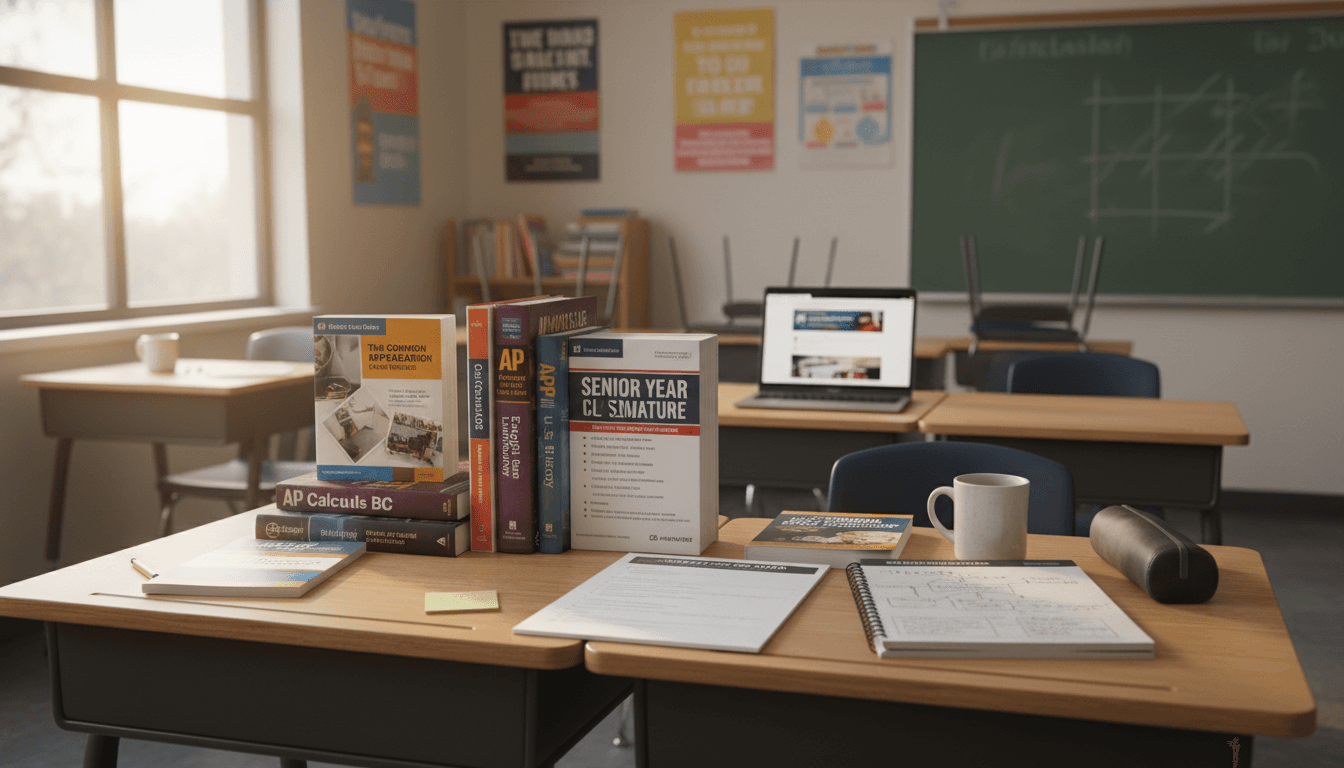
12th Grade Curriculum Overview Newsletter: Helping Senior Families Understand the Final Year Coursework

The curriculum overview newsletter is one of the most functional documents a 12th grade teacher can send. It gives families a clear picture of what the academic year looks like before they have to piece it together from their student's secondhand reports. In senior year, that clarity matters more than in any previous year because the stakes attached to performance are higher and the consequences of confusion are more significant.
A student applying to college needs their first semester grades to reflect consistent effort. A student completing a capstone project needs family support at specific intervals. A student enrolled in AP or IB courses needs a family that understands what external exams are and what they mean. None of that support is possible without good information, and the curriculum overview newsletter is where that information starts.
Why Senior Year Curriculum Communication Carries Extra Weight
In 9th, 10th, and 11th grade, a curriculum overview newsletter tells parents what their student will be learning and roughly how the class will run. That is useful, but the consequences of not reading it carefully are relatively minor. In 12th grade, families who do not understand the curriculum are more likely to be caught off guard by things that matter.
First semester grades are often submitted to colleges as part of mid-year reports. AP exam registration deadlines arrive in the fall, not spring. Capstone or senior thesis requirements may be built into the course grade in ways that are not obvious from a standard grade report. These are not surprises a family should encounter in November. They are things that belong in the first newsletter of the year.
How to Structure the Course Overview
A readable curriculum overview newsletter uses short sections and clear headings rather than dense paragraphs. A structure that works well for senior year courses includes: a brief description of the course and its place in the graduation requirement framework, a unit-by-unit outline with approximate timing, major assessments and their weight in the final grade, any external exams or projects with fixed external deadlines, and the late work or revision policy.
If the course is writing-intensive, say so. If it requires substantial independent reading, say so. If there is a major culminating project in the spring that students should begin thinking about early, mention it in the first newsletter rather than waiting until the spring when the deadline pressure makes everything harder.
AP and IB Courses: What Families Need to Understand
Advanced Placement and IB courses require a specific kind of family understanding. The course grade and the exam score are separate data points that behave differently. The classroom grade appears on the transcript that colleges use for admission decisions. The exam score, which arrives in July, determines whether a student earns college credit. A strong performance in class with a lower exam score is not a failure. But families who do not understand this separation often react to exam results in ways that are unhelpful to students.
Your curriculum overview newsletter should explain this directly. It should also cover when students can expect to be given practice exams, what the College Board exam format looks like for your specific subject, and what AP exam registration involves in terms of timing and cost. FAFSA applications are often due around the same time as AP registration deadlines, and families who are managing both simultaneously appreciate knowing about schedule conflicts in advance.
Connecting Curriculum to Post-Secondary Plans
Senior year students are not taking courses in a vacuum. Many of them have specific post-secondary goals that connect directly to what happens in your classroom. A student applying to nursing school cares about how their biology grade will read on a transcript. A student pursuing engineering needs strong math performance visible in the senior year record. A student planning to enter the military, a trade program, or the workforce directly is managing an entirely different set of priorities.
Your curriculum overview newsletter does not need to individualize for every student, but it can acknowledge this diversity. A brief note recognizing that students in the class have a wide range of post-graduation plans, and that your class is designed to support rigor regardless of destination, sends a signal to families that their student's path is seen and respected.
Setting Expectations for the Second Semester
Second semester senioritis is one of the most well-documented patterns in high school education. After acceptances arrive in March and April, students who were academically strong all year sometimes disengage in ways that damage their final transcript. Colleges do withdraw acceptances when final transcripts show a significant drop, and it happens more often than families realize.
Including a brief but honest paragraph about this in the curriculum overview newsletter, even at the start of the year, sets a tone of accountability. It tells families that you are watching the full year, not just the college application window, and that the work assigned in April and May is real and graded. Students who know their families are informed about this are somewhat more likely to stay engaged through the end.
Capstone Projects and Senior Thesis Requirements
Many 12th grade classes include a significant culminating project, sometimes called a capstone, senior thesis, independent research project, or senior seminar. These projects are often the most memorable academic work students do in high school, and they can be the most stressful if families do not understand what is involved until too late.
If your class includes such a project, your curriculum overview newsletter is the right place to introduce it. Describe the scope, the timeline, any milestones along the way, and what kind of family support is appropriate. Some projects require a family interview or home observation. Some require access to community resources. Giving families a full semester of lead time makes a significant difference in how smoothly these projects run.
Keeping the Overview Accessible and Readable
A curriculum overview newsletter that is eight dense paragraphs long will not be read carefully by most families. Organize it so parents can skim and find the sections most relevant to their student's situation. Use headings for each major unit or assessment category. Put critical dates in a list rather than embedding them in prose. Link to the school's graduation requirement page rather than reprinting the full credit list.
The goal is not comprehensiveness. The goal is to make sure the families who read it walk away with an accurate picture of what senior year looks like in your class, and with enough information to support their student through it.
Get one newsletter idea every week.
Free. For teachers. No spam.
Frequently asked questions
What should a 12th grade curriculum overview newsletter include that earlier grades do not?
Senior year curriculum newsletters should address three things that are unique to this grade level: how the coursework connects to graduation requirements, how it appears on the transcript during the college application window, and what the expectations are for the second semester when senioritis often leads to disengagement. Earlier grade newsletters focus primarily on what students will learn. Senior year newsletters need to also cover the stakes attached to performance.
How detailed should a 12th grade curriculum newsletter be?
Detailed enough to be genuinely useful, but organized so families can find what they need quickly. A unit-by-unit breakdown, major assignment categories with approximate weights, a note on AP or IB exam preparation if applicable, and a clear explanation of how grades are calculated is enough for most families. Avoid burying critical information in long paragraphs. Use headings and short sections so parents can scan for what matters most to them.
How should an AP or IB class curriculum newsletter differ from a standard 12th grade course?
AP and IB curriculum newsletters should include the external exam date and what it means for the course grade, the College Board or IB syllabus alignment, and guidance for families on how to support rigorous home study without creating counterproductive pressure. For AP classes, explain that the exam score and the classroom grade are separate: a student can earn an A in the class and a 3 on the exam, or vice versa. Many parents do not understand this distinction until something surprising happens.
When is the right time to send the curriculum overview newsletter?
The first week of school is ideal. Families are paying attention, the year feels fresh, and parents have not yet formed their own assumptions about what the class involves. Sending a curriculum overview after the first few weeks means some parents have already drawn incorrect conclusions from their student's limited account of what the class is about. The earlier you set accurate expectations, the less you have to correct later.
What newsletter tool works best for sending a 12th grade curriculum overview to families?
Daystage lets teachers build a clean, well-organized curriculum newsletter that is easy to read on any device. You can structure it with clear headings for each unit or topic area, include links to the AP course description or school website, and send it directly to family inboxes. Having a permanent digital record of what you communicated at the start of the year also helps if questions arise later about grading expectations or course content.

Adi Ackerman
Author
Adi Ackerman is a former classroom teacher and curriculum writer with 8 years in K-8 schools. She writes about school communication, parent engagement, and what actually works in real classrooms.
More for High School
12th Grade Testing Newsletter: Communicating AP Exams, SAT Retakes, and Senior Assessment Schedules to Families
High School · 6 min read
12th Grade Homework Policy Newsletter: Communicating Academic Expectations to Senior Families
High School · 5 min read
12th Grade Open House Newsletter: What Senior Families Need to Know Before the First Visit
High School · 6 min read
Ready to send your first newsletter?
3 newsletters free. No credit card. First one ready in under 5 minutes.
Get started free