
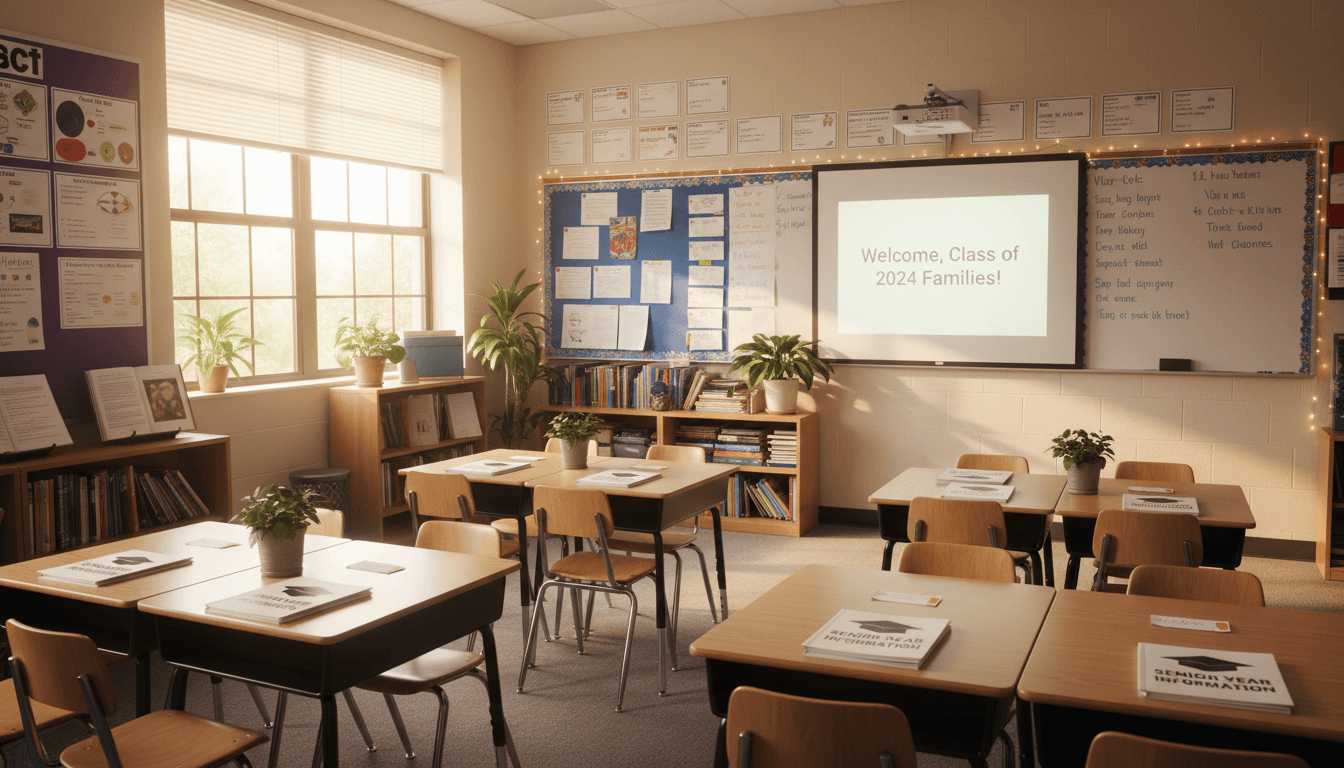
12th Grade Open House Newsletter: What Senior Families Need to Know Before the First Visit
Open house night in senior year carries a different charge than in any previous year. Parents who walk into a 12th grade classroom are not just meeting a new teacher. They are entering what might be the last teacher-parent relationship of their child's K-12 journey. The questions they bring are specific and often urgent: Is my student on track to graduate? How will this class affect college applications? What happens if performance drops in the second semester?
A well-crafted open house newsletter, sent a few days before the event, transforms that anxiety into productive preparation. This guide explains what to include, how to structure it, and how to use it to set the right tone for the full senior year relationship with families.
Start with What Families Most Need to Know
The opening section of your open house newsletter should address the thing that is most on senior parents' minds: graduation. Confirm what your class covers, how it fits into graduation requirements, and where families can check their student's credit status if they have questions. Do not assume parents have tracked this across four years. Many have not, and some students are closer to the edge on credits than families realize.
If your class is weighted or carries college credit through AP, IB, or dual enrollment, explain what that means for the transcript and the college application. Many parents do not fully understand how a B in an AP class compares to an A in a standard course on a college application, and a brief, clear explanation prevents misconceptions that can cause family conflict about grading expectations.
College Application Timeline and Your Class
Colleges receive first-semester senior grades as part of the decision process. Early decision and early action applicants submit applications in October or November, often before the first report card is issued, but colleges follow up with mid-year reports. Regular decision applicants submit in January, and most colleges request final transcripts before confirming enrollment.
Your newsletter should explain how your class's grading timeline interacts with these deadlines. If you do not issue formal grades until the end of a semester, say so. If you do issue progress reports, tell families when to expect them. Parents of seniors who are applying to competitive colleges need to understand exactly what academic record will be visible to admissions offices at each stage of the process.
Your Communication System and Contact Preferences
Senior year parents tend to be more engaged with teachers than at any other point in high school, and not always in productive ways. Setting clear expectations in your open house newsletter about how and when you communicate saves everyone time and prevents the kind of escalating email threads that consume teacher bandwidth.
Be specific: the days you check email, your typical response window, whether you prefer a phone call for urgent concerns, and what qualifies as urgent versus what can wait for the next scheduled conference. If you use a class portal, newsletter platform, or communication app, introduce it here and tell families how to access it. The fewer technical surprises on open house night, the better.
Addressing the Senioritis Reality
Senioritis is a predictable phenomenon, and 12th grade teachers who pretend it does not exist lose credibility with families who will eventually watch it happen to their own student. Your open house newsletter is a good place to name it matter-of-factly: senior disengagement is common, especially in the second semester after acceptances arrive, and it can have real consequences including rescinded admission offers.
Colleges rescind acceptances more often than most families know. Admissions decisions are conditional on continued satisfactory performance. A student who coasts through the second semester, particularly in a class that appeared on their application as in-progress, risks losing an acceptance they worked four years to earn. Saying this plainly in your newsletter, without alarmism, does families a genuine service.
What You Need From Parents This Year
Open house communication is not only about what families need to know. It is also a reasonable place to share what you need from them. In 12th grade, the most useful ask is usually simple: stay engaged even when things seem fine. Senior year has a way of producing unexpected challenges, and parents who have disengaged by November are harder to reach when something goes wrong in February.
Other reasonable asks include reading the monthly newsletter, responding promptly if you reach out with a concern, and talking to their student regularly about academic progress rather than waiting for report cards. These are small requests with meaningful impact on student outcomes.
Senior Year Highlights and Celebrations
Your open house newsletter should not be all logistics and caveats. Senior year is genuinely exciting, and families deserve to feel some of that in the communication they receive from teachers. Include a brief section on the highlights you are looking forward to: a capstone project, a guest speaker series, a final exam format that lets students demonstrate mastery in a meaningful way, or anything specific to your class that makes this year distinct from the ones before.
Parents who leave open house night feeling proud of what their student is about to experience are more likely to stay engaged throughout the year. The newsletter that arrives before the event is your first opportunity to set that tone.
The Practical Checklist Before You Send
Before sending your 12th grade open house newsletter, check that you have covered: graduation requirement context, college application timeline interaction with your class, communication preferences and contact information, a direct mention of senioritis and consequences, what you need from parents, and at least one thing families can look forward to. Proofread for any em dashes or complex punctuation that can render differently across email clients. Send three to five days before the event, not the morning of.
A short, clear, well-organized newsletter sent at the right time is worth more than a comprehensive document sent too late to read properly.
Get one newsletter idea every week.
Free. For teachers. No spam.
Frequently asked questions
What makes a 12th grade open house newsletter different from earlier grades?
Senior year open house is unlike any other grade-level event. Parents attending know their child is in the final stretch of K-12 education, and their questions are different: What does my student need to graduate? What role will this class play in college applications? How much does final semester performance matter after college acceptances come in? A 12th grade open house newsletter should anticipate all of these and give families the information they need before they even walk through the door.
When should the open house newsletter be sent out?
Send it three to five days before the event, not the day before. Families need time to read it, discuss it, and come prepared with specific questions rather than general anxiety. A newsletter that arrives the morning of open house gets skimmed. One that arrives earlier in the week gets read carefully, especially by parents of seniors who have a lot riding on this final year.
What academic information is most important to cover in a senior open house newsletter?
The highest-priority content for 12th grade families includes: graduation requirements and how to confirm their student is on track, any senior-specific coursework like AP, IB, or dual-enrollment classes and what that means for the transcript, the first-semester grading timeline relative to college application deadlines, and the teacher's communication preferences and availability for parent contact. Families of seniors are often anxious about gaps in graduation credits, and this newsletter is a chance to address that proactively.
How should a teacher address senioritis in the open house newsletter?
Name it directly. Senioritis is a real pattern where seniors disengage academically, particularly after college acceptances arrive in spring. Parents need to know it is real, that it can have serious consequences including rescinded college offers, and what the teacher's approach is to keeping students accountable. A paragraph in the newsletter that addresses this honestly builds trust with families and sets a firm tone without being threatening.
What newsletter tool works best for 12th grade open house communication?
Daystage makes it easy to create a clean, readable newsletter that families will actually open before the event. Teachers can format it with clear sections, include links to the school website, graduation requirements, or the AP exam schedule, and send it directly to parent emails. When families arrive at open house already informed, the conversation is more productive for everyone.

Adi Ackerman
Author
Adi Ackerman is a former classroom teacher and curriculum writer with 8 years in K-8 schools. She writes about school communication, parent engagement, and what actually works in real classrooms.
More for High School
12th Grade Curriculum Overview Newsletter: Helping Senior Families Understand the Final Year Coursework
High School · 6 min read
12th Grade Classroom Rules Newsletter: Setting Expectations for the Final Year Without Condescending to Seniors
High School · 5 min read
Eleventh Grade Back to School Newsletter: Starting Junior Year With Purposeful Family Communication
High School · 7 min read
Ready to send your first newsletter?
3 newsletters free. No credit card. First one ready in under 5 minutes.
Get started free