

12th Grade Classroom Rules Newsletter: Setting Expectations for the Final Year Without Condescending to Seniors
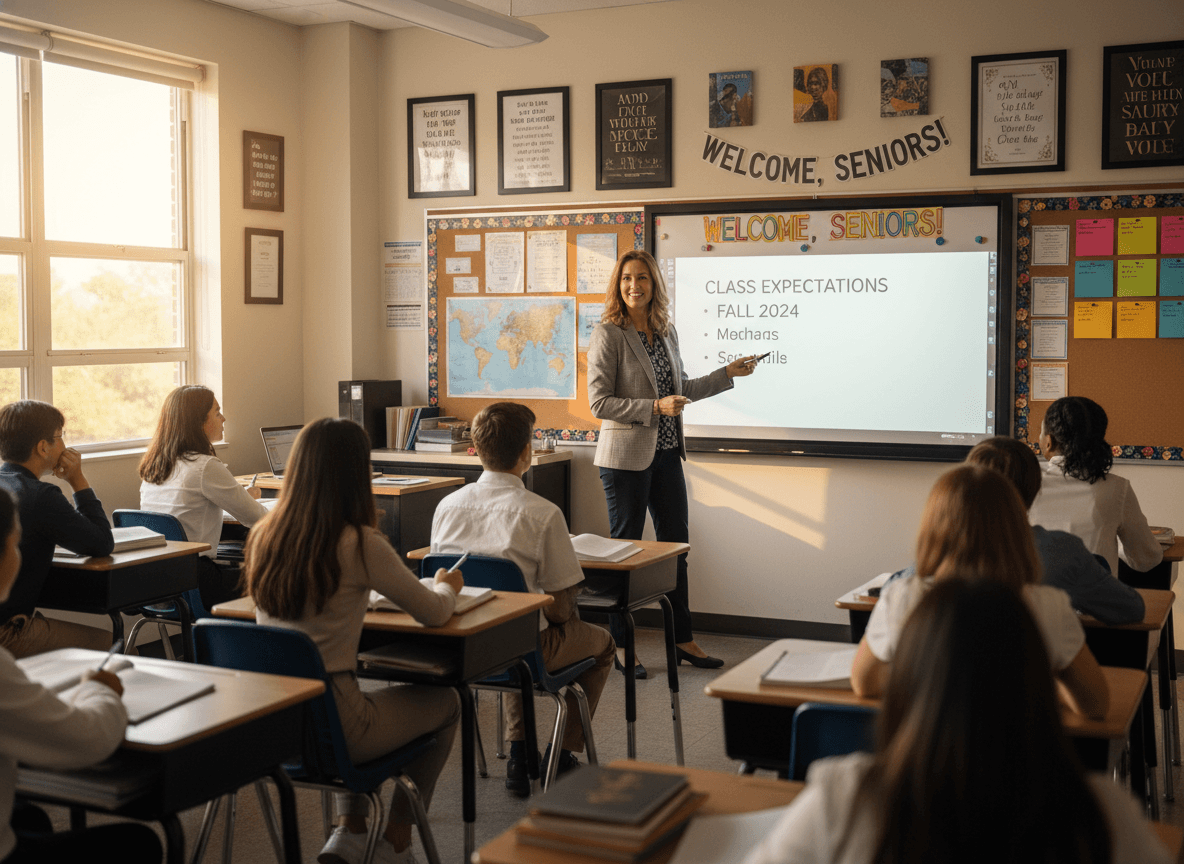
Writing a classroom rules newsletter for 12th grade requires a specific kind of judgment. You are communicating expectations to students who are months away from managing their own academic lives in college, the military, a trade program, or the workforce. A tone that feels juvenile will be dismissed. A tone that feels arbitrary will generate resentment. A tone that is direct, grounded in reason, and respectful of their maturity will actually be read and followed.
This is not a minor stylistic consideration. The credibility of your classroom culture in senior year is built or lost in the first newsletter families receive. This guide covers how to communicate 12th grade classroom expectations in a way that works for seniors specifically.
Frame Expectations as Professional Standards, Not Rules
In elementary school, classroom rules are about behavior management. In senior year of high school, they are better framed as professional expectations because that is actually what they are. A student who shows up late, submits work past deadline, or engages in academic dishonesty is not just breaking a classroom rule. They are demonstrating habits that will affect their performance in every future environment they enter.
Framing your expectations this way in the newsletter serves multiple purposes. It is more persuasive to seniors who are already looking ahead to college. It is more convincing to families who are invested in their student's post-secondary success. And it is accurate: the habits formed in senior year are the ones students carry into what comes next.
Attendance and Tardiness in Senior Year
Attendance matters more in senior year than most families realize at first. Final transcripts include attendance records at many schools. Colleges can and do review attendance as part of final enrollment confirmation. And practically, a student who misses significant class time in an AP course is less prepared for the exam that can earn them college credit.
Your newsletter should state the attendance policy clearly, including what counts as an absence versus a tardy, how excused absences are documented, and what the consequence of excessive absence is. If your school has a specific threshold at which a student risks losing credit for the course, that information belongs in the first newsletter of the year, not in a conversation with a family who is already in crisis mode.
Academic Integrity When College Applications Are Involved
Senior year creates a specific academic integrity challenge that does not exist in other grades. Students are writing college application essays at the same time they are completing classroom writing assignments. The line between personal narrative for an application and original work for class is usually clear, but the volume of writing and the pressure of the application process can blur judgment.
More urgently, AI writing tools have become a default productivity tool for many students. Your newsletter should state clearly what your policy is on AI-assisted writing, what constitutes academic dishonesty in your class, and what the consequences are. Families deserve to know this policy before their student makes a decision that could affect their transcript and potentially their college acceptance.
Late Work Policy With Real-World Framing
Seniors are managing more competing deadlines than any other grade level. College application deadlines, FAFSA deadlines, scholarship deadlines, extracurricular commitments, and classroom assignments all arrive simultaneously. Some students use this complexity as a reason to deprioritize classwork.
Your late work policy should be clear and non-negotiable, but the reasoning behind it matters too. Work submitted late when a student had advance notice and competing demands is a different conversation than work submitted late due to a genuine emergency. Your newsletter can acknowledge the complexity of senior year while still being explicit that the policy applies regardless. Knowing the policy in advance is more respectful than discovering it after a late submission.
Phone and Device Expectations
Phone policies in senior classrooms have become more fraught in recent years, partly because college students are expected to manage their own device use and some families see senior year as a transition toward that autonomy. Your newsletter should explain your specific policy and the reasoning behind it without being defensive.
If phones are permitted but off during direct instruction, say so. If they are required to be stored during class, explain how that works in practice. If students use devices for in-class research or AP Classroom practice, clarify how academic use is distinguished from distraction. The more specific and coherent the policy, the more likely students and families will accept it.
Addressing Senioritis in the Expectations Newsletter
Naming senioritis in a classroom rules newsletter is not pessimistic. It is preventive. You are telling families in August what the pattern looks like, what the consequences can be, and what your approach is to keeping students engaged through May. That is useful information they cannot act on if they receive it in April when the pattern has already set in.
The most important consequence to name is the possibility of a rescinded college acceptance. Colleges issue conditional acceptances. If a student's final transcript shows a significant academic drop, particularly in courses the student identified on their application as in-progress, the college can withdraw the offer. This happens every year to students and families who did not understand the conditions attached to an acceptance letter.
When Rules Meet the Reality of a Final Year
Senior year classroom management requires genuine flexibility alongside firm standards. There will be days when the college application deadline the night before clearly explains a tired, distracted student. There will be weeks around AP exam season when the entire class is operating under unusual stress. Acknowledging this in your newsletter, while still maintaining expectations, signals that you understand the full context of what seniors are managing.
The families and students who respect a 12th grade teacher's expectations most are usually the ones who felt that teacher understood their year, not just their classroom.
Get one newsletter idea every week.
Free. For teachers. No spam.
Frequently asked questions
Why does a 12th grade classroom rules newsletter need a different tone than earlier grades?
Seniors are 17 or 18 years old and within a year of managing their own academic lives in college or the workforce. A newsletter that reads like it was written for a 9th grader will immediately lose credibility with both students and parents. The tone should be collegial and direct: here is how this class operates, here is why each expectation exists, and here is what happens when the standard is not met. Treating seniors like capable adults while still holding firm on expectations is the balance senior year requires.
What classroom rules are most important to communicate to 12th grade families?
Attendance and tardiness policies matter most in senior year because absences affect final transcripts that go to colleges. Academic integrity expectations are especially important when students are writing college application essays alongside class assignments. Late work policies matter because seniors managing multiple deadlines will test them. Phone and device policies matter because the distraction stakes are high when AP exam prep and college application writing are part of the in-class work.
How should a 12th grade classroom rules newsletter address senioritis?
By name, with real consequences stated clearly. Senioritis, the tendency toward disengagement after college acceptances arrive, can result in dropped grades serious enough to trigger a rescinded college offer. Your newsletter should say this plainly: staying on task through May is not optional, and a significant grade drop in the final semester has consequences that extend beyond the classroom. Most families are aware of senioritis as a concept but do not know it can cost a student their college acceptance.
Should classroom rules change in second semester senior year?
The core academic standards should not change. The structure of class might shift as AP exams approach and curriculum winds down, but attendance expectations, late work policies, and academic integrity standards remain in force through graduation. Communicating this in advance, rather than mid-year when students are pushing back, prevents the negotiating that happens when seniors feel entitled to a relaxed second semester.
What newsletter tool works best for sharing 12th grade classroom expectations with families?
Daystage lets teachers build a clear, well-formatted newsletter that covers classroom rules in a readable way without the visual clutter of a scanned syllabus. You can organize expectations by category, include links to school policy documents, and send directly to family inboxes at the start of the year. A clean, readable first newsletter sets a professional tone that carries through the whole year.

Adi Ackerman
Author
Adi Ackerman is a former classroom teacher and curriculum writer with 8 years in K-8 schools. She writes about school communication, parent engagement, and what actually works in real classrooms.
More for High School
12th Grade Homework Policy Newsletter: Communicating Academic Expectations to Senior Families
High School · 5 min read
12th Grade Curriculum Overview Newsletter: Helping Senior Families Understand the Final Year Coursework
High School · 6 min read
12th Grade Open House Newsletter: What Senior Families Need to Know Before the First Visit
High School · 6 min read
Ready to send your first newsletter?
3 newsletters free. No credit card. First one ready in under 5 minutes.
Get started free