

Scoliosis Screening Newsletter: What Parents Need to Know
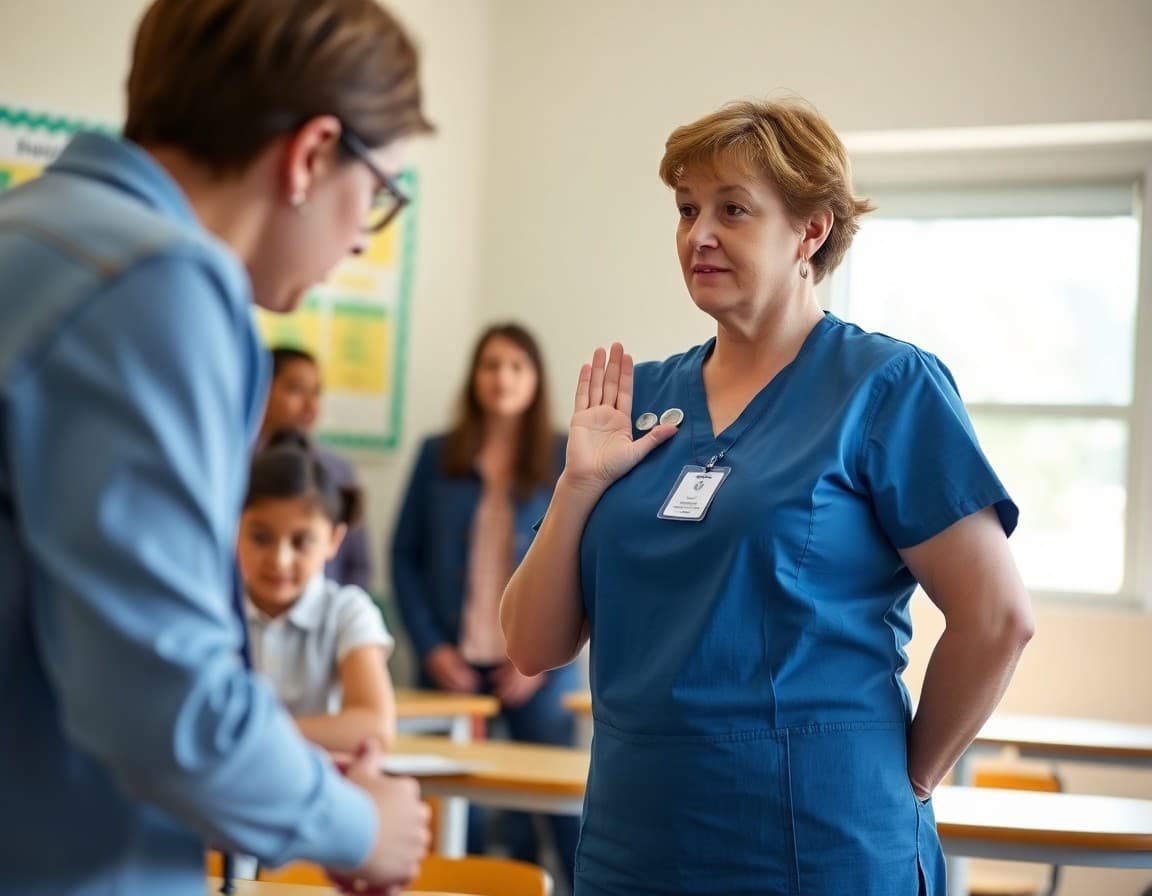
Scoliosis screening newsletters need to do two things at once: convey the medical importance of the screening without alarming families, and explain the process clearly enough that students and families know what to expect. A referral notice without context creates unnecessary fear; a newsletter with good context prevents it.
Explain what scoliosis is in accessible language
Not all families know what scoliosis is. A brief, accurate explanation without excessive medical jargon prepares families to understand both the screening and any referral that might follow.
"Scoliosis is an abnormal curve in the spine. Most people's spines run straight down the middle of the back. In scoliosis, the spine curves to one side, sometimes in an S or C shape. Mild scoliosis is common and often requires only regular monitoring. Moderate cases are managed with a back brace during the growth years. Severe cases are rare. Early detection, which is why we screen, gives families the most treatment options."
Describe exactly how the screening is done
Students who know what to expect during the screening are less anxious about it. Families who understand the process are less likely to opt out unnecessarily.
"The screening takes about 60 seconds. The student bends forward at the waist with arms hanging toward the floor while the nurse looks at the back for any unevenness in the shoulder blades or rib cage. That is the test. No clothing is removed; students wear a tank top or t-shirt to allow visibility of the back. Screenings are conducted privately, one student at a time."
State the screening date, grade level, and consent requirements
Families need these logistics before anything else. Put them prominently.
"Screening date: October 22nd. Grades screened: 5th and 7th grade. Students will be called from class individually during the school day. No prior action is needed unless you wish to opt out. To opt out, return the form below by October 18th or contact the health office."
Explain exactly what a referral means and does not mean
Referral notices are one of the most anxiety-provoking communications health offices send. A newsletter that explains in advance what a referral means prevents the panicked phone calls that arrive after notices go home.
"If your child receives a referral notice, it means the screening observed something that should be checked by a physician with a physical exam and possibly an X-ray. A referral does not mean your child has scoliosis. It does not mean your child needs treatment. Many students who receive referrals are found to have normal spines on physician evaluation. A referral should be followed up with a physician visit within 60 days."
Sample newsletter template excerpt
Scoliosis screening for 5th and 7th grade students is October 22nd.
The screening is a 60-second posture check conducted privately by the school nurse. No clothing is removed. Students should wear a tank top or t-shirt that allows the nurse to see the back clearly. Students will be called from class one at a time.
If your child receives a referral notice after the screening: this is not a diagnosis. It is a recommendation to follow up with your child's doctor. Schedule an appointment within 60 days of receiving the notice. The notice includes the specific observation made during screening so you can share it with the doctor.
Address concerns about privacy and body image sensitively
Middle school students are particularly sensitive about body-related procedures. A newsletter that acknowledges the school's commitment to privacy and dignity during the screening helps families and students feel confident that the process is handled respectfully.
"All screenings are conducted privately with the school nurse and one same-gender or gender-neutral staff member present. Students may request a specific staff member within reason. If your child has concerns about the procedure, please contact the health office in advance so we can discuss accommodations."
Provide follow-up resources for families who need them
Families who receive referral notices and do not have a regular physician need guidance on where to go for follow-up. Include resources for free or low-cost medical care, and offer to help families navigate those options through the health office.
Get one newsletter idea every week.
Free. For teachers. No spam.
Frequently asked questions
What is scoliosis and why do schools screen for it?
Scoliosis is an abnormal lateral curvature of the spine. It most commonly develops during the growth spurt before puberty, typically between ages 10 and 15. Most cases are mild and require only monitoring, but some cases progress and require treatment including bracing or, in severe cases, surgery. School scoliosis screening programs detect curvature early when treatment options are most effective and least invasive. Adolescent idiopathic scoliosis, the most common form, often has no pain or visible symptoms in early stages, making screening the primary detection method.
How is a school scoliosis screening conducted?
The standard school scoliosis screening uses the Adam's Forward Bend Test. The student bends forward at the waist with arms hanging down toward the floor while the screener looks at the back for asymmetry in the rib cage or shoulder blades. The screener may also use a scoliometer, a small device placed along the spine to measure the degree of spinal rotation. The test takes 60 to 90 seconds and is conducted with the same-sex or gender-neutral options available in a private or semi-private setting.
What does it mean if my child is referred after a scoliosis screening?
A referral after a scoliosis screening means the screener observed something that should be evaluated by a physician, not that your child has scoliosis or requires treatment. Many students who are referred at school screening are found to have normal spines when examined by a physician with X-rays. The school screening is a low-precision filter; the physician evaluation is the accurate assessment. A referral should prompt a physician appointment within 60 days but is not a cause for urgent concern.
At what grade levels do schools typically conduct scoliosis screenings?
Most school scoliosis screening programs target grades 5 through 8, the period of highest risk for adolescent idiopathic scoliosis development. Some states mandate screening at specific grades. The American Academy of Pediatrics recommends scoliosis screening at ages 10 and 12 for girls and age 13 for boys, corresponding to the periods of highest growth velocity. Girls are affected by scoliosis at a significantly higher rate than boys and are more likely to have curves that progress to the level requiring treatment.
How does Daystage help school nurses communicate about scoliosis screenings?
Daystage lets school nurses send scoliosis screening newsletters with clear explanations of the process, consent requirements, and referral resources in a format families can read and save. When a nurse uses Daystage to send a screening notification that explains what the screening is, when it is happening, and exactly what a referral means before families receive a referral notice, the anxiety around that notice decreases significantly and follow-through on physician appointments increases.

Adi Ackerman
Author
Adi Ackerman is a former classroom teacher and curriculum writer with 8 years in K-8 schools. She writes about school communication, parent engagement, and what actually works in real classrooms.
More for Health & Wellness
Ready to send your first newsletter?
3 newsletters free. No credit card. First one ready in under 5 minutes.
Get started free