
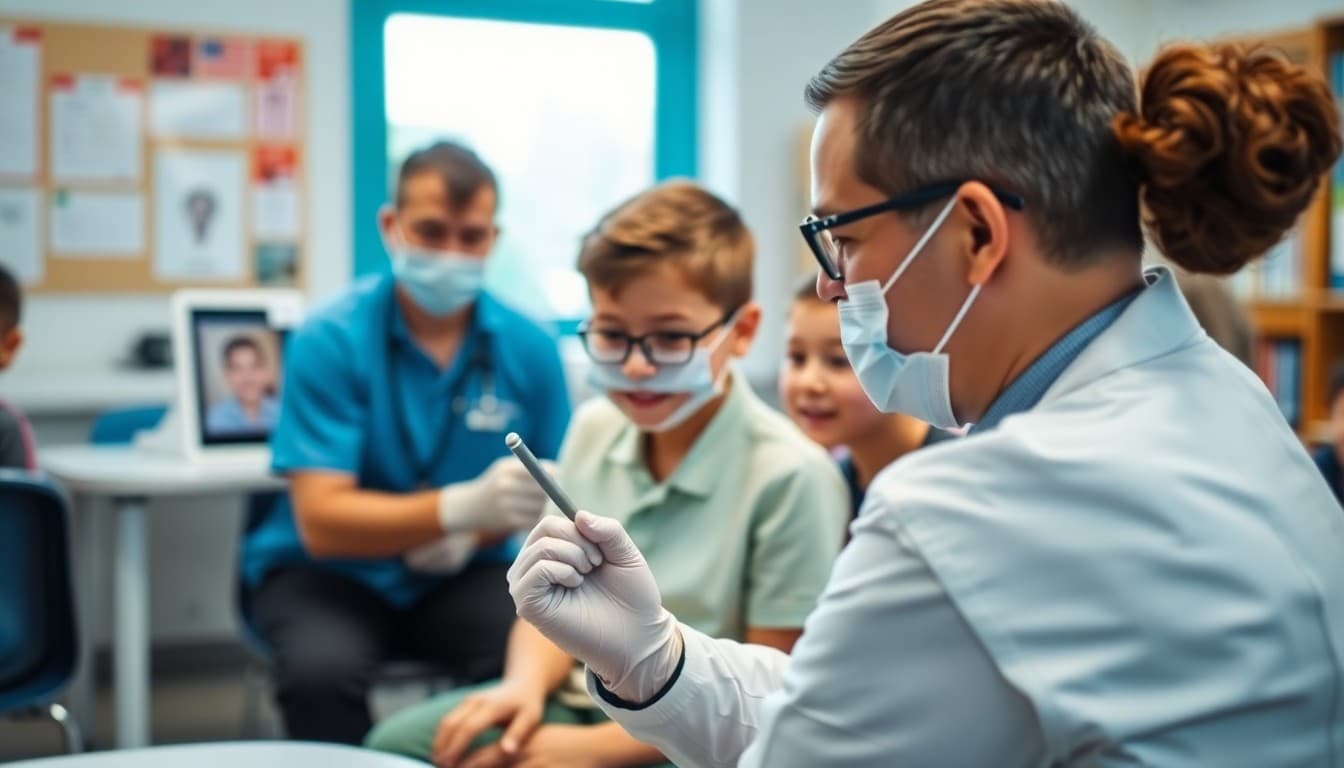
Dental Screening Newsletter: Free Check-Up at School

A dental screening newsletter needs to accomplish two things before screening day: get consent forms back and set accurate expectations about what the screening is and is not. Families who know what to expect cooperate better and respond more appropriately to referral notices.
Explain what the screening is and what it is not
Families sometimes confuse a school dental screening with a full dental exam or worry that their child is receiving dental treatment at school. Clear the misconception before it creates resistance.
"The dental screening is a brief visual examination, not a full dental exam and not treatment. A trained screener will look inside your child's mouth using a light and a wooden tongue depressor. The entire screening takes about two to three minutes per child. The screener does not clean teeth, take X-rays, apply fluoride, or perform any dental procedure. The goal is to identify students who may need follow-up care with a dentist."
State the date, time, and consent requirement clearly
Every dental screening newsletter needs to answer these three questions in the first half of the message: when is the screening, who is being screened, and what do families need to do before then.
"Screening date: October 14th. Grades being screened: K, 2, 5, and 8. Consent requirement: signed consent forms must be returned by October 10th for your child to participate. A consent form is attached to this newsletter. Students without a returned form will not be screened."
Describe what happens if a concern is identified
Families need to know in advance what a referral notice means and what action they should take. Explaining this before the screening prevents panic when notices come home and increases follow-through on recommended appointments.
"If the screening identifies a potential concern, your child will bring home a written referral notice. This notice is not a diagnosis. It means a trained screener observed something that a dentist should evaluate. The most common concerns identified are early-stage tooth decay and mild gum inflammation, both of which are very treatable when caught early. We recommend scheduling a dental appointment within 30 days of receiving a referral notice."
List free and low-cost dental resources in the community
Dental referrals are only useful if families have a way to follow up on them. A newsletter that includes specific local resources for families without dental coverage converts referral notices from anxiety-inducing papers to actionable information.
"If your family does not have dental insurance or a regular dentist, the following resources offer free or low-cost dental care: [Community Dental Clinic], [County Health Department Dental Program], [State CHIP dental coverage enrollment]. Our school nurse can help you navigate any of these resources. Call or email the health office for assistance."
Sample newsletter template excerpt
School dental screening is coming October 14th. Here is what families of students in grades K, 2, 5, and 8 need to know:
The screening is a 2-minute visual check by a trained dental screener. No instruments are used. No treatment is provided. The screener looks for signs that a follow-up dental exam may be needed.
To participate, return the signed consent form attached to this newsletter by October 10th. Forms can be returned to the main office or scanned and emailed to nurse@school.edu.
If your child has had a dental exam in the past six months and your dentist did not identify any concerns, you may not need to participate. If it has been more than a year since your child's last dental exam, the screening is a good first step.
Address privacy and record-keeping clearly
Families sometimes wonder what happens to dental screening results. A brief statement about how results are handled, who sees them, and how long they are retained answers these questions before they generate hesitation about returning the consent form.
"Screening results are kept in your child's confidential health record in the school health office. Results are not shared with teachers, administrators, or other families. Referral notices are addressed to parents or guardians only. Records are maintained in accordance with state student health privacy laws."
Follow up with screening day results
After screening day, a brief follow-up newsletter reporting how many students were screened, the percentage who received referral notices, and the most common concerns identified (without identifying individual students) builds transparency and helps families understand the program's scope and impact.
Get one newsletter idea every week.
Free. For teachers. No spam.
Frequently asked questions
What does a school dental screening check for?
School dental screenings are visual examinations, not full dental exams. They typically check for visible tooth decay or cavities, gum inflammation, obvious malocclusion or bite problems, missing or damaged teeth, and signs of dental pain or infection. Screeners look inside the mouth with a light and a tongue depressor or dental mirror. No instruments are used in the mouth during a school screening. The screening identifies students who may need follow-up dental care but is not a replacement for a full dental exam with a licensed dentist.
What happens if a dental screening identifies a concern?
Students identified as needing follow-up receive a written notice to take home describing what was observed and recommending that families schedule an appointment with a dentist for a full evaluation. The notice is informational, not a diagnosis. Some school programs provide referrals to low-cost or free dental services in the community. The school nurse does not have authority to order treatment or contact a dentist on the family's behalf, but can help families find available resources.
Do families need to consent to school dental screenings?
Most school dental screening programs require active or passive consent from families before examining a student. Active consent means a signed form must be returned for the student to participate. Passive consent means participation is assumed unless the family returns a form opting out. The consent requirement varies by state and district. Your newsletter should specify exactly which type of consent your program uses and what families need to do to ensure their child participates or is excluded based on their preference.
How do school dental screenings address students without dental insurance or regular dental care?
School dental screenings specifically serve students who may not have regular dental care, because they identify dental problems in students who might otherwise go undetected. Many states that mandate school dental screenings also connect programs to community dental clinics, CHIP dental coverage enrollment, or mobile dental units that provide full exams and treatment at no cost to eligible families. A newsletter that mentions these resources alongside the screening announcement ensures that families who receive a referral notice know where to get follow-up care.
How does Daystage help school nurses communicate about dental screenings?
Daystage lets school nurses send dental screening newsletters with consent form links, screening dates, and referral resource lists directly to families. When families receive a Daystage newsletter that explains the screening process, includes a digital consent form, and provides follow-up resource links all in one place, consent form return rates improve significantly compared to paper forms sent home in backpacks. Daystage also makes it easy to send targeted reminders to families who have not yet returned consent forms.

Adi Ackerman
Author
Adi Ackerman is a former classroom teacher and curriculum writer with 8 years in K-8 schools. She writes about school communication, parent engagement, and what actually works in real classrooms.
More for Health & Wellness
Ready to send your first newsletter?
3 newsletters free. No credit card. First one ready in under 5 minutes.
Get started free