

School Run/Walk Newsletter: Fundraiser Communication Guide
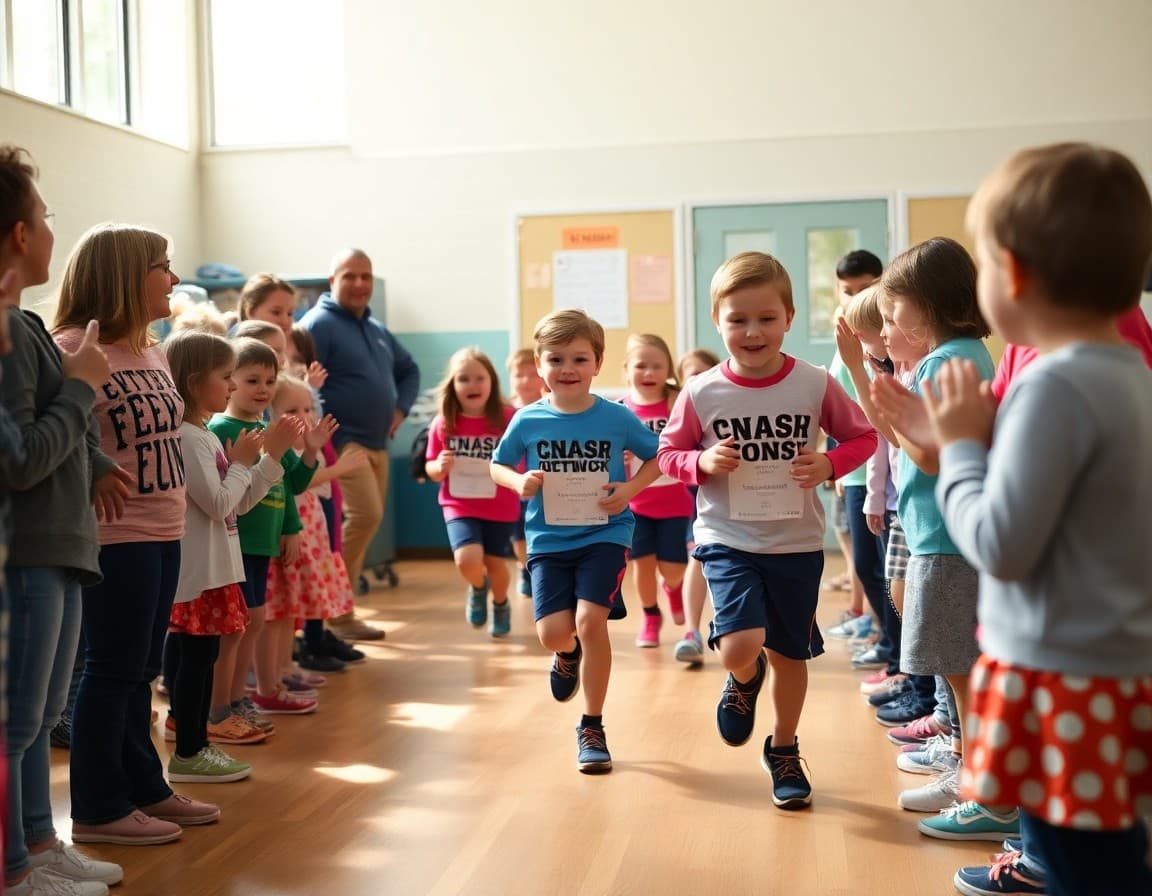
A school run/walk is one of the most effective school fundraisers because it involves every student and connects the fundraising to something physical and memorable. A newsletter that explains the pledge process clearly, builds excitement, and prepares families for the event day is the engine that drives the fundraiser's success.
The Pre-Event Newsletter Series
A school run/walk requires at least two newsletters: a kickoff newsletter explaining the fundraiser and launching pledge collection, and a reminder newsletter one week before the event with day-of logistics. The kickoff newsletter focuses on how pledging works and why families should participate. The reminder newsletter focuses on what happens on the day and how families can attend or support from home.
If your run/walk has a multi-week pledge collection window, a midpoint update newsletter -- "We are 40 percent of the way to our goal!" -- with a progress update motivates additional effort from families who have not yet started collecting pledges.
Explaining the Pledge Process Clearly
Many parents have done school fundraisers before, but not all of them have done a run/walk specifically. The pledge process needs a clear explanation regardless of how familiar it seems to the event coordinators.
Your kickoff newsletter should explain: "Your child will receive a unique pledge link or paper pledge form. They should share this link or form with family members and ask for either a flat donation or a per-lap pledge. On the day of the run/walk, students will complete as many laps as they can in [X] minutes. Per-lap pledges are then calculated based on laps completed. All pledges are due by [deadline]. Online pledges are processed automatically. Cash and check pledges should be returned to [location] by [deadline]."
A Template Kickoff Newsletter
Here is a format that works for a run/walk kickoff newsletter:
"[School] Fun Run Fundraiser -- [Date]. Our school is raising $[goal] for [specific purpose]. Every student participates in a fun run/walk on [date] from [time]. Students collect pledges from family and friends now through [pledge deadline]. How to get pledges: your child's unique pledge link is [link] -- share it with family members via text, email, or social media. Online pledges are processed securely at no cost to donors. Prize tiers: [$X in pledges = prize description]. Top fundraisers: [top 3 students receive specific recognition]. Event day: students run laps on [course location] during the school day. Families welcome to cheer at [location] from [time]. Questions: contact [name] at [contact]."
The Fundraising Goal and What It Funds
Families are more motivated to collect pledges when they know specifically what the money funds. "We are raising $15,000 for new classroom technology" is more compelling than "we are raising money for school programs." "Last year we raised $12,000 and purchased 30 new student Chromebooks that classes use every day" is more compelling than both.
If you have a specific, visible goal -- new playground equipment, a stage curtain for the auditorium, a particular enrichment program -- name it and describe it specifically. Students who know what they are running for run harder. Parents who know what they are pledging for pledge more.
Student Motivation and Incentives
Student enthusiasm drives pledge collection. Your newsletter should describe the incentive structure clearly so students are excited to participate and motivated to collect: specific prizes at specific pledge levels, class competitions with a reward for the highest-collecting class, top fundraiser recognition at an all-school assembly, and celebration plans for the day of the event (music, cheering, popsicles at the finish line). The more the event feels like a celebration rather than a chore, the better the participation.
Post-Event Celebration Newsletter
Send a recap newsletter within three days of the event. Include the total raised, how that compares to the goal and to previous years, photos from the event day, recognition of top fundraisers (with their permission and parents' consent for students), and the specific program or purchase the funds will support. This newsletter is one of the most frequently shared newsletters schools send -- parents share it with the extended family members who donated and who want to see the results of their pledge. Make it worth sharing.
Get one newsletter idea every week.
Free. For teachers. No spam.
Frequently asked questions
What should a school run/walk newsletter include?
A school run/walk newsletter should cover: the event date, time, and location; what students and families will do during the event (the course route or format, lap counting, duration); how pledges work (per-lap, flat donation, or both); the fundraising goal and what proceeds fund; deadline for pledge collection; online pledge link and instructions; student incentives for different pledge levels; what students should wear and bring; and family participation options (can families join the run or just cheer?). The more specifically the newsletter explains how pledges and the event work, the higher the participation.
How do you explain per-lap vs. flat donation pledging to families?
Per-lap pledging means donors commit a dollar amount per lap completed (for example, $2 per lap). If a student runs 20 laps, a per-lap donor pledges $40. Flat donation means the donor gives a fixed amount regardless of laps. Your newsletter should explain both options clearly and note which the school recommends. Many programs use only flat donations to simplify collection. If per-lap pledging is involved, help families set appropriate per-lap amounts: 'We recommend per-lap pledges of $1 to $2 -- most students complete 20 to 30 laps, so a $1 per-lap pledge typically results in a $20 to $30 donation.'
How do you motivate students to collect pledges before the event?
Student pledge collection is highest when there are clear incentives tied to pledge amounts and when families understand the process. Your newsletter should describe the prize or recognition structure tied to pledge milestones: students who collect $25 receive X, students who collect $50 receive Y, the top three student fundraisers receive Z. Include specific instructions for using the online pledge link and a script students can use when asking family members: 'Hi, my school is having a fun run to raise money for [specific goal]. Would you pledge $[amount] to support it? Here is my link: [link].'
How should a run/walk newsletter communicate the event day logistics?
Event day logistics matter as much as pre-event pledge communication. Families who plan to attend need to know: what time students line up and start, how the course is laid out, where families should stand to cheer, whether families can run alongside students, what happens after the event including prize distribution, and the schedule for the rest of the school day. A run/walk event that families attend as spectators needs the same logistical specificity as any other school event.
How can Daystage support school run/walk fundraiser communication?
Daystage lets school coordinators build a professional run/walk invitation newsletter with the fundraising goal progress meter, student pledge instructions, event day logistics, and photos from previous events all in one send. A follow-up newsletter after the event that shows the total raised, celebrates the top fundraisers, and shares photos from the day is one of the most widely shared newsletters schools send all year. Programs that use Daystage for run/walk communication report higher pledge collection rates because families understand the process clearly from the first communication.

Adi Ackerman
Author
Adi Ackerman is a former classroom teacher and curriculum writer with 8 years in K-8 schools. She writes about school communication, parent engagement, and what actually works in real classrooms.
More for School Events
Ready to send your first newsletter?
3 newsletters free. No credit card. First one ready in under 5 minutes.
Get started free