
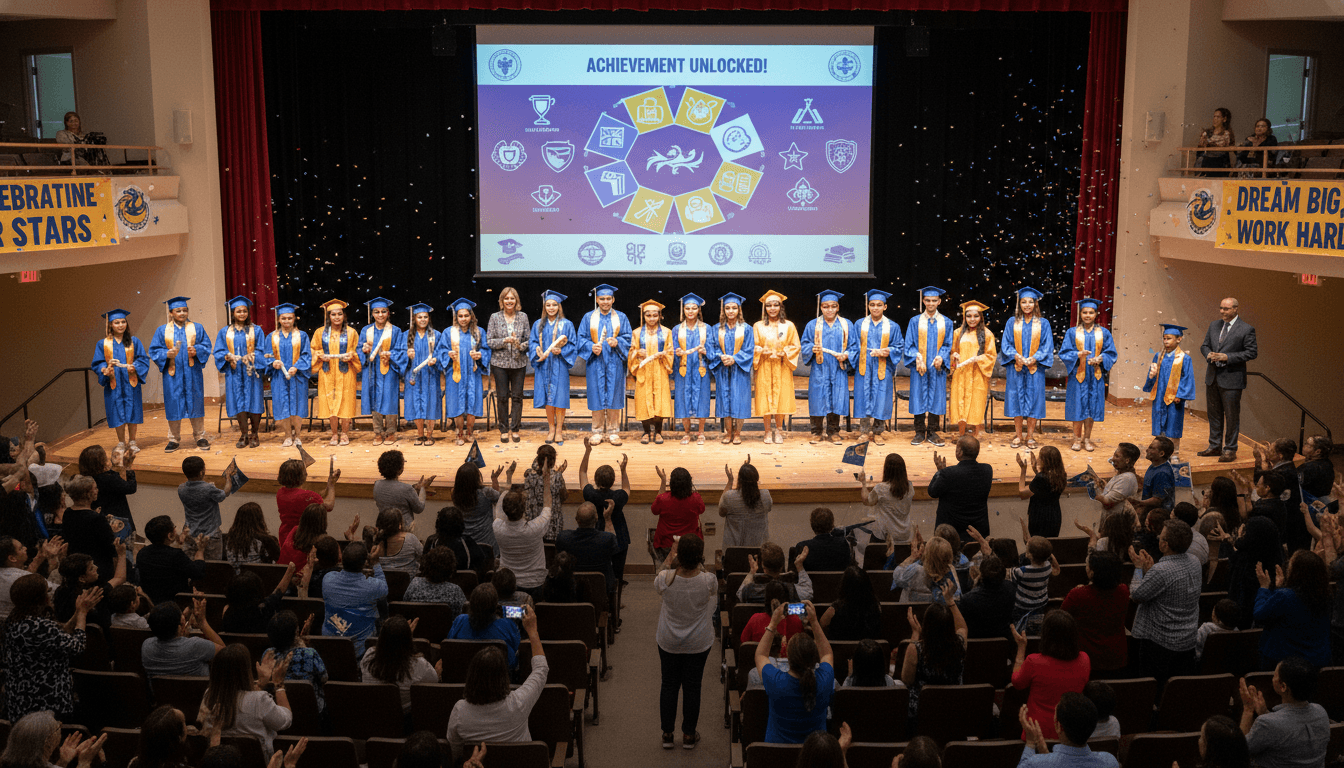
School Academic Bowl Newsletter: Celebrating Knowledge and Teamwork
Academic bowl competitions deserve the same community attention that athletic competitions receive, and they rarely get it. A newsletter that communicates the competition with the same energy as a sports announcement, when is it, who is competing, what is at stake, and how to support the team, begins to close that gap.
What academic bowl looks like
Many families have never attended or watched an academic bowl competition and do not know what to picture. A brief description of a match captures the format: teams at tables with buzzers, a moderator reading rapid-fire questions across multiple subjects, players racing to buzz in, bonus questions for teams that answered correctly.
Academic bowl is genuinely exciting to watch because the pace is fast and the outcomes are unpredictable. A newsletter that communicates this honestly, rather than describing it only as an academic exercise, is more likely to generate family attendance.
Introducing the team
Name the students who are competing. A brief note on each team member, their grade level, their strongest subject areas, and how long they have been on the team, gives families and the broader school community a connection to the people representing the school. Sports rosters are standard. Academic team rosters should be too.
If the team has a coach or faculty advisor, introduce them as well. Families who know who is preparing their students for the competition feel more connected to the program.
Subject areas and what students are preparing
List the subject areas that will be covered in the competition. Include any specialty categories that differ from what families might expect. Science categories might include biology, chemistry, and earth science separately rather than as a single category. History might be divided by period or geography.
A brief note on how students have been preparing, study groups, subject specialists, practice rounds, gives families a picture of the rigor involved and the commitment students have made.
Competition logistics and how families can attend
For home competitions, include the date, start time, location within the school, and whether families are welcome to observe. For away competitions, include travel logistics. For regional or state-level competitions, generate appropriate excitement: reaching a higher level of competition is a genuine achievement worth announcing.
Connecting academic achievement to school identity
A school that celebrates its academic team with the same pride as its athletic teams sends a clear message about what the institution values. An academic bowl newsletter that runs in the same communication channel as the football preview, with comparable energy and detail, does visible work in establishing that culture.
End the newsletter with a call to support: wish the team well before the competition, congratulate them in the hallways, and, if the competition is in school, come watch. That community investment matters to the students who are competing.
Get one newsletter idea every week.
Free. For teachers. No spam.
Frequently asked questions
What should an academic bowl newsletter include?
Cover the competition format, the subject areas covered, the team roster, the competition schedule, how families can attend or watch, and how students prepared. An academic bowl newsletter works best when it makes the competition feel exciting and accessible rather than only of interest to academic superstars. The format is inherently dramatic, fast-paced questions and buzzer races, and the newsletter can capture that energy.
How do you explain academic bowl or quiz bowl format to families?
Describe a typical match: teams sit at tables with buzzers, a moderator reads questions on various subjects, and the first player to buzz in correctly scores points for their team. Rounds are timed and cover multiple categories. Teams may also have bonus questions where only the player who buzzed in answers. Two to three sentences is enough to give families a visual frame for the competition.
How should the newsletter communicate what subjects are covered?
List the subject areas clearly: science, math, history, literature, current events, arts, and any specialty categories. Families who know the subject areas can help students review specific topics. Students who know which categories they are strongest and weakest in can direct their preparation more effectively. Publishing the subject list also builds anticipation for the competition.
How can families support student preparation for an academic bowl?
Families can quiz students using flashcards, watch trivia shows together, discuss current events, and recommend books or videos on topics the student is weaker in. The practice of being asked questions and retrieving information under a time constraint is itself valuable preparation, and families can provide this even without any specialist knowledge.
How does Daystage help coaches communicate academic bowl information to school families?
Daystage lets coaches and administrators send academic bowl newsletters to all school families, so the competition earns the community recognition it deserves rather than being only known to the team's immediate circle.

Adi Ackerman
Author
Adi Ackerman is a former classroom teacher and curriculum writer with 8 years in K-8 schools. She writes about school communication, parent engagement, and what actually works in real classrooms.
More for School Events
Kindness Week Newsletter: How to Extend the Celebration Into Every Family's Home
School Events · 6 min read
School College Signing Day Newsletter: Celebrating Every Path Forward
School Events · 5 min read
School Musical and Play Newsletter: Before, During, and After the Performance
School Events · 7 min read
Ready to send your first newsletter?
3 newsletters free. No credit card. First one ready in under 5 minutes.
Get started free