
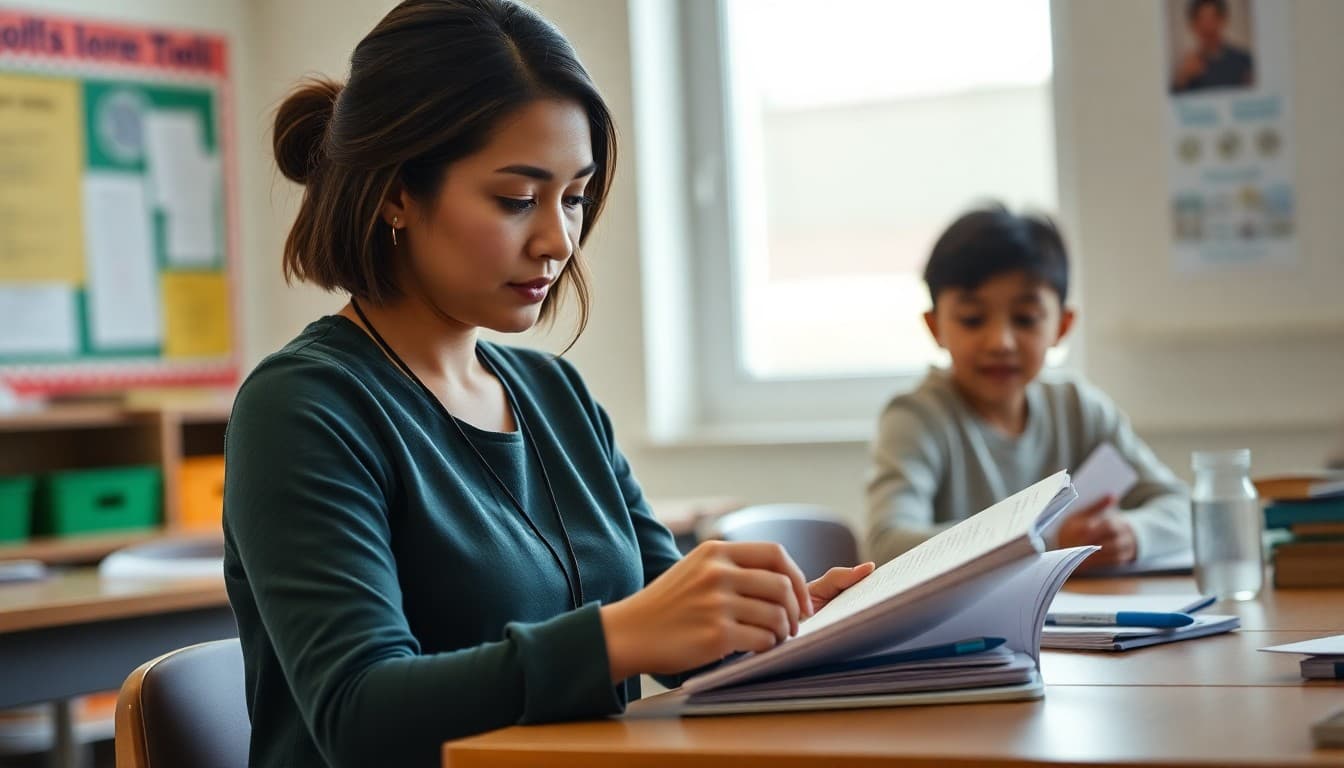
Teacher Newsletter Home Language: Supporting Bilingual Students Through Communication
One of the most common and most damaging mistakes immigrant families make is stopping their home language at home when their child starts school in English. They do it out of love and concern: they want their child to learn English quickly and believe speaking the home language might slow that down. The research says the opposite. A classroom newsletter that delivers this message clearly, with warmth and evidence, can prevent families from making a choice they will regret and that genuinely harms their child's development.
The Research Is Clear
Decades of bilingual education research show that strong home language development provides the cognitive foundation that accelerates second language learning. Concepts, vocabulary depth, and literacy skills transfer across languages. A child who has rich vocabulary in Spanish will learn English vocabulary faster than a child who lost their Spanish in kindergarten and is starting from scratch in English. This is not a controversial finding. It is one of the most replicated findings in applied linguistics. The newsletter is the right place to share this with families who have never been told it.
Affirming Home Language as an Asset
Many immigrant families experience their home language as something that marks their child as different and potentially behind. The classroom newsletter can reframe this explicitly: bilingualism is an intellectual and economic asset. A child who maintains both their heritage language and English is not behind. They are ahead. A brief, direct statement of this in the newsletter, early in the year, sets the tone for everything that follows.
Practical Home Language Support
Tell families specifically what they can do to support the home language: read aloud in the home language every night, tell family stories and discuss memories in the home language, watch television and movies in the home language, maintain connections with grandparents and extended family through the home language. These are not complicated suggestions. They are the normal activities of a family that takes both languages seriously.
Discussing School Topics in Two Languages
One of the most effective bilingual development practices is discussing what happened at school in the home language at home. When a child explains their science unit in Spanish to a grandparent, they are using academic vocabulary in both languages, building deeper conceptual understanding of the content, and maintaining the home language relationship simultaneously. Teachers can encourage this by mentioning it explicitly in the newsletter and framing it as a research-supported learning activity rather than a translation exercise.
Books and Media in the Home Language
Recommend that families seek out books, podcasts, YouTube channels, and other media in the home language for their child. Many languages now have rich children's media in digital form that is freely or cheaply available. A brief list of resources, even just two or three, gives families a concrete starting point. Public libraries often have collections in the most common community languages and are worth a specific mention.
Heritage Language Schools and Communities
Many language communities have Saturday schools, community centers, or religious institutions that provide home language instruction and community connection. Recommending these resources to families who have them in your area shows genuine investment in the whole child's development rather than just the English-learning side of the equation.
Modeling Respect for Home Languages
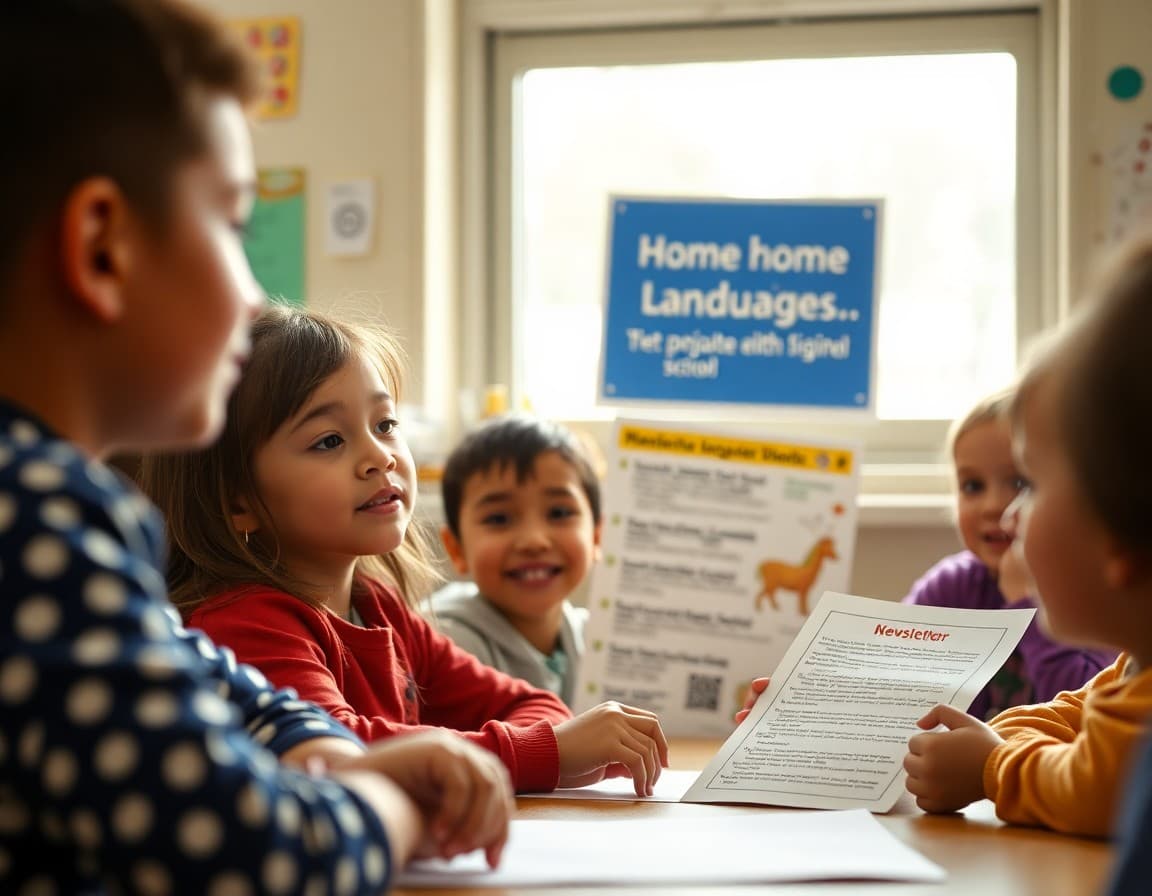
When the classroom newsletter itself appears in the family's language, it models the respect for bilingualism that it is encouraging families to practice at home. A teacher who sends translated newsletters is demonstrating, not just claiming, that both languages are valued. Daystage makes this modeling easier by supporting multilingual distribution as part of the standard newsletter workflow rather than as a special effort.
Get one newsletter idea every week.
Free. For teachers. No spam.
Frequently asked questions
Should teachers encourage families to speak their home language at home?
Yes, emphatically. Research consistently shows that strong home language development supports, rather than impedes, English language development. Teachers who communicate this clearly prevent families from making the common but counterproductive mistake of stopping home language use to 'help' their child learn English faster.
What does a home language newsletter section look like?
A brief paragraph acknowledging the value of bilingualism, a specific research finding or statistic families can hold onto, and a practical suggestion for maintaining home language at home while English is developing at school. Keep it warm and specific rather than academic.
How do you communicate with families who are worried that home language use is hurting their child's English?
Address the concern directly and with evidence. Explain that research shows bilingual children develop both languages when both are consistently supported, and that cutting off home language risks both the heritage language AND the child's conceptual development in the home language, which actually slows English acquisition.
What home language practices should teachers recommend in newsletters?
Reading aloud in the home language, telling family stories in the home language, discussing school topics in both languages, and maintaining connections to the home language community through books, media, and relationships. These practices maintain heritage language while supporting cognitive development.
What tool works best for newsletters supporting home language development?
Daystage supports bilingual newsletter distribution so teachers can send the same message in both English and the home language, modeling the bilingual communication they are encouraging families to maintain at home.

Adi Ackerman
Author
Adi Ackerman is a former classroom teacher and curriculum writer with 8 years in K-8 schools. She writes about school communication, parent engagement, and what actually works in real classrooms.
More for ELL & ESL
Ready to send your first newsletter?
3 newsletters free. No credit card. First one ready in under 5 minutes.
Get started free