

Teacher Newsletter for Immigrant Families: Building Trust Through Communication
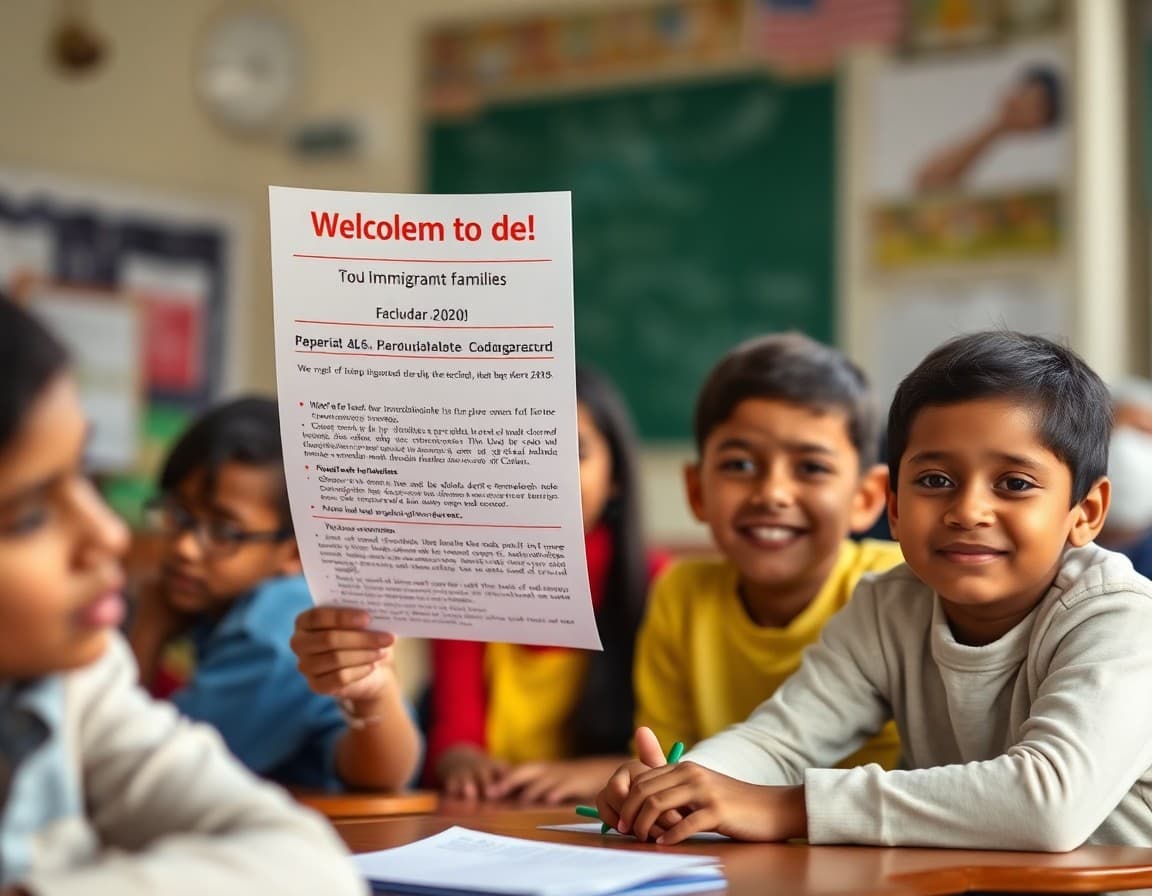
Immigrant families often arrive at school with enormous hopes for their child and significant anxiety about whether they will be understood, respected, and included. A classroom newsletter is one of the smallest but most consistent signals a teacher can send about whether immigrant families are truly welcome in the classroom community or merely tolerated in it. The signal comes not just from whether the newsletter is translated, but from what it says and how it says it.
Language Access is the Starting Point
A newsletter that only comes in English is not a newsletter for families who read primarily in Spanish, Arabic, Somali, or Haitian Creole. Language access is not a courtesy. It is the minimum required for the communication to function at all. Use translation tools for a first draft, have a bilingual staff member or community liaison review it, and send the translated version through the same channel as the English version. Do not make translated newsletters feel like an afterthought by burying them at the bottom or sending them a day late.
Avoid Education Jargon
Terms like IEP, RTI, Tier 2 support, ELA proficiency, and MTSS are meaningless to most families, including many English-speaking ones. For immigrant families, education jargon that does not translate cleanly creates additional barriers. Write in plain language: "your child is getting extra reading support in a small group twice a week" instead of "your child is receiving Tier 2 reading intervention." The plain version is clearer for everyone.
Explain the American School System
Many immigrant families come from countries with very different educational structures: different relationships between teachers and parents, different grading systems, different expectations for homework help, and different norms around contacting teachers directly. A newsletter that occasionally explains how the American system works, such as how parent-teacher conferences are structured, what a report card means, or what homework is expected to look like, serves newcomer families directly without alienating families who already know these things.
Acknowledge and Celebrate Cultural Diversity
When a newsletter mentions a cultural celebration, a multilingual book, or a family's shared cultural knowledge, it sends a signal to immigrant families that their background is an asset in this classroom, not something to be set aside. This acknowledgment does not need to be elaborate. A sentence noting that the class read a book by an author from a particular cultural background, or that students shared holiday traditions from their families, is enough to communicate inclusion.
Use Visuals and Photos
Photos of the classroom, the school building, and school events serve immigrant families who are unfamiliar with American school environments in a way that written descriptions alone cannot. A photo of the lunch room tells a family what to expect before their child's first day. A photo of a classroom activity shows what learning looks like in American school. These visuals reduce anxiety and build familiarity for families who are navigating an unfamiliar system.
Make Contact Easy and Non-Threatening
Some immigrant families are hesitant to contact teachers directly because of past experiences, cultural norms around teacher authority, or anxiety about language barriers. The newsletter should make contact feel easy and genuinely welcome: include multiple contact methods, mention that the teacher can find a translator if needed, and express genuine interest in hearing from families. A sentence like "I always enjoy hearing from families" sounds simple, but for a family that has been uncertain about whether to reach out, it can be the prompt that moves them to contact you.
Consistency Builds Trust
Immigrant families who receive a reliable, translated newsletter every month for a full school year develop genuine trust in the teacher and the school system. That trust compounds: they are more likely to attend conferences, more likely to respond to urgent communications, and more likely to feel that the school system is working for their family. Daystage makes it practical to send consistent multilingual newsletters without significant additional production time.
Get one newsletter idea every week.
Free. For teachers. No spam.
Frequently asked questions
How do teachers communicate effectively with immigrant families who have limited English?
Use translated newsletters in the families' primary language, supplement written communication with photos and visual cues, and avoid education jargon that is hard to translate. Building a relationship with families through school translators or bilingual community liaisons supplements written communication significantly.
What content should teacher newsletters for immigrant families prioritize?
Practical information first: school calendar, what children are learning, how to contact the teacher, and what families can do at home to support their child. Immigrant families often have high educational aspirations for their children and want actionable guidance, not just general updates.
How do you acknowledge a family's language and culture in a classroom newsletter?
Reference the languages and cultures present in your classroom specifically and positively. Mention a cultural celebration the class recognized, a family's shared expertise, or a text that represents students' backgrounds. Acknowledgment signals belonging, which matters enormously for newcomer families.
What is the biggest mistake teachers make when communicating with immigrant families?
Assuming that the parent email address is the best contact point. Many immigrant families communicate primarily through their phone, may not check email regularly, and may have literacy barriers that make written communication less effective than a phone call or text. Understanding each family's preferred communication channel matters.
What tool works best for newsletters reaching immigrant families?
Daystage supports multilingual newsletter distribution and mobile-friendly formatting that works well for families who access communications primarily through smartphones rather than computers.

Adi Ackerman
Author
Adi Ackerman is a former classroom teacher and curriculum writer with 8 years in K-8 schools. She writes about school communication, parent engagement, and what actually works in real classrooms.
More for ELL & ESL
Ready to send your first newsletter?
3 newsletters free. No credit card. First one ready in under 5 minutes.
Get started free