

Pennsylvania ELL Program Newsletter: Local Resources and Guide
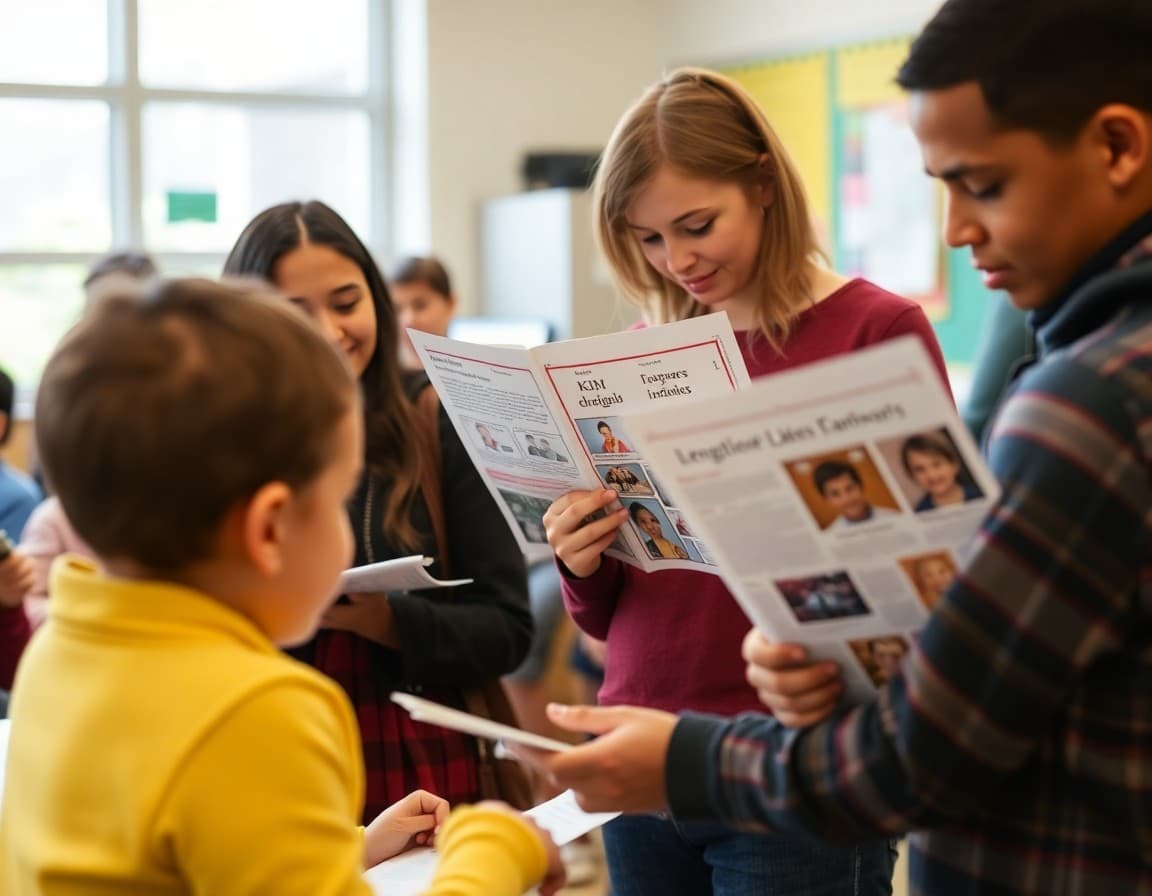
Pennsylvania has a diverse ELL student population spanning Philadelphia's cosmopolitan immigrant communities, Reading and Allentown's large Puerto Rican and Dominican populations, Lancaster County's growing Latino farmworker community, and Pittsburgh's refugee resettlement. The state has strong ELL infrastructure through its Intermediate Unit network, and effective Pennsylvania ELL newsletters take advantage of both state and regional resources while meeting each community where it is.
Philadelphia's Multilingual ELL Communities
Philadelphia School District serves a highly diverse ELL population. Spanish-speaking families are the largest group, concentrated in North Philadelphia and other Latino neighborhoods. Chinese-speaking families -- both Cantonese (primarily Fujianese) and Mandarin -- are significant in South Philadelphia and nearby communities. Vietnamese, Cambodian, and other Southeast Asian communities have deep roots in South Philadelphia. African communities speaking French, Wolof, Twi, and other languages are growing. Arab-American families are present in Northeast Philadelphia.
SEAMAAC serves the Southeast Asian community specifically and is one of the most important community partners for Philadelphia schools with Southeast Asian ELL enrollment. The IRC Philadelphia and Nationalities Service Center serve the broader refugee and immigrant community.
Reading and Allentown: High-ELL Cities
Reading has one of the highest proportions of ELL students of any city in the Northeast. The city's large Puerto Rican and Dominican communities have been in Reading for decades, and more recent Central American immigration has increased ELL enrollment further. Allentown and the broader Lehigh Valley have seen similar growth. Hispanic Center of the Lehigh Valley is a key community partner for Allentown area schools. ELL newsletters for Reading and Allentown schools can assume a well-established Spanish-speaking community with its own institutions and community infrastructure.
Lancaster County
Lancaster County has a growing Latino community tied to agricultural and food industry employment alongside its well-known Amish and Mennonite communities. Church World Service Lancaster is a major refugee resettlement agency that has resettled tens of thousands of people from dozens of countries. Lancaster County schools serve both Spanish-speaking farmworker families and refugee families from many countries including Iraq, Nepal, Congo, and elsewhere. ELL newsletters for Lancaster County schools need to reflect this dual reality.
Pennsylvania Department of Education and Intermediate Units
PDE's Bureau of Teaching and Learning provides ELL program guidance and family resources on the PDE website. Pennsylvania's 29 Intermediate Units provide regional ELL support including translation resources, professional development, and family engagement materials. IUs are the most important support resource for smaller Pennsylvania districts. WIDA ACCESS is Pennsylvania's ELL assessment, and WIDA's multilingual family resources are worth linking to from Pennsylvania ELL newsletters.
Pittsburgh's Refugee Communities
Pittsburgh has received refugee resettlement from many countries, with Bhutanese Nepali-speaking families and various African communities being significant in recent years. Jewish Family and Community Services Pittsburgh and Northern Area Multi-Service Center are key resettlement partners. Pittsburgh Public Schools has developed ELL communication resources reflecting the city's specific refugee communities. Pittsburgh's ELL population is smaller than Philadelphia's but has grown meaningfully in the past decade.
Community Organizations by Region
Philadelphia: SEAMAAC, IRC Philadelphia, Nationalities Service Center, Al-Aqsa Islamic Society. Lehigh Valley: Hispanic Center of the Lehigh Valley, United Way Lehigh Valley immigrant programs. Lancaster: Church World Service Lancaster, ASSETS Lancaster (economic development for immigrants). Pittsburgh: JFCS Pittsburgh, Northern Area Multi-Service Center, Catholic Charities Diocese of Pittsburgh. Statewide: HIAS Pennsylvania, ACLU Pennsylvania immigrant rights project, Pennsylvania Immigration and Citizenship Coalition.
Using Daystage for Pennsylvania ELL Newsletters
Daystage supports Pennsylvania ELL coordinators in creating newsletters with Spanish, Chinese, Nepali, Arabic, and other language sections and delivering them to family groups by language. For high-ELL cities like Reading and Allentown, Daystage provides a professional delivery platform that scales to large family email lists. For smaller Pennsylvania districts working with their regional IU for ELL support, Daystage's reusable templates make consistent communication achievable without significant additional capacity.
Get one newsletter idea every week.
Free. For teachers. No spam.
Frequently asked questions
What languages are most common among Pennsylvania ELL students?
Spanish is the most common home language among Pennsylvania ELL students, with heavy concentrations in Philadelphia, Reading, Allentown, Lancaster, and communities across the state. Reading, Pennsylvania has one of the highest proportions of ELL students of any city in the Northeast due to its large Puerto Rican and Dominican communities. Chinese (Cantonese and Mandarin) is significant in Philadelphia. Arabic, Nepali (Bhutanese refugees), Somali, Vietnamese, and Karen are present in Philadelphia and Pittsburgh. Lancaster County has a large Amish and Mennonite population with German heritage, but also a significant Latino immigrant community.
What state agency oversees Pennsylvania ELL programs?
The Pennsylvania Department of Education (PDE) oversees ELL programs through its Bureau of Teaching and Learning. Pennsylvania administers the WIDA ACCESS assessment. PDE provides guidance and family resources on the PDE website. Pennsylvania's Intermediate Units (IUs) provide regional support to districts for ELL programs, translation resources, and professional development. IUs are an important resource for smaller Pennsylvania districts that cannot maintain their own multilingual family services staff.
What are Pennsylvania ELL family rights?
Pennsylvania ELL families have federal rights to notification within 30 days of ELL identification, communication in a language they understand, interpreter access for school meetings, and translated essential documents. PDE requires districts to meet these obligations and provides guidance through the IU network. Pennsylvania also has specific requirements around the identification and initial placement of ELL students that are worth communicating to families so they understand the process their child went through when first identified.
What community resources serve Pennsylvania ELL families?
Philadelphia resources include SEAMAAC (Southeast Asian Mutual Assistance Associations Coalition), the IRC Philadelphia office, Nationalities Service Center, and Al-Aqsa Islamic Society which serves the Arabic-speaking community. Allentown and Lehigh Valley resources include Hispanic Center of the Lehigh Valley. Lancaster resources include Church World Service Lancaster, which is a major refugee resettlement agency. Pittsburgh resources include Northern Area Multi-Service Center and Jewish Family and Community Services Pittsburgh. Statewide, HIAS Pennsylvania provides immigration legal assistance.
How does Daystage support Pennsylvania ELL newsletters for Reading and Allentown's large Latino communities?
Reading and Allentown have among the highest ELL enrollment percentages of any Pennsylvania cities. Daystage lets ELL coordinators build Spanish-English newsletters with links to local community resources and deliver them by email to family groups. For Reading and Allentown schools where Spanish-speaking families are the dominant ELL population, Daystage supports a newsletter format where Spanish content receives equal visual prominence to English, reflecting the community's cultural position rather than treating Spanish as secondary.

Adi Ackerman
Author
Adi Ackerman is a former classroom teacher and curriculum writer with 8 years in K-8 schools. She writes about school communication, parent engagement, and what actually works in real classrooms.
More for ELL & ESL
Ready to send your first newsletter?
3 newsletters free. No credit card. First one ready in under 5 minutes.
Get started free