

Pennsylvania ELL Program Newsletter: Guide for ESL Teachers and Coordinators
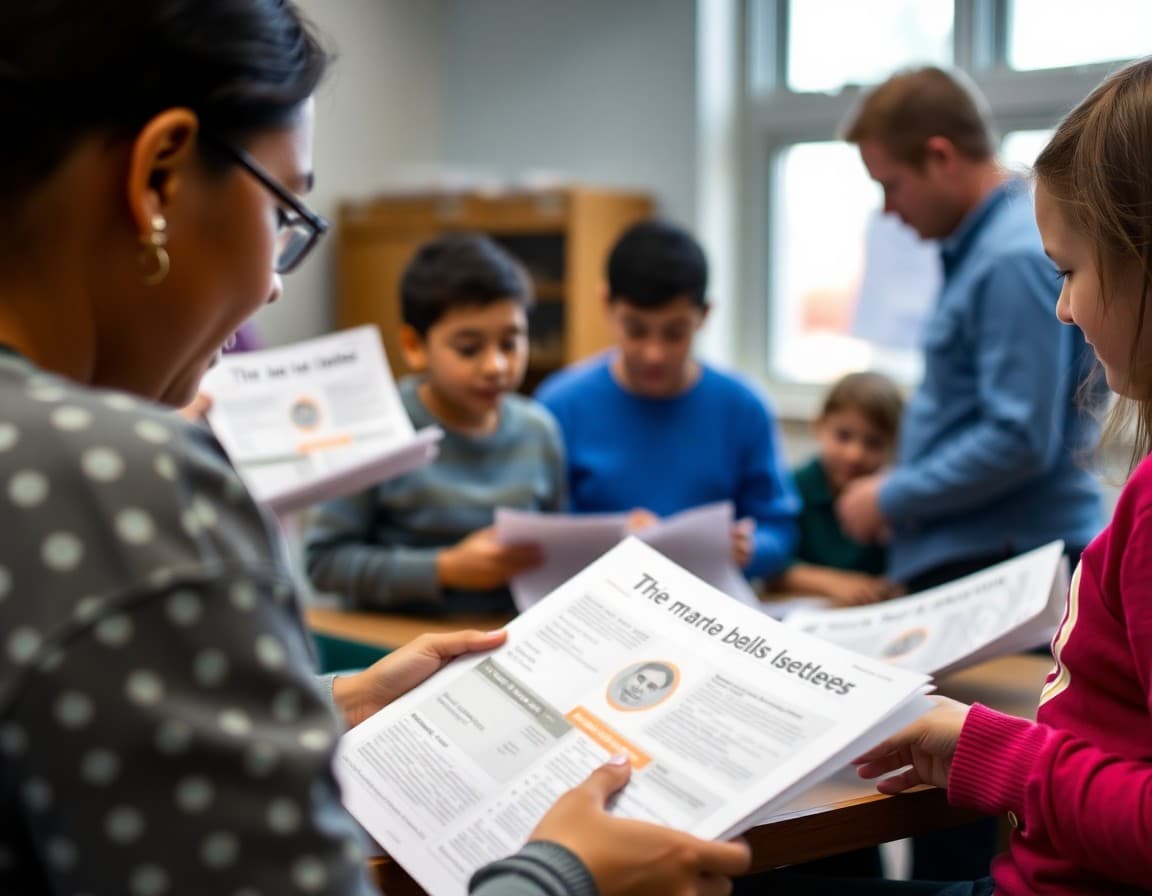
Pennsylvania's ELL programs serve a state where Reading is one of the most heavily Latino cities in the Northeast, where Philadelphia has deep Vietnamese and Chinese communities, and where Lancaster County has a significant Spanish-speaking community that few people outside Pennsylvania know about. The communication challenge ranges from established Puerto Rican communities in Reading to newly arrived refugees in Pittsburgh. An effective newsletter has to know which community it is writing for.
Pennsylvania's Title III Communication Framework
Pennsylvania follows federal Title III and ESSA requirements: essential communications for families with limited English proficiency must be translated, annual WIDA results must be explained, and conferences must be accessible to families who do not read English. The Pennsylvania Department of Education reviews compliance through the Title III consolidated application. Your ELL program newsletter is the most visible, consistent communication your program sends year-round. Schools that maintain regular, translated newsletters build the family engagement that formal compliance documents cannot create.
Explain WIDA ACCESS Results in Plain Language
Pennsylvania uses WIDA ACCESS to measure English language proficiency. Families receive score reports each spring. Your newsletter during the testing window and when scores release should explain what ACCESS measures, what the 1-6 scale means, and what your district requires for reclassification. For Spanish-speaking families in Reading, Allentown, and Lancaster, publish this in Spanish. For Vietnamese families in South Philadelphia, provide a Vietnamese version. A parent who understands the ACCESS score can set goals with their child at home and ask specific, informed questions at the parent-teacher conference.
Acknowledge Pennsylvania's Long-Established Puerto Rican Communities
Reading, Allentown, and Philadelphia have Puerto Rican communities that have been in Pennsylvania since the 1950s migration. These families are not immigrants in the usual sense -- they are American citizens with multigenerational presence in Pennsylvania schools. Many parents in Reading and Allentown attended the same schools their children attend now. Your newsletter for these families should provide program-specific information about reclassification criteria, high school course options, and college preparation pathways rather than explaining how American schools work. Treating a multigenerational Pennsylvania family as a newcomer who needs orientation basics is both condescending and counterproductive.
A Monthly Pennsylvania ELL Program Newsletter Template
This format works across grade levels:
ELL Program Update -- [Month] [Year]
Your student is working on: [Language skill area]
What this looks like in class: [Brief description]
How to support at home: [Activity in the home language]
Coming up:
- [Date]: WIDA ACCESS testing
- [Date]: Parent conference (interpreter available)
Contact: [ELL coordinator name, phone, email]
Serve Philadelphia's Vietnamese and Chinese Communities
South Philadelphia has one of the oldest Vietnamese communities on the East Coast, established through post-Vietnam War refugee resettlement. The community has deep roots and established institutions: Vietnamese Catholic churches, restaurants, and community organizations anchor the neighborhood. Philadelphia's Chinese community is primarily in Chinatown, with Cantonese and Mandarin speakers. Your newsletter for Vietnamese-speaking families in South Philly should acknowledge the community's long history in the city. For newer Vietnamese arrivals and for Chinese-speaking families, the newsletter should provide more orientation context alongside program-specific information.
Connect Pennsylvania Families to Community Resources
Pennsylvania has substantial resources for ELL families. JUNTOS in Lancaster serves the Latino community with education and advocacy. Nationalities Service Center in Philadelphia serves immigrant and refugee families. Welcoming Pittsburgh serves new Americans in western Pennsylvania. Pennsylvania Immigration and Citizenship Coalition provides advocacy and legal resources. Lutheran Children and Family Service has offices across the state. Philadelphia Legal Assistance handles immigration-adjacent legal matters. One resource mention per newsletter issue builds a community resource map that families use when they face language barriers outside the school context.
Use Daystage to Reach Pennsylvania ELL Families Directly
Pennsylvania ELL coordinators managing newsletters for families speaking Spanish, Vietnamese, Somali, and other languages need tools that simplify multilingual production. Daystage lets coordinators create one newsletter structure and send separate language versions to the right families simultaneously. A Vietnamese family in South Philadelphia receives the Vietnamese version on the same day a Spanish-speaking family in Reading receives the Spanish version. Programs that use digital delivery reach families directly, in their language, without depending on the paper-in-backpack chain that loses too many newsletters before they ever reach a parent. Consistent digital delivery directly improves conference attendance rates and parent engagement with the ELL program throughout the year.
Get one newsletter idea every week.
Free. For teachers. No spam.
Frequently asked questions
What are Pennsylvania's requirements for communicating with ELL families?
Pennsylvania follows federal Title III and ESSA language access requirements. Schools must translate essential communications for families with limited English proficiency, including ELL identification notices, annual ACCESS assessment results, placement letters, and conference invitations. The Pennsylvania Department of Education oversees compliance through the Title III consolidated application and provides language access guidance through its Division of Student Support Services.
What assessment does Pennsylvania use for English language proficiency?
Pennsylvania uses ACCESS for ELLs (WIDA) to measure English language proficiency in grades K-12. The assessment covers Listening, Speaking, Reading, and Writing on a 1-6 scale. Pennsylvania's reclassification criteria include WIDA composite and domain score thresholds along with academic performance indicators. Families need plain-language explanations of what ACCESS measures and what reclassification means in their district.
What languages do Pennsylvania ELL families most commonly speak?
Spanish is the most common home language in Pennsylvania's ELL population, with large communities in Philadelphia, Reading, Allentown, Lancaster, and York. Reading is one of the poorest cities in the United States with a predominantly Latino population. Vietnamese and Chinese are significant languages in Philadelphia. Somali and Karen speakers are present in Philadelphia and Pittsburgh. New York City proximity draws many Spanish-speaking families to eastern Pennsylvania communities.
How should Pennsylvania ELL newsletters address Reading and Allentown's Latino communities?
Reading has one of the highest concentrations of Spanish-speaking residents per capita of any city in Pennsylvania, with a predominantly Puerto Rican and Dominican community. Allentown has a similarly high Latino concentration. These are not primarily immigrant communities -- many families have been in Pennsylvania for generations, with roots going back to the 1950s migration from Puerto Rico. Your newsletter for these communities should provide program-specific information at a sophisticated level, not newcomer orientation basics.
Can Daystage support Pennsylvania ELL programs with multilingual newsletters?
Yes. Daystage lets ELL coordinators create formatted newsletters and send separate language versions to specific family groups. For a Philadelphia district with Spanish, Vietnamese, and Somali-speaking families, you can manage multiple language versions through one platform. Daystage handles formatting and delivery so coordinators focus on content quality and translation accuracy.

Adi Ackerman
Author
Adi Ackerman is a former classroom teacher and curriculum writer with 8 years in K-8 schools. She writes about school communication, parent engagement, and what actually works in real classrooms.
More for ELL & ESL
Ready to send your first newsletter?
3 newsletters free. No credit card. First one ready in under 5 minutes.
Get started free