

Illinois ELL Program Newsletter: Local Resources and Guide
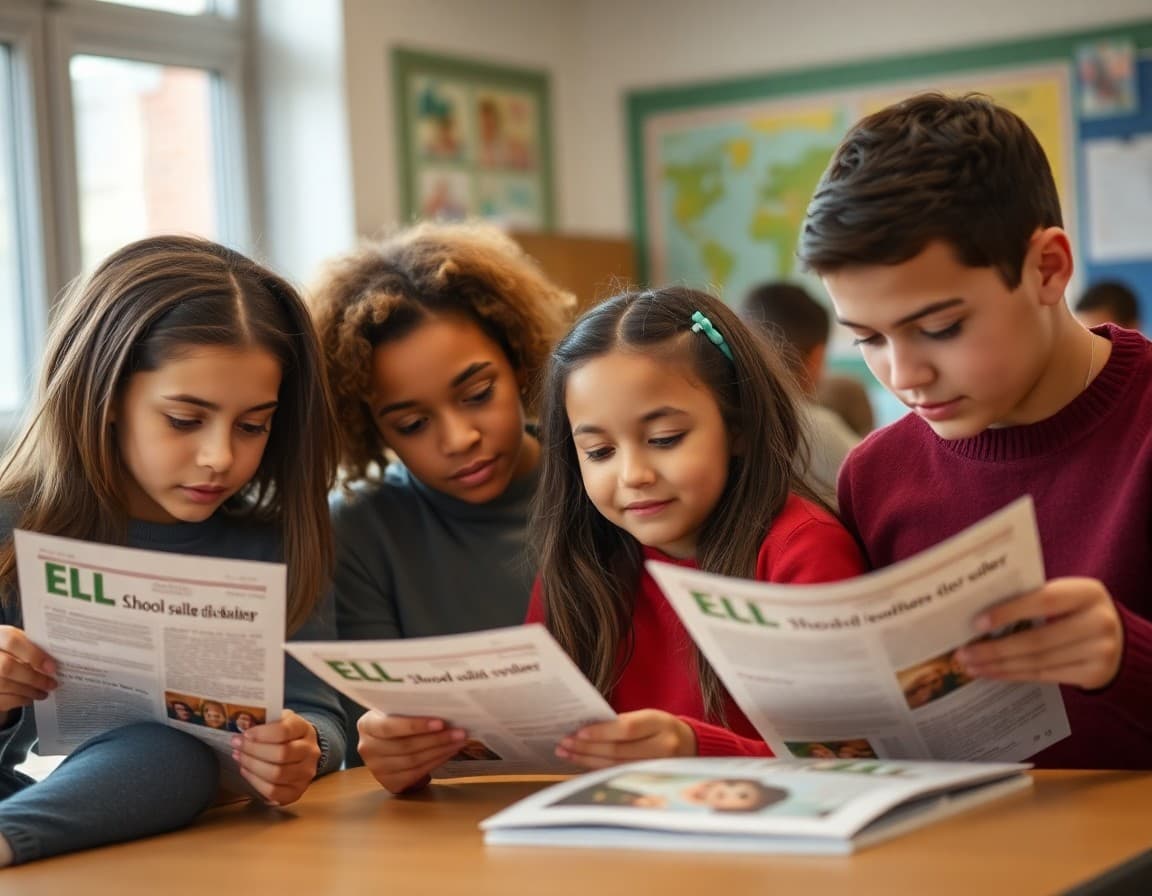
Illinois has one of the strongest bilingual education mandates in the country, giving ELL families legal rights that go significantly beyond what federal law requires. Chicago's large and long-established Latino and Arabic-speaking communities, combined with rapidly growing ELL populations in suburban Cook, DuPage, and Kane Counties, make Illinois ELL communication both a high-stakes obligation and an opportunity to build lasting school-family partnerships.
Illinois' Bilingual Education Mandate
When 20 or more students in a district speak the same home language, Illinois law requires the district to provide Transitional Bilingual Education (TBE) in that language. This means instruction in content areas in both the home language and English for a transitional period. When fewer than 20 students share a home language, the district must provide a Transitional Program of Instruction (TPI), which typically means ESL services without home language instruction.
Your ELL newsletter should clearly state which program model your school offers and what that means for families. Families who know their child is in a TBE program -- and that this is a legal right -- engage with that program differently than families who think their child is simply receiving ESL classes.
Illinois ELL Family Rights
Illinois requires ELL identification notification within 14 days -- faster than the federal 30-day requirement. Families have the right to bilingual instruction when the enrollment threshold is met. They have the right to communication in their home language, interpreter access, and translated essential documents. The ISBE publishes a Family Rights in Bilingual Education and ESL Programs guide in multiple languages that is worth linking to in every Illinois ELL newsletter.
Chicago's ELL Communities
Chicago Public Schools is home to large Mexican-American and Puerto Rican communities that have been in Chicago for generations, as well as growing communities from Central America, West Africa, Eastern Europe, South Asia, and Southeast Asia. The Arab-American community is concentrated primarily in the northwest suburbs, particularly in Dearborn Heights and surrounding communities. Polish-speaking families are present in significant numbers in both Chicago and suburban Cook County. Understanding the specific community in your school shapes every communication decision.
ISBE and CPS Resources
The Illinois State Board of Education ELL unit website is the primary state resource for ELL program guidance and family rights information. Chicago Public Schools has developed multilingual family communication resources including parent guides in Spanish, Arabic, Polish, and other languages. The Illinois Resource Center provides professional development and materials for bilingual and ESL educators. Regional education cooperatives throughout the state provide additional support for districts outside Chicago.
Chicago Area Community Organizations
Chicago's immigrant services infrastructure is extensive. Heartland Alliance provides immigration legal assistance and family services. The IRC Chicago serves refugee families. The Puerto Rican Cultural Center in Humboldt Park serves the Puerto Rican community. Casa Michoacan and Enlace Chicago serve Mexican-American communities. Arab American Family Services serves Arabic-speaking communities in the southwest suburbs. Public libraries across Chicago and Cook County offer multilingual ESL programs and family resources.
Suburban Illinois ELL Growth
Kane, DuPage, Will, and Lake Counties have seen substantial growth in ELL enrollment over the past 20 years. Aurora, with its large Spanish-speaking community, is one of the largest ELL districts in the state outside Chicago. Suburban districts that did not have bilingual education programs a decade ago now have TBE obligations and are building the infrastructure to meet them. ELL newsletters in these growing suburban programs should explicitly address families who are new to the district's program.
Using Daystage for Illinois ELL Newsletters
Daystage lets Illinois ELL coordinators build newsletters with Spanish, Arabic, Polish, Urdu, and other language sections, deliver them to family groups by language, and include links to ISBE resources and community organizations. For Illinois programs that include TBE components, Daystage supports a newsletter design that presents both languages as valued -- consistent with the program's legal and pedagogical philosophy.
Get one newsletter idea every week.
Free. For teachers. No spam.
Frequently asked questions
What makes Illinois ELL law unique compared to other states?
Illinois has one of the strongest bilingual education mandates in the United States. Under the Illinois School Code, when 20 or more students in a district speak the same home language other than English, the district must provide a Transitional Bilingual Education (TBE) program in that language. Districts with fewer than 20 students sharing a home language must provide a Transitional Program of Instruction (TPI). This means that Spanish-speaking families in large Illinois districts have a legal right to bilingual instruction, not just ESL pullout services. ELL newsletters in Illinois must accurately describe which program their school offers and what legal rights families have.
What languages are most common among Illinois ELL students?
Spanish is by far the most common home language among Illinois ELL students, reflecting Chicago's large and long-established Mexican and Puerto Rican communities as well as growing Central American populations. Arabic is second, with significant communities in Chicago's northwest suburbs. Polish, Urdu, Gujarati, Mandarin, and Tagalog are also significant. Chicago Public Schools alone serves families speaking over 100 different languages. Suburban districts, particularly DuPage, Kane, and Will Counties, have seen rapid growth in ELL populations in recent decades.
What are Illinois ELL family rights under state law?
Illinois families have stronger ELL rights than families in most other states due to the bilingual education mandate. If 20 or more students in your district share a home language, those families have the right to bilingual instruction in that language. All ELL families have the right to communication in their home language, interpreter access for school meetings, translated essential documents, and notification within 14 days of ELL identification -- a shorter window than the federal 30-day requirement. The Illinois State Board of Education ELL unit can advise on specific rights and district obligations.
What ISBE resources should Illinois ELL newsletters reference?
The Illinois State Board of Education publishes Family Rights in Bilingual Education and ESL Programs guides in multiple languages on the ISBE website. ISBE also provides guidance on the Transitional Bilingual Education and Transitional Program of Instruction requirements, and publishes annual data on ELL program enrollment. Chicago Public Schools has developed extensive multilingual family communication resources including parent guides in multiple languages. The ISBE ELL unit website is a comprehensive resource for families and coordinators.
How does Daystage support Illinois ELL and bilingual program newsletters?
Illinois ELL programs that include TBE components -- teaching content in Spanish or another home language alongside English development -- can use Daystage to create newsletters that reflect the bilingual program philosophy. Daystage supports newsletters with sections in Spanish, Arabic, Polish, Urdu, and other languages and delivers them to family groups by language. For Chicago-area districts with large and linguistically diverse ELL populations, Daystage's segmented delivery makes it practical to reach many different language communities with appropriate content.

Adi Ackerman
Author
Adi Ackerman is a former classroom teacher and curriculum writer with 8 years in K-8 schools. She writes about school communication, parent engagement, and what actually works in real classrooms.
More for ELL & ESL
Ready to send your first newsletter?
3 newsletters free. No credit card. First one ready in under 5 minutes.
Get started free