
Illinois ELL Program Newsletter: Guide for Multilingual Program Coordinators
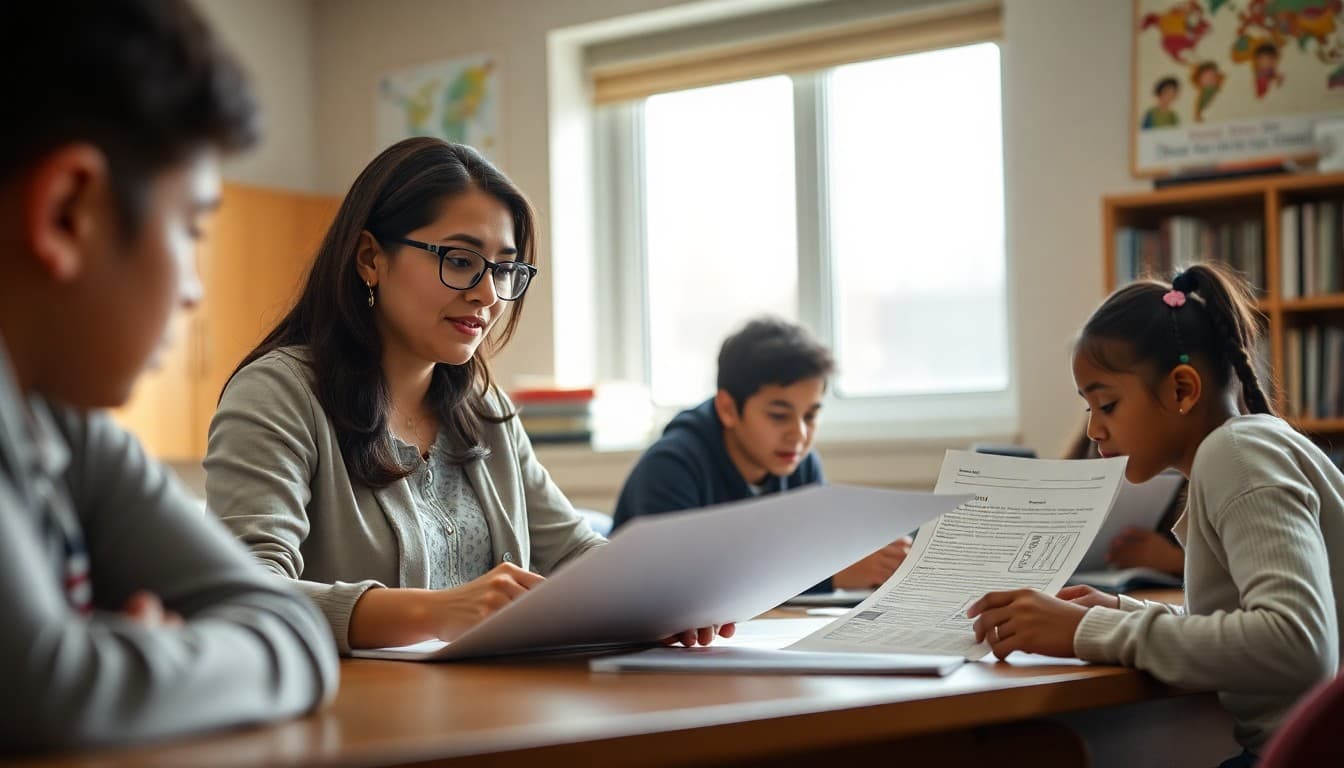
Illinois has one of the most comprehensive bilingual education statutes in the country. The 20-student threshold that triggers a TBE or TPI program creates specific communication obligations for districts that go beyond what most states face. In Chicago, those obligations multiply across dozens of language communities. A well-built ELL program newsletter is essential to meeting those obligations and to the family engagement that bilingual programs depend on.
Illinois's Bilingual Education Law Creates Real Communication Duties
Under the Illinois School Code, any district with 20 or more ELL students sharing the same home language must offer either a Transitional Bilingual Education (TBE) or Transitional Program of Instruction (TPI) program. The TBE model uses the home language for initial instruction with gradual transition to English. The TPI model provides English-only instruction with supplemental support services. Both models require that essential communications be translated into the family's home language. The Illinois State Board of Education reviews annual Bilingual Education Service Plans and expects to see evidence of translated parent communication. Your newsletter is part of that evidence.
Know When the 20-Student Threshold Triggers Additional Obligations
The 20-student threshold is not just an enrollment number -- it determines what program model your district is required to offer and what communication obligations follow. If your school has 22 Spanish-speaking ELL students and 8 Polish-speaking ELL students, you are required to offer a Spanish TBE or TPI program, but not necessarily a Polish one. Your newsletter should reflect those obligations honestly: explain what programs your district offers, which students qualify for each model, and what parents have the right to request if they believe their child needs a different level of support.
Explain ACCESS Results in the Languages Your Families Speak
Illinois uses WIDA ACCESS to measure English language proficiency. Families receive score reports each spring that require explanation. Your newsletter during the testing window should include a plain-language section explaining what ACCESS measures, what the 1-6 proficiency scale means, and what your district requires for reclassification. For Chicago schools, this explanation needs to be available in Spanish as a minimum, and in Polish, Arabic, or other languages based on your enrollment data. The explanation that reaches families in their language is the one that gets read and acted on.
A Monthly Illinois Bilingual Program Newsletter Template
This format works across grade levels:
Bilingual / ELL Program Update -- [Month] [Year]
Your student's current program: [TBE, TPI, or ESL pull-out]
Language focus this month: [Domain and skill in plain language]
How to help at home: [One activity in the home language]
Coming up:
- [Date]: WIDA ACCESS testing
- [Date]: Parent-teacher conference (bilingual staff available)
Contact: [Bilingual coordinator name, phone, email]
Serve Chicago's Linguistic Diversity With Specific Planning
Chicago Public Schools serves students speaking over 100 languages. Pilsen, Little Village, and Back of the Yards are predominantly Spanish-speaking. Albany Park has Korean and Arabic-speaking families. Polish communities are concentrated on the northwest and north sides. Rogers Park and Uptown have Ethiopian, Cambodian, and Vietnamese communities. Your newsletter languages should reflect your specific school's enrollment data. A Pilsen school that translates only into Polish is missing its community. A Rogers Park school that offers only Spanish misses a different set of families.
Connect Families to Illinois's Support Network
Illinois and Chicago specifically have extensive resources for immigrant and ELL families. The Illinois Coalition for Immigrant and Refugee Rights advocates for families across the state. Heartland Alliance in Chicago provides legal, health, and educational services for immigrant families. Chinese Mutual Aid Association serves Chinese-speaking families in Uptown. Indo-American Center on the north side serves South Asian families. MALDEF -- the Mexican American Legal Defense and Educational Fund -- has a Chicago office that handles education rights cases. One resource mention per newsletter issue builds a meaningful support map over the school year.
Use Daystage to Manage Illinois's Multilingual Communication Complexity
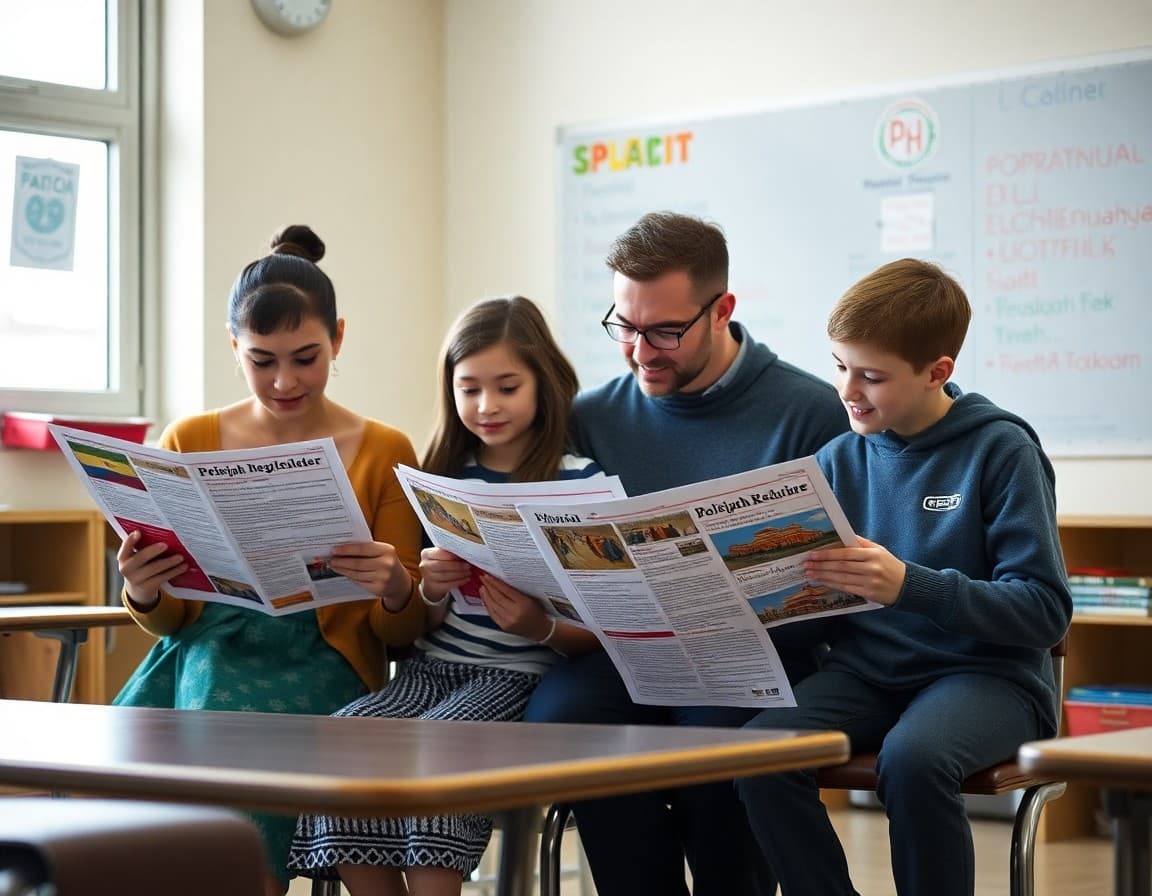
Illinois bilingual program coordinators managing newsletters in three, four, or more languages need tools that simplify production rather than compound the effort. Daystage lets coordinators build one newsletter structure and send separate language versions to the right families simultaneously. Spanish, Polish, and Arabic versions go out at the same time to the right family groups. The coordinator manages one workflow, meets the state's documented communication requirements, and families receive information they can read and act on. That combination is what moves a bilingual program from compliance-minimum to genuinely effective family engagement.
Get one newsletter idea every week.
Free. For teachers. No spam.
Frequently asked questions
What are Illinois's requirements for communicating with ELL families?
Illinois has some of the most extensive bilingual education requirements in the country. Under the Illinois School Code, districts with 20 or more students of the same language background who have limited English proficiency must offer a transitional bilingual education (TBE) or transitional program of instruction (TPI). Essential communications must be translated into the family's home language. The Illinois State Board of Education monitors compliance through its annual Bilingual Education Service Plan review.
What assessment does Illinois use for English language proficiency?
Illinois uses ACCESS for ELLs (WIDA) to measure English language proficiency. The test covers Listening, Speaking, Reading, and Writing on a 1-6 scale. Illinois's reclassification criteria require meeting WIDA composite and domain score thresholds, academic performance indicators, and teacher recommendation. Families need plain-language explanations of what ACCESS scores mean and what reclassification looks like in their district.
What languages do Illinois ELL families most commonly speak?
Spanish is the most common home language among Illinois ELL students, with large communities in Chicago, Cicero, Aurora, Elgin, and throughout the state. Polish is the second-largest language community in Chicago, with significant numbers in the northwest and northwest suburban areas. Arabic, Urdu, Hindi, Gujarati, Korean, Vietnamese, and Tagalog are also present in the Chicago metro area. Downstate Illinois has agricultural communities with Spanish-speaking families.
What is the difference between a TBE and TPI program in Illinois, and how should it appear in newsletters?
Illinois's Transitional Bilingual Education (TBE) program requires instruction in both English and the student's home language. The Transitional Program of Instruction (TPI) provides support services in English only. The threshold that determines which program a district must offer is 20 students speaking the same language with limited English proficiency. Your newsletter should explain which program model your school offers and what that means for your student's daily instruction and language support.
Can Daystage help Illinois ELL and bilingual programs send multilingual newsletters?
Yes. Daystage lets multilingual program coordinators create formatted newsletters and send separate language versions to different family groups. For a Chicago district with Spanish, Polish, and Arabic-speaking families, you can manage all three language versions through one platform. Daystage handles formatting and delivery so coordinators focus on content quality and translation accuracy across the multiple languages Illinois programs often require.

Adi Ackerman
Author
Adi Ackerman is a former classroom teacher and curriculum writer with 8 years in K-8 schools. She writes about school communication, parent engagement, and what actually works in real classrooms.
More for ELL & ESL
Ready to send your first newsletter?
3 newsletters free. No credit card. First one ready in under 5 minutes.
Get started free