

Hawaii ELL Program Newsletter: Local Resources and Guide
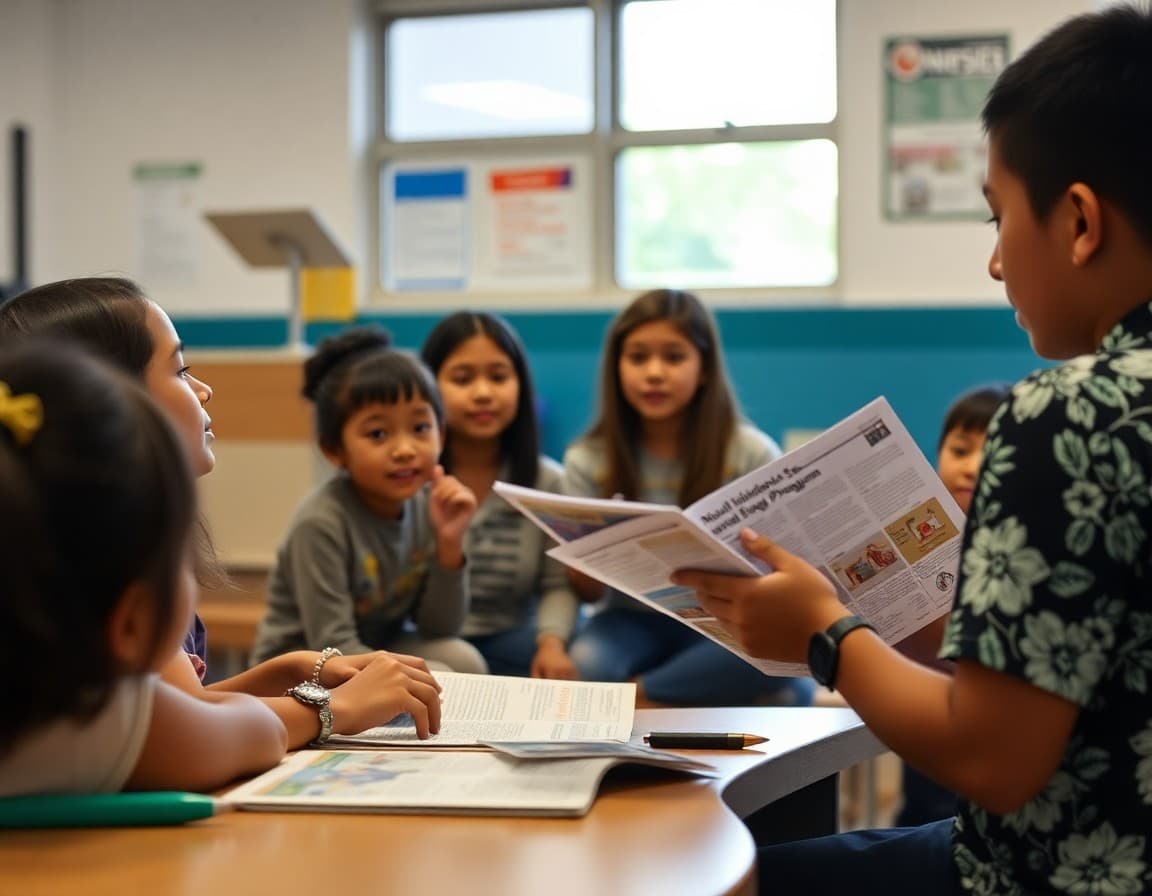
Hawaii's ELL student population reflects the state's extraordinary position as a Pacific crossroads. Filipino, Micronesian, Japanese, Korean, and Samoan communities all have deep roots in Hawaii, while newer communities from throughout Asia and the Pacific continue to shape the state's school demographics. Hawaii's single statewide school district means that HIDOE ELL standards apply consistently, but effective ELL newsletters need to reflect the specific languages and cultural communities in each school.
Hawaii's Unique ELL Context
Hawaii is unusual among US states in that English is spoken alongside Hawaiian, Hawaii Pidgin, and a range of Pacific Island and Asian languages with deep community roots. This history means that the relationship between English and other languages in Hawaii is more complex than in mainland states where immigration is more recent. ELL newsletters should reflect respect for this linguistic history rather than positioning English as the unquestioned goal and other languages as problems to be overcome.
Families from Marshall Islands, Federated States of Micronesia, and Palau have unique legal standing in the US under Compact of Free Association agreements, giving them the right to live and work in the US without traditional immigration status. This community's relationship with government institutions, including schools, is shaped by this distinctive history and by the significant health and economic challenges many COFA families face.
Pacific Islander ELL Communities
Micronesian families -- including Marshallese, Chuukese, and Pohnpeian speakers -- are among the fastest-growing ELL communities in Hawaii. These communities often experience higher rates of homelessness, health disparities, and economic hardship compared to other Hawaii residents, which affects school engagement and communication. ELL newsletters for Pacific Islander communities should be written with awareness of these challenges and should include information about wraparound support services, not just academic program information.
Filipino Language Communities
Hawaii's Filipino community is multi-generational, with many families having been in Hawaii for three or four generations. Newly arrived Filipino families, however, may speak Ilokano, Tagalog, or other Filipino languages at home. Ilokano is the most common Filipino language among ELL students in Hawaii and should be a translation priority in schools with large Filipino ELL enrollment.
Hawaii Department of Education Resources
HIDOE's Office of Student Support Services oversees ELL programs and provides family guidance on the HIDOE website. The state's Office of Language Access provides resources for schools and families on language access rights and services. Many Hawaii schools benefit from community school coordinators who bridge school-family communication in culturally appropriate ways, particularly in schools serving Pacific Islander communities.
Community Organizations for Hawaii ELL Families
Kokua Kalihi Valley Comprehensive Family Services is a community health center serving the Kalihi neighborhood in Honolulu, which has large Pacific Islander and immigrant populations. Pacific Gateway Center provides refugee and immigrant services including language classes and family support. The Queen's Medical Center and community health centers serve Pacific Islander families with multilingual health services. The Micronesian Resource Project at University of Hawaii supports Micronesian community needs across the state.
Cultural Respect in ELL Communication
Pacific Islander and Asian cultures place significant emphasis on respect for elders, communal decision-making, and indirect communication styles. ELL newsletters that use overly direct or demanding language may be received poorly in these communities. A warm, respectful tone that invites family participation rather than instructing it is more likely to build the kind of ongoing engagement that supports student success.
Sending Hawaii ELL Newsletters With Daystage
Daystage supports Hawaii ELL coordinators in creating newsletters with Ilokano, Marshallese, Japanese, and other language sections and email delivery to family groups. For Hawaii's statewide school district, Daystage provides a consistent communication platform that individual schools can use while maintaining their community-specific language and cultural orientation.
Get one newsletter idea every week.
Free. For teachers. No spam.
Frequently asked questions
What languages are most common among Hawaii ELL students?
Ilokano and other Filipino languages are among the most common home languages for ELL students in Hawaii, reflecting the state's large Filipino-American community. Marshallese, Chuukese, and other Micronesian languages are a significant and growing ELL language group, particularly in Honolulu and on neighbor islands. Japanese, Korean, Samoan, and Tongan are also present. Spanish-speaking ELL students are a smaller but present population. Hawaii's geographic position and historical ties to Pacific Island nations create a distinct ELL language landscape that differs from mainland US schools.
What makes Hawaii's ELL context unique?
Hawaii is one of the few states where English is not a majority home language in all communities. Native Hawaiian and Pidgin (Hawaii Creole English) are widely spoken alongside standard American English. The state also has one of the largest proportions of students from Pacific Island nations -- the Marshall Islands, Federated States of Micronesia, and Palau -- whose families have unique rights under Compact of Free Association agreements. ELL programs in Hawaii must navigate these distinct cultural and legal contexts alongside standard federal ELL requirements.
What are Hawaii ELL family rights and what special considerations apply?
Hawaii ELL families have the standard federal rights: notification within 30 days of ELL identification, communication in a language they understand, interpreter access, and translated documents. For families from Compact of Free Association nations (Marshall Islands, Micronesia, Palau), additional considerations apply related to their legal status and eligibility for state programs. Hawaiian culture also places significant importance on community and family relationships with schools, and ELL newsletters that reflect understanding of Pacific Islander cultural values -- including communal rather than individual decision-making around education -- are more effective.
What Hawaii state resources should ELL newsletters reference?
The Hawaii Department of Education (HIDOE) oversees ELL programs statewide as Hawaii has a single unified school district. HIDOE's Office of Student Support Services covers ELL programs and publishes family resources and guidance. The state's Office of Language Access provides translation and interpretation resources for government services including schools. Community organizations like the Kokua Kalihi Valley Comprehensive Family Services and Pacific Gateway Center in Honolulu provide multilingual family support for Pacific Islander and immigrant communities.
How does Daystage support Hawaii ELL program newsletters?
Daystage lets Hawaii ELL coordinators build newsletters with sections in Ilokano, Marshallese, Japanese, and other home languages, deliver them by email to family groups, and include links to HIDOE resources and local community organizations. Hawaii's single statewide school district means that ELL communication standards set at the HIDOE level flow to all schools, and Daystage's consistent template structure supports this statewide consistency while allowing individual schools to customize for their community.

Adi Ackerman
Author
Adi Ackerman is a former classroom teacher and curriculum writer with 8 years in K-8 schools. She writes about school communication, parent engagement, and what actually works in real classrooms.
More for ELL & ESL
Ready to send your first newsletter?
3 newsletters free. No credit card. First one ready in under 5 minutes.
Get started free