
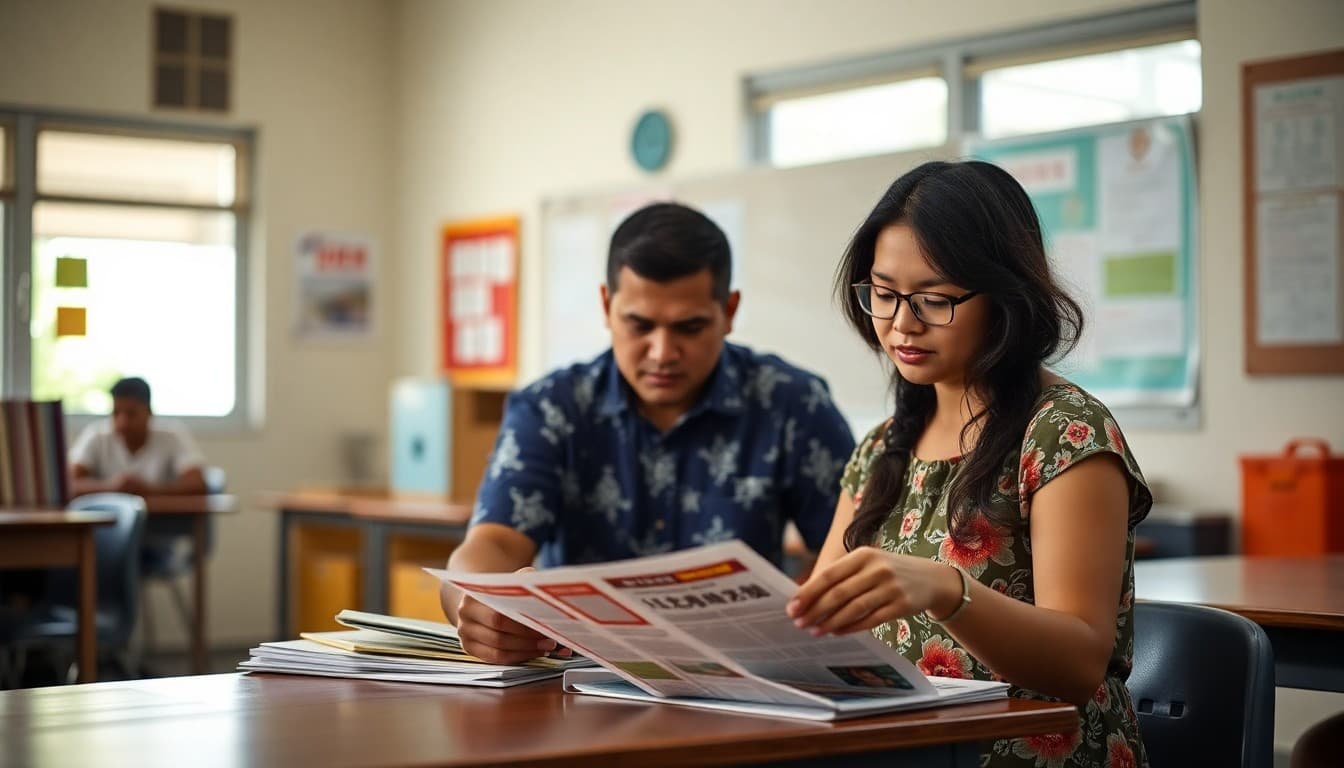
Hawaii ELL Program Newsletter: Guide for ESL and Multilingual Educators
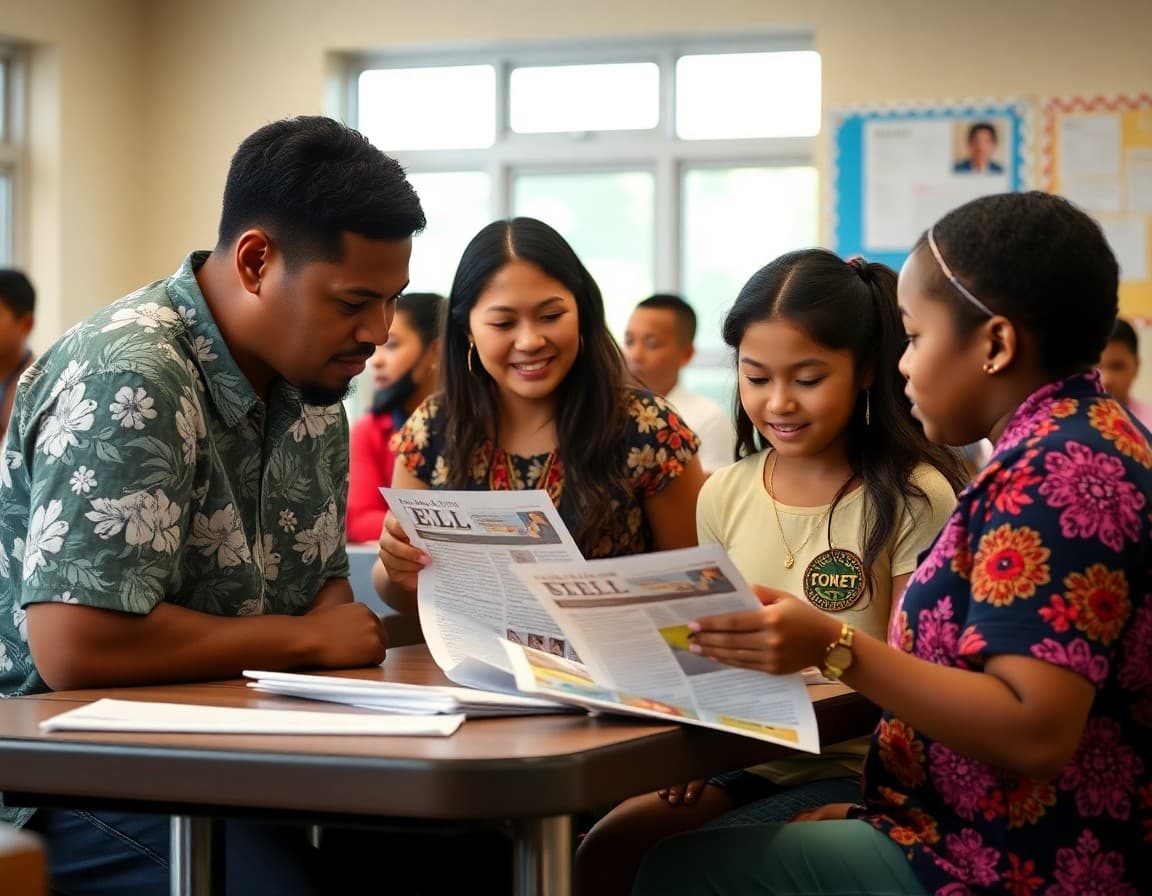
Hawaii's ELL landscape is unlike any other state. The dominant language groups include Micronesian communities speaking Marshallese, Chuukese, and other Pacific Island languages, large Filipino communities speaking Tagalog and Ilocano, and East Asian families speaking Japanese, Korean, and Cantonese. An ELL program newsletter that works in Hawaii has to account for linguistic diversity that most mainland educators rarely encounter.
Hawaii's Single-District Language Access Framework
Hawaii is unique in operating as a single statewide school district. Language access policies are set centrally by the Hawaii Department of Education and applied across all islands and schools. This means translation resources, template documents, and language access guidance are available from a single state source rather than varying by district. Title III and ESSA requirements apply as in all states: essential communications for families with limited English proficiency must be translated, and annual assessment results must be explained in a language families understand. The central structure makes coordination easier, but school-level implementation still requires teachers and coordinators to know their specific community's language needs.
Understand Hawaii's Pacific Island Language Communities
The Micronesian community in Hawaii is among the most linguistically underserved in the United States. Marshallese, Chuukese, Pohnpeian, and other Micronesian languages have limited published educational resources in comparison to Spanish or Tagalog. Translation support for these languages often requires community liaisons rather than professional translation services. The Micronesian Islander Community organization in Honolulu is a key partner for schools serving Chuukese and Pohnpeian families. Marshallese Educational Initiative has materials in Marshallese that can support communication. Building community partnerships is as important as building translation capacity for these language groups.
Explain WIDA ACCESS in Plain Language for Pacific Island Families
Hawaii uses WIDA ACCESS to measure English language proficiency. Many Micronesian and Filipino families receive score reports without any context for interpreting them. Your newsletter during the January through April testing window should explain in plain language what the test measures, what the 1-6 scale means, and what score your school requires for reclassification. For Tagalog-speaking families, publish this in Tagalog. For Marshallese families, work with a community liaison to ensure the explanation is accurate and culturally appropriate.
A Monthly Hawaii ELL Program Newsletter Template
This one-page format covers the core information:
ELL Program Update -- [Month] [Year]
Your student is working on: [Language skill area]
What this means: [Plain language description]
How to support at home: [Activity in the home language]
Coming up:
- [Date]: WIDA ACCESS testing
- [Date]: Parent conference (interpreter available)
Contact: [ELL coordinator name, phone, email]
Available in: [Languages listed]
Address the Compact of Free Association Context
Micronesian families in Hawaii have a specific immigration status under the Compact of Free Association that affects their eligibility for some federal and state benefit programs. This creates confusion and anxiety for families trying to understand what services their children can access. Your newsletter cannot resolve these policy complexities, but it can include a note directing families to organizations that can help: the Micronesian Islander Community, Legal Aid Society of Hawaii, and the Hawaii Department of Human Services have staff who work with COFA families specifically. A single clear sentence pointing families to the right resource can prevent months of confusion.
Connect Families to Hawaii's Community Support Networks
Hawaii has resources for ELL families that many do not know about. Catholic Charities Hawaii provides social services for immigrant and refugee families. The Filipino Community Center serves Tagalog and Ilocano-speaking families in Waipahu. International Services of Hawaii supports newcomer families with resettlement needs. Hawaii Adult Education programs are available through the Department of Education and community organizations. The Honolulu Community Action Program reaches low-income families across Oahu. Including one community resource per newsletter issue over a school year builds a significant resource map for families who need it.
Use Daystage to Deliver Newsletters Across Hawaii's Islands
Hawaii's geography creates distribution challenges that the mainland does not face. Families on Maui, the Big Island, Kauai, or Molokai cannot attend central events easily. Digital newsletter delivery through Daystage reaches families on every island at the same time, in the same language, with the same quality. Coordinators can send Tagalog, English, and community-language versions to the right families without managing separate distribution processes for each language group. Programs that deliver consistent, translated communication throughout the year are the programs that maintain family trust and program participation across a full academic year.
Get one newsletter idea every week.
Free. For teachers. No spam.
Frequently asked questions
What are Hawaii's requirements for communicating with ELL families?
Hawaii follows federal Title III and ESSA language access requirements. The Hawaii Department of Education must translate essential communications for families with limited English proficiency. Hawaii operates as a single statewide school district, which means language access policies are set centrally and applied uniformly across all schools. Essential documents including ELL identification notices, annual assessment results, and conference invitations must be translated into the family's home language.
What assessment does Hawaii use for English language proficiency?
Hawaii uses WIDA ACCESS for ELLs to measure English language proficiency in grades K-12. The assessment covers Listening, Speaking, Reading, and Writing on a 1-6 scale. Hawaii's reclassification criteria include meeting WIDA score thresholds along with academic performance indicators. Families need plain-language explanations of what ACCESS scores mean and what reclassification looks like in Hawaii schools.
What languages do Hawaii ELL families most commonly speak?
Hawaii's ELL population is predominantly Micronesian and Filipino, with significant Marshallese, Chuukese, Pohnpeian, and other Pacific Island language communities. Tagalog and Ilocano are the most common Filipino languages. Japanese, Korean, Cantonese, and other East Asian languages are also present. Hawaii is the only state where Micronesian languages represent a significant share of ELL enrollment, creating translation challenges since those languages have limited educational translation resources.
How should Hawaii ELL newsletters address the Micronesian community?
Hawaii has the largest Micronesian community in the United States outside Micronesia itself, with large Marshallese, Chuukese, and Pohnpeian populations on Oahu and other islands. These communities face unique challenges: Compact of Free Association status creates complex immigration and benefit-access issues, community health disparities are significant, and translation resources for Micronesian languages are limited. Building relationships with community organizations like the Micronesian Islander Community is more effective than relying solely on translated documents.
Can Daystage support Hawaii ELL programs with multilingual newsletters?
Yes. Daystage lets ELL coordinators create formatted newsletters and send separate language versions to different family groups. For a Hawaii school serving Tagalog, Marshallese, and English-dominant families, you can manage multiple language versions through one platform. Daystage handles formatting and delivery, letting coordinators focus on content and community-specific translation quality.

Adi Ackerman
Author
Adi Ackerman is a former classroom teacher and curriculum writer with 8 years in K-8 schools. She writes about school communication, parent engagement, and what actually works in real classrooms.
More for ELL & ESL
Ready to send your first newsletter?
3 newsletters free. No credit card. First one ready in under 5 minutes.
Get started free