
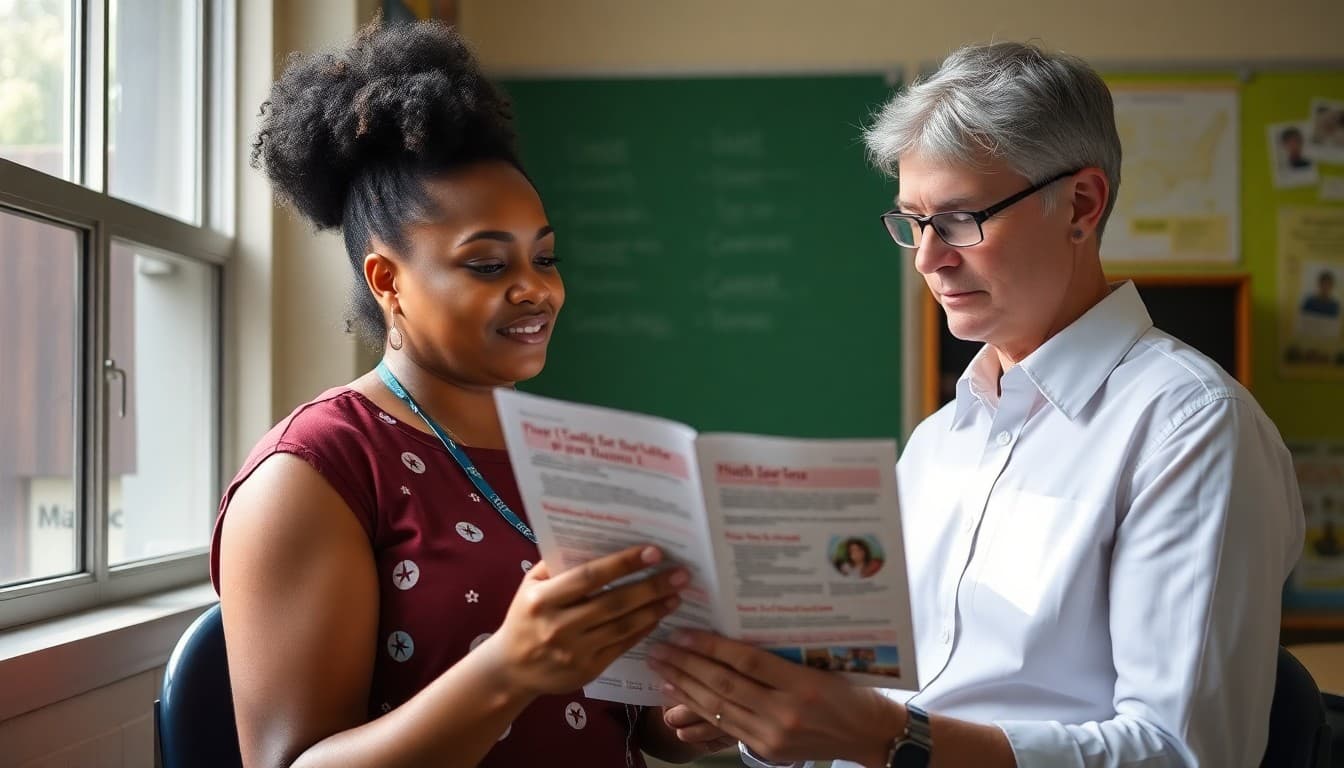
Florida ELL Program Newsletter: Local Resources and Guide

Florida educates one of the largest ELL student populations in the United States, concentrated heavily in South Florida's Miami-Dade, Broward, and Palm Beach Counties but present throughout the state. Florida's ESOL program structure is shaped by a unique legal history -- the Consent Decree -- that creates specific obligations for how schools communicate with ELL families. Understanding this context is essential for writing an effective Florida ESOL newsletter.
Florida's Consent Decree and What It Means for Families
The 1990 Consent Decree in League of United Latin American Citizens v. State Board of Education established Florida's ESOL requirements. It mandates that ELL students be taught by ESOL-certified teachers for ESOL classes, that students be identified and placed appropriately, and that families be notified about their child's ESOL status and rights. This legal framework gives Florida ELL families stronger procedural rights than families in many other states, and your newsletter should reflect that.
Families who know their rights are more likely to advocate effectively for their children. An ESOL newsletter that explains the Consent Decree in plain language, even briefly, is providing information that most families have never been told clearly.
Florida Uses CELLA, Not WIDA
Florida uses the CELLA (Comprehensive English Language Learning Assessment) for annual ELL proficiency testing rather than the WIDA ACCESS test used in most other states. CELLA measures listening, speaking, reading, and writing in English. If families have moved from another state and reference WIDA or ACCESS test scores, explain that Florida uses CELLA and that scores are not directly comparable between the two assessments. Include information about when CELLA testing occurs each year and what the proficiency levels mean.
Florida's Spanish-Speaking ELL Communities
Florida's Spanish-speaking ELL population is culturally and linguistically diverse. Cuban Spanish, Puerto Rican Spanish, Dominican Spanish, and Central and South American Spanish varieties are all present and carry distinct cultural identities. Writing in a neutral, broadly accessible Spanish register respects this diversity. Avoid colloquial terms from one specific Spanish-speaking culture when writing for a broad audience.
Haitian Creole is the second most common ELL home language in Florida, concentrated primarily in Broward County and parts of Miami-Dade. Translation into Haitian Creole is a genuine need for many South Florida ESOL programs, not an afterthought.
Florida Department of Education Resources
The FDOE Office of Academics and Transformation oversees ESOL programs and publishes guidance and family information on the FDOE website. Miami-Dade County Public Schools has developed extensive multilingual family communication resources including translated parent guides that smaller districts can reference. The Florida Immigrant Coalition and Catholics Charities of Florida provide community resources for immigrant families across the state.
South Florida Community Resources
South Florida has one of the richest immigrant services infrastructures in the country. Miami-Dade County organizations include the Haitian American Community Association of Dade County (HACAD), Catalyst Miami, and numerous Cuban American and Caribbean community organizations. Broward County has the Center for Independent Living of Broward and the Haitian American Nurses Association of Florida. For Central Florida ELL families, the Hispanic Services Council in Orlando and the International Services Center provide multilingual family support.
Year-Round Communication With Florida's Mobile Families
Florida has a significant mobile family population, with families moving in and out of districts during the school year tied to seasonal employment and migration patterns, particularly in agricultural communities. ELL newsletters should include clear information about how families can re-enroll their child in ESOL services if they move and return, and what documentation is needed for ESOL placement when students arrive mid-year.
Using Daystage for Florida ESOL Newsletters
Daystage lets Florida ESOL coordinators build newsletters with Spanish and Haitian Creole sections, deliver them to family groups by language, and include links to FDOE resources and local community organizations. For large South Florida ESOL programs serving thousands of families, Daystage's delivery infrastructure manages the volume requirements that individual email accounts cannot handle reliably.
Get one newsletter idea every week.
Free. For teachers. No spam.
Frequently asked questions
What terminology does Florida use for its ELL program?
Florida uses the term ESOL (English for Speakers of Other Languages) rather than ELL for its program and for the teachers who specialize in English language instruction. Students are referred to as ELLs (English Language Learners). Florida's ESOL program is governed by the Consent Decree (League of United Latin American Citizens v. State Board of Education), a 1990 settlement that established Florida's ESOL requirements and has shaped the state's approach ever since. Understanding and using Florida's specific terminology helps ELL newsletters communicate credibly and accurately to families.
What makes Florida's ESOL program unique?
The Consent Decree is the foundation of Florida's ESOL requirements, mandating ESOL-certified teachers for ESOL classes, specific program monitoring procedures, and detailed family notification requirements. Florida also uses its own CELLA (Comprehensive English Language Learning Assessment) for K-12 ELL proficiency testing rather than WIDA ACCESS. Florida ESOL newsletters must reference these state-specific requirements rather than generic ELL program frameworks. Miami-Dade and Broward County schools in particular have deep institutional expertise in ESOL communication given their very large ELL populations.
What are the most common home languages among Florida ELL students?
Spanish is by far the most common home language among Florida ELL students, with significant communities speaking Caribbean Spanish from Cuba, Puerto Rico, and the Dominican Republic as well as Central American and South American Spanish varieties. Haitian Creole is the second most common, concentrated primarily in South Florida. Portuguese, Arabic, and Vietnamese communities are also present. The diversity of Spanish dialects and cultural backgrounds within Florida's Spanish-speaking population means that Florida ELL newsletters should use a neutral register that works across Latin American Spanish communities.
What state resources should Florida ELL newsletters reference?
The Florida Department of Education's Office of Academics and Transformation oversees ESOL programs. FDOE publishes family guides, Consent Decree summaries, and program information on the FDOE website. Miami-Dade County Public Schools has an extensive multilingual family services infrastructure including translated parent materials in Spanish, Haitian Creole, and other languages. Regional resources vary significantly: South Florida has rich immigrant services networks while rural districts in the Panhandle and Central Florida have different resource landscapes.
How does Daystage support Florida ESOL program newsletters for large multilingual populations?
Florida's ESOL programs -- particularly in Miami-Dade, Broward, Palm Beach, and Orange Counties -- serve tens of thousands of ELL students. Daystage lets Florida ESOL coordinators build professional newsletters with Spanish and Haitian Creole sections, email delivery to language-segmented family groups, and links to FDOE and community resources. For large Florida ESOL programs, Daystage's delivery infrastructure handles high-volume family email distribution more reliably than individual email accounts.

Adi Ackerman
Author
Adi Ackerman is a former classroom teacher and curriculum writer with 8 years in K-8 schools. She writes about school communication, parent engagement, and what actually works in real classrooms.
More for ELL & ESL
Ready to send your first newsletter?
3 newsletters free. No credit card. First one ready in under 5 minutes.
Get started free