
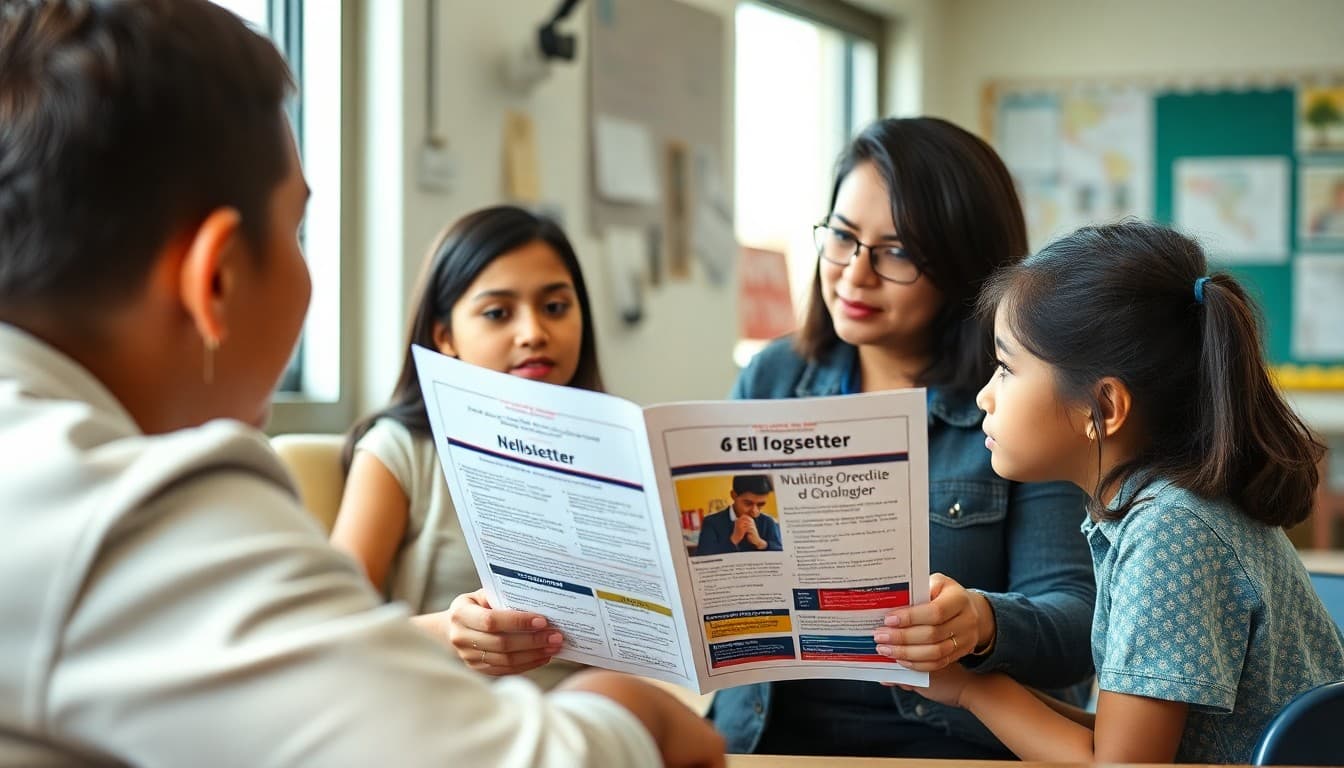
California ELL Program Newsletter: Local Resources and Guide
California educates more English learners than any other state -- over a million students across thousands of schools. The state has a robust legal framework protecting EL family rights, a complex program landscape including dual language immersion options, and a multilingual population that includes significant communities speaking Spanish, Cantonese, Vietnamese, Tagalog, Korean, Punjabi, and dozens of other languages. An effective California EL newsletter takes all of this context seriously.
California's EL Program Landscape
California offers families a choice between program models where multiple options exist at the school. Structured English Immersion provides the core English language development instruction most EL students receive. Alternative Course of Study programs and Dual Language Immersion programs are available in many districts, particularly those with large Spanish-speaking populations. Explaining the available program options at your specific school is an important job for your EL newsletter, especially for newcomer families who may not know these choices exist.
The ELPAC -- not WIDA ACCESS -- is California's EL assessment. Families who have moved from other states may have heard of the ACCESS test and be confused when you reference the ELPAC. A brief explanation of what the ELPAC is and when it is administered prevents this confusion.
Family Rights Under California Law
California EL families have strong legal rights worth stating clearly in every newsletter. Families must be notified within 30 days of initial EL identification. They have the right to choose the language program their child is in, to meaningful consultation before reclassification, and to communication in their primary language about essential school matters. The CDE publishes family rights guides in Spanish, Chinese, Vietnamese, and other languages that are worth linking to in your newsletter.
The Reclassification Process
California's reclassification process -- officially called Reclassification as Fluent English Proficient (RFEP) -- is a formal multi-criteria determination that involves the ELPAC score, teacher assessment, parent consultation, and comparison to grade-level academic standards. Many families do not know what reclassification means or when it happens. A clear explanation in your EL newsletter, including what the criteria are and that families will be consulted, prevents confusion and positions the school as transparent and collaborative.
California Department of Education Resources
The CDE English Learner Support Division website is a rich resource for families and coordinators alike. The English Learner Roadmap document explains California's commitment to multilingual learners and can be referenced in newsletters as a statement of program philosophy. County offices of education, including those in Los Angeles, San Diego, Santa Clara, and Fresno, provide regional translation resources and coordinator support. Many also run professional development for EL teachers that feeds into better family communication practices.
Community Resources by Region
California's size means regional resources vary significantly. Los Angeles County has the Multilingual Learners unit at LAUSD, Centro Latino, and dozens of immigrant services organizations. The Bay Area has a strong nonprofit infrastructure including the Immigrant Legal Resource Center, International Rescue Committee, and county social services multilingual programs. Central Valley communities can access resources through organizations serving agricultural worker families. Include region-specific resources that are genuinely accessible to your families.
Addressing California's Linguistic Diversity
No single district in California can translate every newsletter into every language its families speak. Prioritize the top three to five languages by enrollment share and use telephone interpreter services for smaller language communities. The California Language Line is available to all California school districts. Many large California districts have bilingual family liaison staff for the most common languages in their communities.
Sending California EL Newsletters With Daystage
Daystage helps California EL coordinators manage the complexity of multilingual family communication by supporting segmented delivery by language group, reusable templates, and links to CDE and county resources. For large California EL programs, the ability to reach hundreds of families in multiple languages through a single platform with delivery tracking is a significant operational improvement over paper distribution or individual email campaigns.
Get one newsletter idea every week.
Free. For teachers. No spam.
Frequently asked questions
What terminology does California use for English learners that coordinators should know?
California officially uses the term English Learner (EL) rather than ELL. The state also uses specific terminology around program types: Structured English Immersion (SEI), Alternative Course of Study, and Dual Language Immersion. The Reclassification process -- the formal exit from EL status -- is referred to as RFEP (Reclassified Fluent English Proficient). California also uses the ELPAC (English Language Proficiency Assessments for California) rather than WIDA ACCESS. ELL newsletters in California should use California-specific terminology to avoid confusion.
What are California EL family rights under state law?
California has some of the strongest EL family rights protections in the country. Under the California Education Code, families must be notified within 30 days of initial EL identification. They have the right to choose between SEI and alternative program options. They must be consulted about reclassification decisions. Districts must provide translation of notices, report cards, and other essential communications in the primary language of the family. The California Department of Education publishes detailed family rights guides in multiple languages on the CDE website.
How does California's EL program system differ from other states?
California has one of the most complex EL program systems in the country, partly because of its size and partly because of the strong legal framework around language access. California allows families to choose between program models, including dual language immersion programs where available. The state's ELPAC assessment is different from the WIDA ACCESS used in most other states. California also has specific requirements around the Education for Immigrant Students program and services for newcomer students. ELL newsletters need to explain whichever program model is available at your school.
What resources does the California Department of Education provide for EL families?
The CDE English Learner Support Division publishes extensive family resources on its website, including parent advisory committee guidance, family rights documents, and information about the ELPAC in multiple languages. CDE also publishes the English Learner Roadmap, which outlines the state's commitment to multilingual learners and provides a framework that ELL newsletters can reference when explaining program philosophy. Many California county offices of education also provide regional resources and translation support.
How does Daystage help California EL programs communicate with their large multilingual family populations?
California EL programs often serve families speaking dozens of languages, and Daystage's ability to segment newsletter delivery by language group makes it practical to reach Spanish, Cantonese, Vietnamese, Tagalog, Korean, and other language communities with the right content. EL coordinators in large California districts who use Daystage report that the platform's email delivery infrastructure handles the volume requirements of large EL programs far better than individual email accounts or paper distribution alone.

Adi Ackerman
Author
Adi Ackerman is a former classroom teacher and curriculum writer with 8 years in K-8 schools. She writes about school communication, parent engagement, and what actually works in real classrooms.
More for ELL & ESL
Ready to send your first newsletter?
3 newsletters free. No credit card. First one ready in under 5 minutes.
Get started free