

California ELL Program Newsletter: Guide for Multilingual Educators
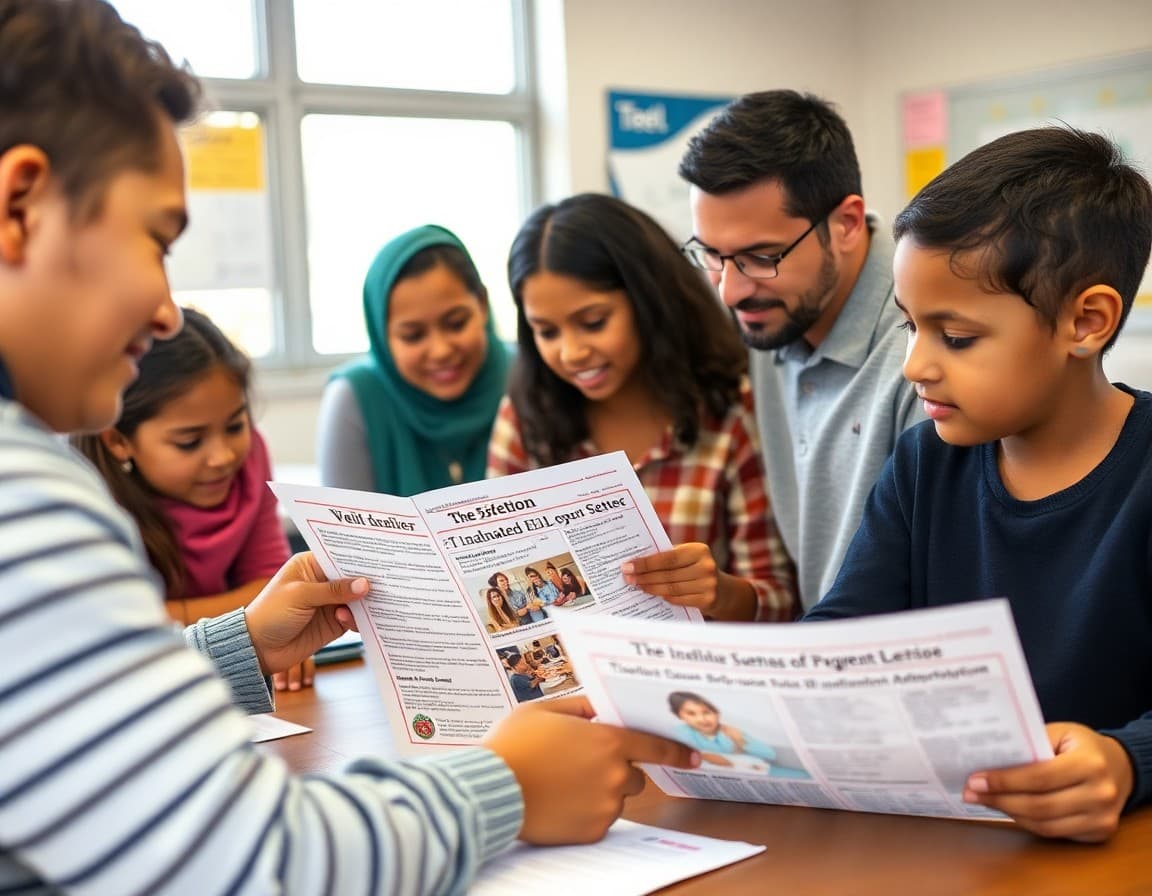
California serves more English learners than any other state, with over a million students classified as EL in grades K-12. The families behind those numbers speak dozens of languages, live in communities from Imperial County to the Oregon border, and often have no idea what the ELL program is actually doing for their child. A well-built newsletter fixes that.
California's Language Access Requirements Go Further Than Federal Law
Most states follow the federal Title III minimum: translate essential communications for families with limited English proficiency. California goes further. Under the California Education Code, any district with 15 or more students speaking the same non-English language must translate all major communications -- not just essential ones, but all major ones -- into that language. That means if your school has 15 or more students speaking Punjabi, your ELL program newsletter must be available in Punjabi. The California Department of Education provides template translations for many common parent documents. Use them as a starting point, not a substitute for local review.
Explain the ELPAC Assessment Every Year
The English Language Proficiency Assessments for California measures Listening, Speaking, Reading, and Writing in grades K-12 on a four-level scale. Families receive score reports that are dense and technical. Your newsletter around the January through May ELPAC window should translate the score levels into plain language: what a Beginning level score means for services, what Bridging means for reclassification eligibility, and what overall reclassification requires in your district. Families who understand the assessment stay more engaged with the program throughout the year.
Inform Families About Proposition 58 Program Options
Proposition 58 opened the door for California districts to offer bilingual, dual-language, and multilingual program models without the restrictions that Proposition 227 imposed for years. Many families -- especially newer arrivals -- do not know their child might be eligible for a Spanish-English dual-language program or a Cantonese immersion program. Your newsletter can describe what program options your district currently offers, how to apply, and what research shows about academic outcomes for students who complete dual-language programs through high school. This is information families actively want but rarely find.
A Monthly California ELL Program Newsletter Template
This one-page format works across grade levels:
ELL Program Update -- [Month] [Year]
Your student's current proficiency level: [ELPAC level or description]
What we are working on: [Language skill area in plain language]
How to support at home: [Specific activity in the home language]
Coming up:
- [Date]: ELPAC testing (no preparation needed from families)
- [Date]: Parent-teacher conference (interpreter available, request in advance)
Questions? [ELL coordinator name, phone, email]
Available in: [Languages offered]
Match Your Newsletter to Your District's Specific Language Community
Statewide data shows Spanish dominance at 80 percent, but your school's data may look very different. In the Central Valley, Spanish-speaking agricultural families are the primary community. In the San Gabriel Valley, Mandarin and Cantonese speakers are the majority in many districts. In San Jose, Vietnamese and Tagalog speakers add to the mix. Los Angeles Unified serves students speaking over 80 languages. Pulling your school's home language survey data and letting that drive your translation priorities -- not the state average -- is the most important planning step you will take all year.
Connect Families to California's Extensive Resource Network
California has one of the strongest infrastructure networks for immigrant and ELL families in the country. The California Adult Literacy Professional Development Project supports adult ESL programs through community colleges. Immigrant Legal Resource Center chapters are in many cities. Catholic Charities, International Rescue Committee offices in Los Angeles and San Diego, and local community-based organizations offer family support services. Parent Institute for Quality Education trains parents in California communities to advocate for their children's education. One resource reference per newsletter issue builds awareness over a year.
Use Daystage to Manage Multiple Language Versions Efficiently
California ELL coordinators managing newsletters in three, four, or five languages need production systems that do not multiply effort with each language added. Daystage lets you build one newsletter format and send separate language versions to the appropriate family groups. A family who speaks Tagalog receives the Tagalog version. A Spanish-speaking family in the same school receives the Spanish version. The coordinator manages one workflow, not five. Programs that simplify their production process are the ones that maintain consistent communication throughout the year rather than letting newsletters trail off after the first semester.
Get one newsletter idea every week.
Free. For teachers. No spam.
Frequently asked questions
What are California's requirements for communicating with ELL families?
California has extensive language access requirements beyond federal Title III and ESSA mandates. Under the California Education Code, districts with 15 or more students speaking the same non-English language must translate all major communications into that language. The California Department of Education provides translated parent notification templates. Proposition 58, passed in 2016, expanded multilingual program options and the accompanying notice requirements for parents.
What is the ELPAC and how should it appear in newsletters?
The English Language Proficiency Assessments for California (ELPAC) replaces the CELDT and is the primary tool for identifying and reclassifying English learners. It measures Listening, Speaking, Reading, and Writing in grades K-12. Families receive score reports that are difficult to interpret without context. Your newsletter should explain what the ELPAC measures, what score a student needs for reclassification, and when the testing window is scheduled.
What languages do California ELL families most commonly speak?
Spanish is the home language for approximately 80 percent of California's English learner population. The state also has large populations of Cantonese, Mandarin, Vietnamese, Tagalog, Arabic, and Punjabi speakers. In specific regions -- the Central Valley, Los Angeles, the Bay Area, and San Diego -- the language mix differs significantly, which means district-level data does not always reflect what a specific school needs.
What are California's multilingual program options that families should know about?
Proposition 58 allows districts to offer bilingual, dual-language, and other multilingual program models without the previous restrictions of Proposition 227. Many California districts have expanded dual-language programs. Your newsletter can inform families about what program options exist in your district, how enrollment works, and what the research says about academic outcomes for students in dual-language programs.
Can Daystage support California ELL programs with newsletters in multiple languages?
Yes. Daystage lets multilingual program coordinators create formatted newsletters and send separate language versions to different family groups. For a California district with Spanish, Cantonese, and Vietnamese-speaking families, you can manage all three language versions through one platform. Formatting and delivery are handled automatically so coordinators focus on content quality and translation accuracy.

Adi Ackerman
Author
Adi Ackerman is a former classroom teacher and curriculum writer with 8 years in K-8 schools. She writes about school communication, parent engagement, and what actually works in real classrooms.
More for ELL & ESL
Ready to send your first newsletter?
3 newsletters free. No credit card. First one ready in under 5 minutes.
Get started free