
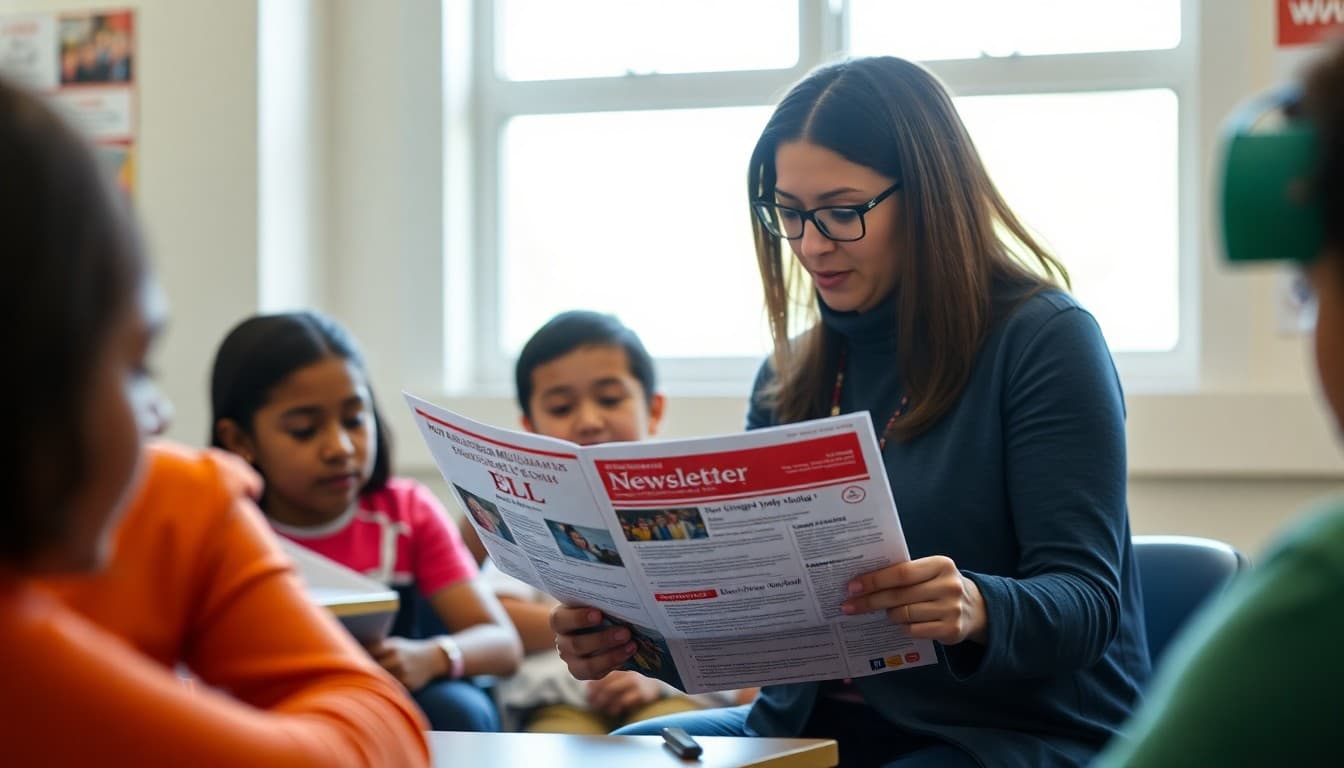
Alabama ELL Program Newsletter: Local Resources and Guide

Alabama's ELL population has grown steadily over the past two decades, bringing speakers of Spanish, Arabic, Vietnamese, and dozens of other languages into school districts across the state. Reaching those families with clear, accessible communication about their child's language program is both a legal obligation and a practical investment in student success. An ELL newsletter that families can actually read and act on is the foundation of that communication.
Know Your Alabama ELL Community
Alabama's ELL student population is concentrated in distinct communities with different language backgrounds. Huntsville's large international workforce brings Arabic, Korean, and South Asian language communities. The agricultural regions of north and central Alabama have substantial Spanish-speaking populations from Mexico and Central America. Urban districts in Birmingham and Montgomery serve more diverse language communities. Before writing your ELL newsletter, pull your current home language survey data and identify the top three to five languages your families speak.
Do not assume last year's language priorities still hold. Families move, new students enroll, and community demographics shift. Reviewing enrollment data before each newsletter cycle keeps your translation priorities current.
What Alabama ELL Program Newsletters Should Cover
An Alabama ELL newsletter should explain what English language development services the student is receiving, how those services align with Alabama's English Language Proficiency standards, and what the annual WIDA ACCESS assessment measures and when it takes place. Families deserve to understand the system their child is moving through, including what proficiency levels look like and what it means when a student is on track to exit ELL services.
Include information about Title III-funded programs if your district receives that funding. Families are often unaware of the federal support behind their child's ELL program and the rights that come with it.
Alabama State and Local Resources to Include
The Alabama State Department of Education's English Learner Programs office is a useful reference for families who have questions about program compliance or student rights. Local resources vary significantly by district, but most Alabama communities have access to public library ESL programs, immigrant services organizations, and community college adult education programs that offer English classes.
List the resources that are actually accessible to your families. A Birmingham resource is not helpful to a family in Decatur. Take the time to identify what is genuinely available in your specific community before publishing a resources section.
Family Rights Under Federal Law
Every Alabama ELL newsletter should include a brief statement of key family rights. Families have the right to communication in their home language. They have the right to an interpreter for parent meetings upon request. They have the right to receive notice within 30 days of their child being identified as an English learner. They have the right to request a meeting to discuss their child's language services at any time.
Stating these rights clearly is not just a compliance measure -- it changes the dynamic of the school-family relationship. Families who know their rights are more likely to engage as partners rather than as passive recipients of school decisions.
Translation and Interpretation Access in Alabama
Include information about how families can access translation and interpretation services through your school or district. The Language Line telephone service covers hundreds of languages and is available to most Alabama school districts. If your school has bilingual staff or community liaisons, name them and include their contact information. If your district uses a contracted translation service for written documents, note that families can request translated versions of any essential school document.
Summer and Year-Round Language Support
Alabama's public library system offers summer reading programs and ESL resources in many communities. Local community organizations in cities with significant immigrant populations often run free or low-cost English classes. Include any summer programs available in your community, especially ones with childcare so that parents and caregivers can participate.
Sending Your Alabama ELL Newsletter With Daystage
Daystage lets Alabama ELL coordinators create professional newsletters with sections in Spanish, Arabic, and other home languages, embed links to ALDOE resources and local programs, and deliver them to family groups by language. Setting up your newsletter template in Daystage gives you a reusable structure that takes a fraction of the time to update each month compared to building a new document from scratch.
Get one newsletter idea every week.
Free. For teachers. No spam.
Frequently asked questions
What state resources should an Alabama ELL newsletter reference?
Alabama ELL newsletters should reference the Alabama State Department of Education's English Learner Programs office, which provides guidance on Title III funding, program compliance, and family rights under federal law. Local community resources vary by district but often include Catholic Social Services, which operates in many Alabama cities and provides bilingual family support. The Alabama Coalition for Immigrant Justice and local library ESL programs are also relevant resources worth including depending on your community's primary languages.
What are the most common home languages of ELL students in Alabama?
Spanish is by far the most common home language among ELL students in Alabama, reflecting significant Latino communities in cities like Huntsville, Birmingham, and throughout the agricultural regions of the state. Arabic is the second most common, concentrated particularly in Huntsville due to the city's large international engineering and technology workforce. Vietnamese, Khmer, and Korean communities are also represented in certain districts. Review your current home language survey data to prioritize translation languages for your specific school.
What rights do ELL families have in Alabama under federal law?
ELL families in Alabama have the right to receive school communication in a language they can understand, as guaranteed by Title VI of the Civil Rights Act and reinforced by the Every Student Succeeds Act. This includes the right to meaningful access to parent-teacher conferences through an interpreter, the right to receive translated essential school documents, and the right to be informed about their child's language proficiency status and ELL services in an accessible language. Alabama schools are required to notify families within 30 days of identifying a student as an English learner.
How can Alabama ELL coordinators handle translation for smaller language communities?
For smaller language communities where professional translators may be limited, Alabama schools can access the Language Line telephone interpretation service, which covers hundreds of languages. Many districts also partner with local immigrant services organizations and universities to identify community interpreters. For written translation, school districts can use vetted bilingual community members or contracted translation services. Avoid using students as interpreters for family communication about academic or sensitive topics.
How does Daystage help Alabama ELL programs communicate with multilingual families?
Daystage lets Alabama ELL coordinators build professional newsletters with translated sections for Spanish, Arabic, and other home languages, deliver them by email to family groups, and include links to Alabama ALDOE resources and local support organizations. ELL coordinators who use Daystage report that families who previously were not reached by paper newsletters begin engaging when communication arrives digitally in their language. The platform also supports attaching translated documents and forms alongside the newsletter.

Adi Ackerman
Author
Adi Ackerman is a former classroom teacher and curriculum writer with 8 years in K-8 schools. She writes about school communication, parent engagement, and what actually works in real classrooms.
More for ELL & ESL
Ready to send your first newsletter?
3 newsletters free. No credit card. First one ready in under 5 minutes.
Get started free