

World History Elementary Newsletter: Learning Updates for Parents
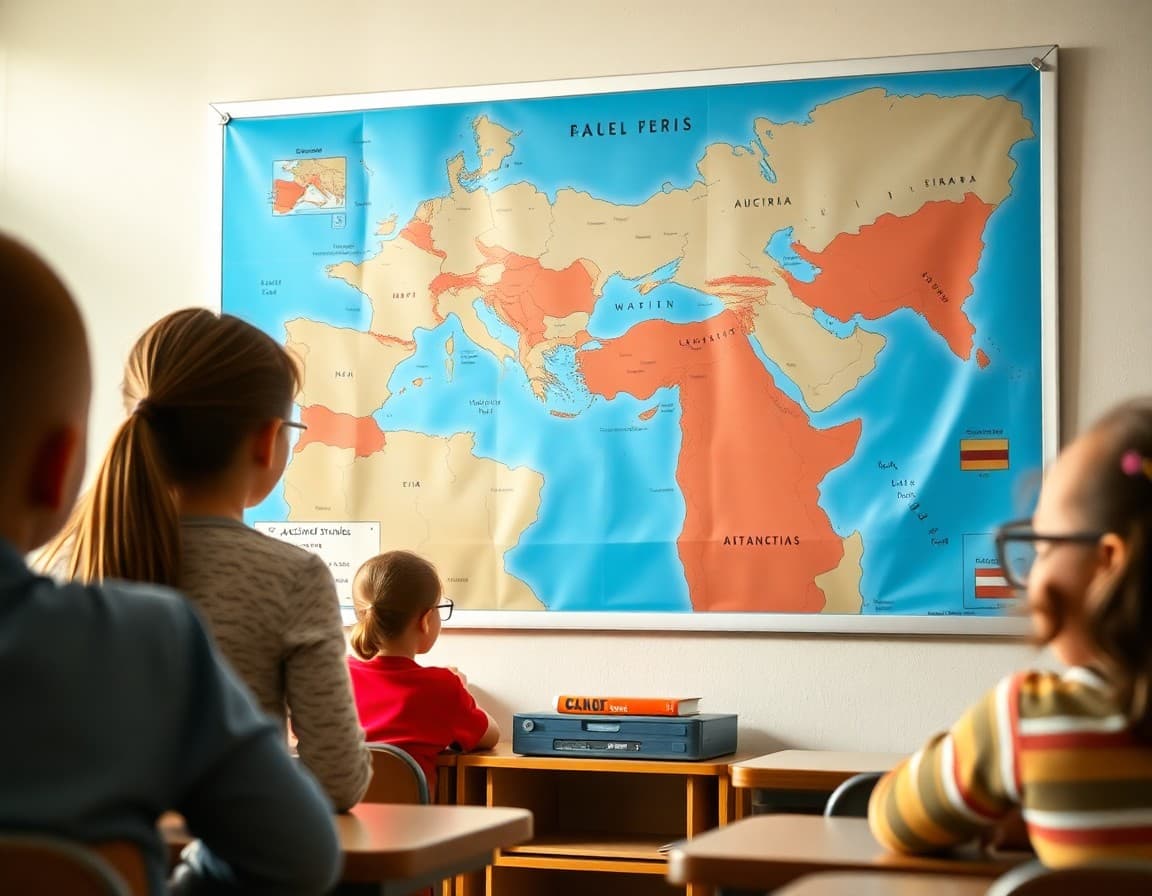
World history at the elementary level introduces students to civilizations far removed from their daily experience, which makes parent communication especially important. Families who understand what students are studying can supplement with the most powerful resource available: their own heritage, culture, and family stories. A good world history newsletter opens that door.
Name the Civilization and the Time Period
Start with specifics. "This month, fifth graders are studying ancient Mesopotamia, the region in modern-day Iraq and Syria where some of the earliest writing, law codes, and cities developed, around 3500 BCE." That context helps parents who are unfamiliar with the topic understand the scope. It also gives them enough information to find relevant books, maps, or videos to look at alongside their child.
Explain What Students Are Investigating
World history lessons work best when they center on real questions. Share the driving inquiry: "Students are investigating how geography shaped the development of early Mesopotamian cities. Why did civilization develop near rivers? How did irrigation change what was possible? What problems came with living in large, dense settlements?" These questions are interesting to adults too, which makes them natural conversation starters at home.
Invite Family Heritage Connections
Many families have direct cultural connections to the civilizations being studied. Extend that invitation openly: "If your family has heritage from the Middle East, North Africa, or any region connected to the ancient world we are studying this month, we would love to hear about it. Artifacts, family stories, traditional foods, or cultural practices that trace back to ancient roots bring history to life in ways no textbook can." This invitation is voluntary and respectful, never required.
A Template Section for Family Discussion
Here is a discussion prompt section you can adapt for any world history unit:
"This week, look at a world map together with your child and find [REGION]. Notice what rivers, mountains, or oceans are nearby. Ask your child why they think the first cities developed in that location and not somewhere else. This connects directly to what we are studying: how geography shapes where and how people choose to live. There are no wrong answers. The goal is curiosity, not accuracy."
The map activity is powerful because it is immediate, visual, and requires nothing more than a phone or globe.
Share the Key Vocabulary
Ancient history introduces vocabulary students may not encounter anywhere else. A brief glossary helps: "Civilization: a complex society with cities, government, writing, and division of labor. Irrigation: a system for bringing water to farmland from a river or other source. Cuneiform: the earliest known writing system, developed in Mesopotamia around 3400 BCE. City-state: a city and the surrounding region that functions as an independent country." These definitions appear in readings and homework throughout the unit.
Recommend Age-Appropriate Books and Media
World history literature for elementary students has improved significantly. A few specific recommendations by grade help families find appropriate materials: "For second and third graders, You Wouldn't Want to Be a Pyramid Builder by David Stewart is entertaining and informative. For fourth and fifth graders, The Ancient Civilizations series from National Geographic Kids covers Mesopotamia, Egypt, and Rome at a strong reading level. The Crash Course Kids YouTube channel has short animated videos on ancient history that work well for any age."
Connect World History to Today
Ancient history can feel irrelevant without a bridge to the present. Build that bridge explicitly: "Many ideas developed in Mesopotamia still shape our world. Written law codes, city planning, irrigation, and organized trade all began in this region. The challenges those early cities faced, managing resources, governing large populations, dealing with conflict, are the same challenges modern cities face. That continuity is part of why ancient history matters." That connection gives students and families a reason to care about civilizations that ended 4,000 years ago.
Preview the Next Civilization
A brief preview of the next unit sustains engagement and gives motivated families a head start: "After Mesopotamia, we move into ancient Egypt, which shares the river-dependent geography of Mesopotamia but developed in distinct ways. If your family wants to get a head start, finding Egypt on a world map and discussing the Nile River is perfect preparation." Preview activities make the world history sequence feel like a continuing journey rather than isolated topics.
Get one newsletter idea every week.
Free. For teachers. No spam.
Frequently asked questions
What should an elementary world history newsletter include?
A world history newsletter should name the civilization or time period being studied, describe the kinds of primary and secondary sources students are working with, and suggest ways families can connect the content to their own cultural background or heritage. World history is one of the few subjects where many families have direct, personal connections that can enrich classroom learning.
What world history topics do elementary students typically study?
Lower elementary grades often focus on community helpers and local history before expanding to national history. Upper elementary grades (fourth and fifth) increasingly introduce ancient civilizations, world geography, and global cultures. Some curricula cover Mesopotamia, ancient Egypt, Greece, Rome, China, and the Americas. Others use a thematic approach across cultures. The newsletter should identify the specific civilization or theme so parents can look for relevant books, maps, and resources.
How can families connect world history to their own heritage?
World history units are excellent opportunities to invite families to share. If the class is studying ancient China, a family with Chinese heritage might share a tradition, a family heirloom, or a story passed down through generations. If the unit covers ancient trade routes, families with heritage from the Middle East, India, or North Africa might have direct cultural connections. Inviting these contributions respectfully and voluntarily enriches the unit for everyone.
How do I handle world history content that may conflict with some families' religious beliefs?
Focus on historical evidence, archaeological findings, and the academic study of ancient cultures without making claims about religious truth or falsity. Acknowledge that ancient histories are studied through the lens of evidence historians have found. If a family has concerns about specific content, offer to discuss it privately. Transparency about what is being studied and why it is in the curriculum prevents most conflicts before they escalate.
What is a good tool for sending world history newsletters to elementary parents?
Daystage lets teachers send world history newsletters with maps, artifact images, vocabulary lists, and family activity suggestions in a clean, readable format. You can create a social studies newsletter template and reuse it each unit, making it straightforward to keep families informed across the whole school year.

Adi Ackerman
Author
Adi Ackerman is a former classroom teacher and curriculum writer with 8 years in K-8 schools. She writes about school communication, parent engagement, and what actually works in real classrooms.
More for Elementary
Ready to send your first newsletter?
3 newsletters free. No credit card. First one ready in under 5 minutes.
Get started free