

American History Elementary Newsletter: Learning Updates for Parents
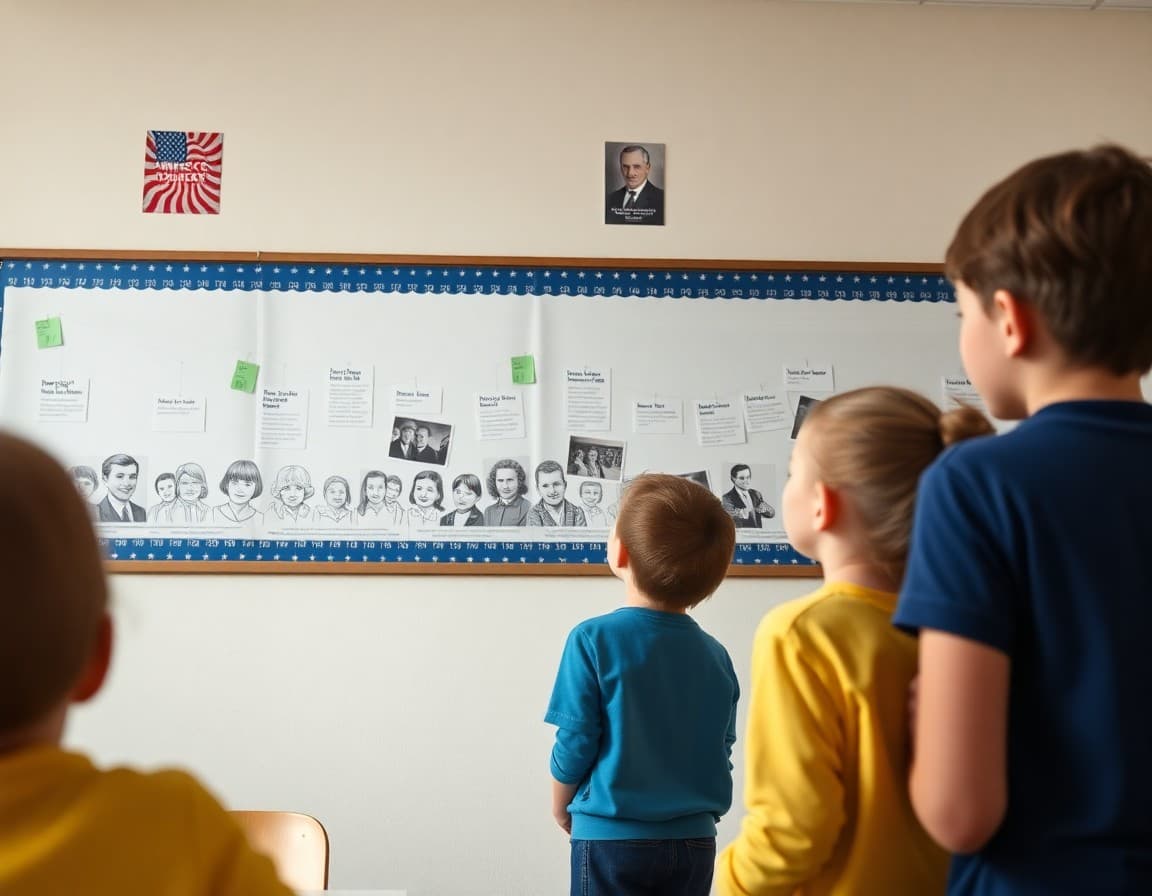
American history in elementary school covers some of the most complex and contested topics in any curriculum. A newsletter that prepares families for what students are learning, explains the framing being used, and invites continued conversation at home makes a difficult subject more accessible for everyone involved.
Name the Period and the Central Questions
Start with a specific historical period and frame it around the questions driving the unit. "This month, fourth graders are studying the American Revolution. Our central questions are: why did colonists decide to separate from Britain, and what values shaped the new government they created?" Those questions give parents a frame for dinner conversations. "What did you learn about why colonists were angry at Britain?" produces a much richer conversation than "what did you do in social studies today?"
Explain the Historical Thinking Skills Students Are Building
American history instruction at the elementary level is not just about memorizing dates and names. Explain the thinking skills involved: "Students are learning to read primary sources, think about multiple perspectives, and evaluate causes and effects. For the American Revolution unit, they will read excerpts from colonial pamphlets, analyze a political cartoon, and compare the perspectives of a Boston merchant, a British soldier, and a Loyalist family. That kind of multi-perspective analysis is the core of historical thinking."
Address Sensitive Content Directly
If the unit includes content about slavery, indigenous displacement, or other difficult historical realities, name it and explain your approach. "This unit includes a discussion of the role of enslaved people in the colonial economy. We approach this topic with honesty and with care for all students in the room. Students learn that the ideals of the Revolution and the reality of slavery existed simultaneously, and that this contradiction shaped American history for centuries." Proactive communication like this prevents surprise and builds trust.
A Family Conversation Template
Here is a dinner conversation prompt section you can adapt for your newsletter:
"This week, try this conversation at dinner: ask your child to explain one reason colonists wanted independence from Britain. Then ask them to think of one reason a colonist might have wanted to remain part of the British Empire. There are no wrong answers. The goal is to practice seeing multiple sides of a historical argument, which is exactly what historians do. If your family has any connection to the Revolutionary era through family history or local landmarks, share it."
Suggest Local or Digital Historical Resources
Even families without access to a museum can engage with primary sources. Mention specific resources: "The Library of Congress has a free online collection of primary sources from every period of American history, including images, documents, and maps at a reading level appropriate for elementary students. The National Archives website has similar materials. If you are near a historic site related to this unit, a visit over the weekend can be a powerful supplement to classroom instruction."
Connect History to Current Events Thoughtfully
Elementary students benefit from understanding that history is not just the past. A brief connection to current events is appropriate and motivating: "The ideas students are studying in the American Revolution, representation, taxation, and the relationship between government and citizens, are still debated today. Helping students see that connection makes history feel alive rather than finished." This framing builds civic awareness without taking political positions.
Share Key Vocabulary
History units introduce vocabulary that students need for reading and discussion. A brief list helps families: "Colony: a region controlled by a distant country. Revolution: a complete change in government or society, often through conflict. Patriot: a colonist who supported independence from Britain. Loyalist: a colonist who wanted to remain part of the British Empire. These words will appear on homework and in class discussions this month."
Invite Family Stories
A brief invitation at the end adds warmth and acknowledges that families hold living history: "If your family has any connection to the periods or places we are studying, I would love to hear about it. Family immigration stories, military service in historical conflicts, or relatives who lived through major historical events bring this content to life in ways that textbooks cannot. Families are welcome to reach out and share what they are comfortable sharing."
Get one newsletter idea every week.
Free. For teachers. No spam.
Frequently asked questions
What should an American history newsletter for elementary parents include?
An American history newsletter should identify the specific period or topic students are studying, explain the key questions and concepts driving the unit, and suggest ways families can extend learning through conversation, books, or local historical sites. American history is also a subject where family connections can be powerful: encouraging families to share their own stories or heritage adds a human dimension that textbooks rarely provide.
How do I communicate sensitive historical topics to elementary parents?
Be direct and transparent. If the unit covers topics like slavery, Native American history, or civil rights, let parents know what students will be learning and why it is in the curriculum. Explain the age-appropriate framing you are using and invite parents to continue the conversation at home. Avoiding hard topics or being vague about them tends to generate more concern than clear, thoughtful communication.
What American history topics do elementary students study?
Most elementary history curricula cover communities and neighborhoods in kindergarten through second grade, then move into national history: indigenous peoples, European exploration, colonial America, the American Revolution, westward expansion, immigration, and the Civil Rights Movement across third through fifth grade. State-specific content varies. A newsletter that names the exact unit and grade-level scope helps parents understand where their child is in the larger narrative.
How can families support American history learning at home?
Visiting local historical sites or museums is the most powerful home extension. If that is not accessible, history-related picture books and chapter books, documentaries appropriate for the age group, and family conversations about ancestors' immigration or migration stories all connect classroom content to lived experience. Parents who share their own family history make the biggest impression on young history learners.
What tool makes it easy to send American history newsletters to elementary parents?
Daystage lets teachers build social studies newsletters with timelines, primary source images, family activity ideas, and vocabulary lists in a readable format. You can send it directly to families by class or grade, and it looks clean on any device. No app download required for parents.

Adi Ackerman
Author
Adi Ackerman is a former classroom teacher and curriculum writer with 8 years in K-8 schools. She writes about school communication, parent engagement, and what actually works in real classrooms.
More for Elementary
Ready to send your first newsletter?
3 newsletters free. No credit card. First one ready in under 5 minutes.
Get started free