
Elementary Social Studies Newsletter: Community and World
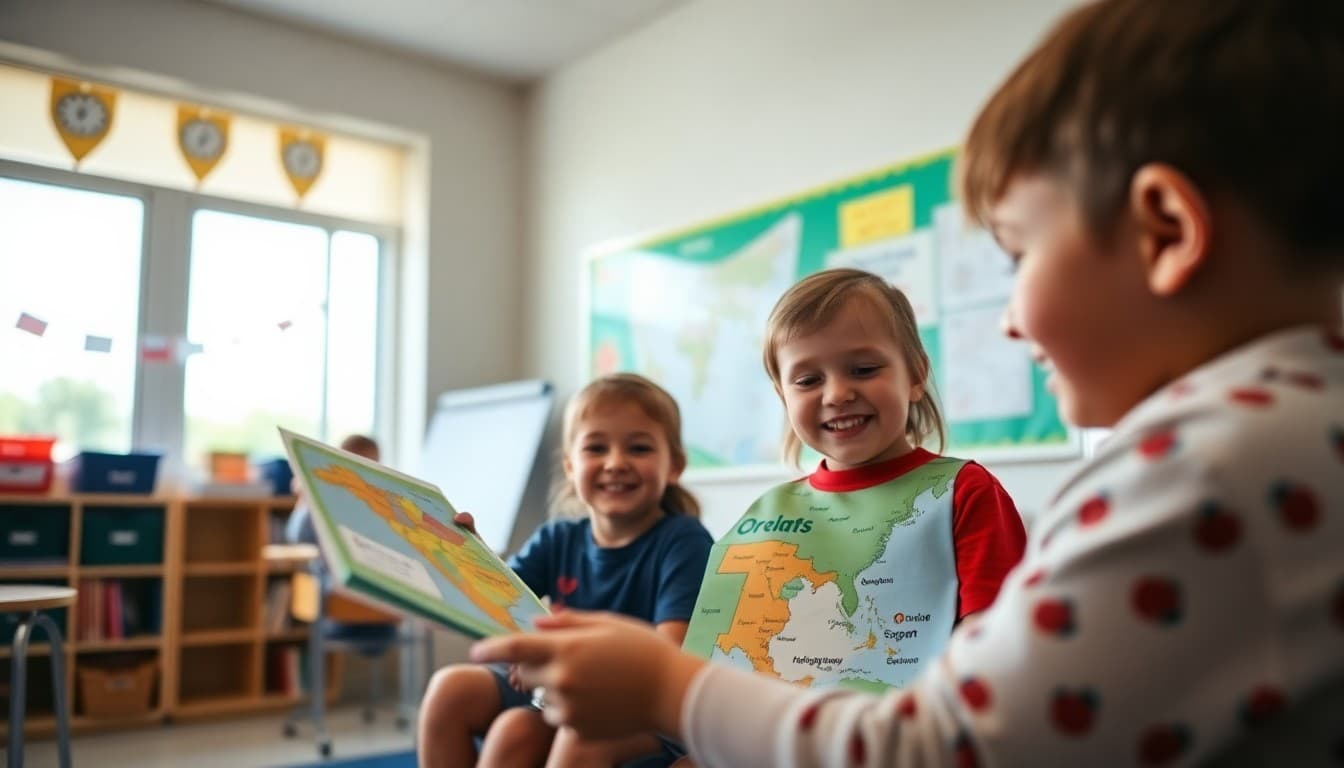
Social studies is the subject that gives elementary students a framework for understanding their place in the world. Community helpers in first grade, map skills in third grade, the Bill of Rights in fifth grade. These units look abstract on paper but have concrete connections to every family's daily life. The social studies newsletter is the bridge between what students are learning in the classroom and the conversations families can have at home. Families who know what their child is studying show up as participants, not bystanders.
K-2 Social Studies: Community and Family
In the primary grades, social studies is about concentric circles: self, family, classroom, school, neighborhood, community. Your newsletter for these grades should mirror that structure. When students are studying family structures, invite families to tell their child how your family fits into that framework. When students are studying community helpers, ask families to name the community helpers they interact with each week and what those people do. The content is simple but the invitation to connect classroom learning to family life is what makes it stick.
Grade 3-4: Geography and Maps
Map skills are some of the most easily reinforced at home. A unit on cardinal directions is a chance to practice on the drive to school: which way do we turn to go north? A unit on the 50 states is a chance to find the states where family members live or where the family has traveled. A unit on landforms is a chance to watch a 10-minute nature documentary together about the Grand Canyon or the Great Lakes. Include one of these suggestions in each newsletter during geography units and give parents a specific starting point rather than a general instruction to reinforce geography at home.
Grade 5: US History and Primary Sources
Fifth grade social studies typically introduces primary source analysis: letters, speeches, historical images, and documents. This is often unfamiliar territory for parents. Explain what primary sources are, why students use them, and how to have a conversation about them at home. If students are studying the Declaration of Independence, include the first two sentences in the newsletter and ask families to read it together. If students are studying the perspectives of indigenous peoples during westward expansion, let families know that multiple perspectives are being examined and what that looks like in the classroom. This context prevents the "they're not teaching real history" reaction that comes from incomplete information.
A Sample Family Activity: Community Helper Interview
Here is a template activity block for a community helpers unit:
This Week's Home Connection: The Expert Interview
We are studying community helpers in class. Your child has been learning about jobs that people do to take care of our community: teachers, doctors, firefighters, librarians, food service workers, and many others. This week, we are asking each family to hold a 10-minute "expert interview" at home. Pick an adult in your household or family and interview them about their job. What do they do each day? How does their work help others? Students will share what they learned on Wednesday. There is no written assignment. The conversation is the assignment.
Handling Difficult History Units With Families
When units cover painful chapters of history, the newsletter should give parents a heads-up and a framework for handling questions. A few sentences like: "This month we begin studying the period of slavery in American history. We teach this content honestly and age-appropriately. Students may come home with questions. The most helpful response is to take the questions seriously, share what you know, and let your child know it is okay to be troubled by unjust events. We can discuss the unit more at our next parent-teacher conference." That level of preparation transforms a potentially difficult moment at home into a meaningful educational conversation.
Current Events in the Elementary Classroom
Many elementary teachers incorporate age-appropriate current events into social studies. If you do this, mention it in the newsletter so families know their child may reference news stories at home. Recommend two or three sources you consider appropriate: Newsela, CNN10, or Time for Kids are commonly used at different grade levels. Families who know their child is discussing current events are more likely to engage with those conversations at home rather than being surprised when their first grader mentions a news story at dinner. That engagement is part of what social studies is for.
Get one newsletter idea every week.
Free. For teachers. No spam.
Frequently asked questions
What topics does elementary social studies cover and how should the newsletter reflect them?
Elementary social studies typically covers family and community in grades K-2, regional and national geography in grades 3-4, and early US and world history in grades 5-6. Your newsletter should name the specific unit currently in progress and explain how it connects to the grade-level standards. Parents who understand what their child is studying are far more likely to have relevant conversations at home that reinforce the learning.
How do I make social studies homework feel relevant to families?
Connect the unit directly to the family's own experience. A unit on community helpers is an opportunity to ask families to describe their own jobs to their child. A unit on maps is an opportunity to pull up a map on a phone and find the family's neighborhood. A unit on immigration history is an opportunity to share the family's own story. Social studies is uniquely positioned to bridge classroom learning and family knowledge. Use the newsletter to explicitly invite that connection.
How do I handle sensitive social studies topics in the newsletter?
When units cover history that includes difficult topics like slavery, indigenous displacement, or immigration hardship, let families know in advance. A brief note explaining that 'this month we begin a unit on the history of the civil rights movement, and students will learn about events that were unjust and painful' prepares families for conversations at home and prevents parents from being surprised by what their child shares at dinner. Transparency builds trust even when the content is uncomfortable.
Should I include primary source documents or maps in the social studies newsletter?
Yes, occasionally. A cropped section of a primary source document, a simplified map of the region being studied, or a photograph related to the unit adds visual interest and gives families a tangible window into what students are examining. Keep it to one visual per newsletter and write a two-sentence explanation of what it shows. Families who can see what their child is studying engage more actively than families who only read about it.
Can I use Daystage to send social studies newsletters with embedded images and maps?
Yes. Daystage supports image embedding directly in newsletters so you can include a map, historical photo, or student project image without attaching a separate file. The newsletter looks the same on phones and computers, which matters because most parents open school emails on their phone. Several elementary teachers use Daystage specifically for units with visual content that would otherwise require a PDF attachment that many families do not open.

Adi Ackerman
Author
Adi Ackerman is a former classroom teacher and curriculum writer with 8 years in K-8 schools. She writes about school communication, parent engagement, and what actually works in real classrooms.
More for Elementary
Ready to send your first newsletter?
3 newsletters free. No credit card. First one ready in under 5 minutes.
Get started free