
School Newsletter for School Library Month: Ideas and Template

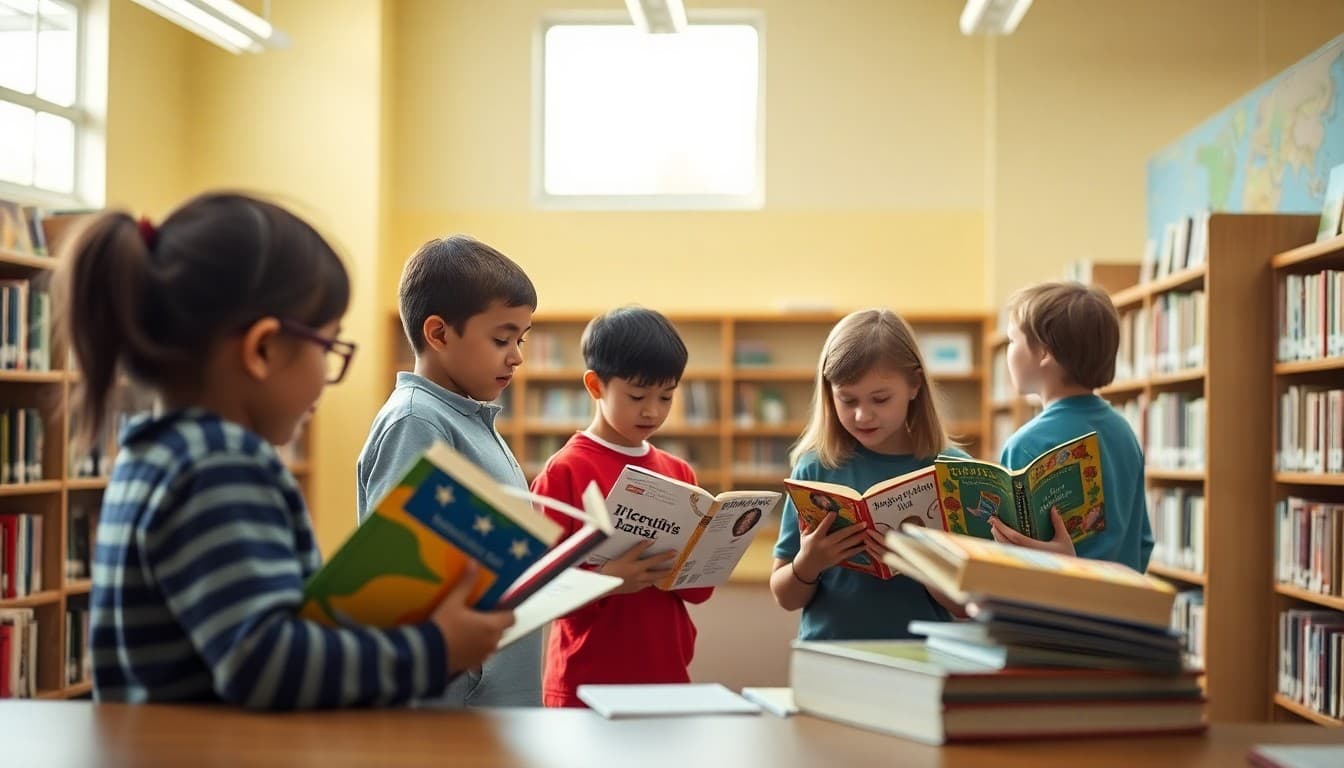
April is School Library Month, and for school librarians it is one of the busiest and most visible months of the year. Author visits, reading challenges, and library-themed classroom collaborations all cluster in April. A newsletter during School Library Month gives families a window into the library program, introduces or reinforces the librarian's role, and gives students a reason to engage with the library beyond required book checkout.
What the School Library Actually Does
Many families picture the school library as a quiet room where students check out books once a week. The reality in most well-resourced schools is far richer. School librarians teach research skills -- how to formulate a research question, evaluate sources, avoid plagiarism, and cite evidence. They teach digital literacy -- how to evaluate websites, understand algorithmic bias in search results, and use databases rather than just Google. In schools with makerspaces, the librarian often facilitates hands-on creative projects involving 3D printing, coding, robotics, or crafts. Many librarians also run book clubs, host author visits, coordinate reading incentive programs, and serve as the school's reading culture champion. The newsletter can describe two or three of these functions that families may not know about.
Highlighting the School Librarian
A brief librarian spotlight in the newsletter builds community and gives families a person to connect to. A three-sentence spotlight: "Our librarian, Ms. Rivera, has been building our school library program for eight years. This spring she is piloting a Makerspace program where students design and print 3D objects as part of their research projects. Ask your student if they have visited the Makerspace yet -- it is one of the most popular destinations in the building." Personal, specific, and inviting. Families who know the librarian's name and one thing about their work are more likely to interact with them at school events.
Spring Library Programming
Tell families what is happening in the library this spring. Is there an author visit? A reading challenge? A poetry slam? A library scavenger hunt? New books just arrived? Any of these events are worth describing specifically: "On April 15, local children's book author [name] will visit grades 2-4 for a 45-minute author talk. Students will have the opportunity to ask questions and purchase signed books if they choose -- no purchase required." Or: "Our spring reading challenge runs from April 1 through May 15. Students who read 10 books earn a prize from the prize shelf and their name on the library's Wall of Readers."
Template Section: School Library Month Feature
Here is a newsletter section appropriate for any elementary grade:
"April is School Library Month. This month our library is running the Spring Reading Challenge: read 10 books by May 15 and earn your name on the Wall of Readers. Students can choose any books they like -- picture books, chapter books, graphic novels, and nonfiction all count. Tracking sheets are available from Ms. Rivera in the library or from me. On April 15, we have an author visit from [name], who wrote [title]. Students should read the book before the visit if they can -- library copies are available now. Reserve yours this week."
New Books Worth Recommending
Include a brief "New Arrivals" section with three to five books that just came into the school library. Ask the librarian to contribute the recommendations -- they know what students in your building are reading and excited about, which is more useful than a generic bestseller list. A recommendation with a brief annotation: "This is our most-requested picture book right now -- the third-graders have a waitlist" tells families the book is worth pursuing even before they read the description. Social proof from peers is the most effective book recommendation tool in any grade level.
Public Library Connection
School Library Month is an ideal moment to remind families about the public library as a free resource. Many families do not have current library cards, do not realize the library loans e-books and audiobooks through apps like Libby, and do not know that most public libraries have summer reading programs that prevent the "summer slide" in reading skills. Include the public library's name, address, website, and phone number in the newsletter. A single newsletter that introduces a family to the public library creates a reading resource that outlasts the school year.
Asking the Librarian for Help
One of the most underused school resources is the school librarian's recommendation expertise. A student who says "I don't know what to read next" has a standing invitation waiting: a good school librarian can identify the perfect next book in two minutes by asking three questions about what the student has enjoyed. Encourage families in the newsletter to ask their student to visit the library and ask for a personalized recommendation. The experience of having a knowledgeable adult find exactly the right book for you is one of the things that turns students into lifelong readers.
Get one newsletter idea every week.
Free. For teachers. No spam.
Frequently asked questions
When is School Library Month?
April is School Library Month, designated by the American Association of School Librarians (AASL). It coincides with National Poetry Month, Earth Day, and National Arts Month, making April one of the richest months for themed newsletters. A School Library Month newsletter in early April can preview spring library programming and give families a month of library-connected activities.
What should a School Library Month newsletter include?
Cover what the school librarian does beyond shelving books -- research instruction, digital literacy, makerspace facilitation, reading incentive programs, and collaboration with teachers on information literacy. Share current library programming. Preview any reading challenges or author visits. Give families a list of new library books or recommended reads for the grade level. Include the library's schedule so families know when their student visits.
How do I highlight the school librarian's role in a newsletter?
Many families think of the school librarian primarily as a book checkout person. Describe the full role: the librarian teaches research skills, digital literacy, source evaluation, and information ethics. In schools with makerspaces, the librarian often facilitates hands-on learning projects. Many librarians also serve as reading culture champions, running book clubs, author talks, and reading events. Specific descriptions of what the librarian does change how families perceive the role.
What family library activities work for School Library Month?
Visiting the public library as a family, getting a public library card if the family does not have one, participating in the school library's reading challenge, reading a book together recommended by the school librarian, and asking the librarian to recommend a book for a specific student's interest are all strong options. Including the public library's phone number or website link makes action easy.
Can Daystage help school librarians send their own newsletters to families?
Yes. School librarians use Daystage to send monthly newsletters covering new book arrivals, author visits, reading challenges, and library skills lessons. A librarian newsletter that arrives in April during School Library Month is an ideal introduction for families who may not have received direct communication from the library before.

Adi Ackerman
Author
Adi Ackerman is a former classroom teacher and curriculum writer with 8 years in K-8 schools. She writes about school communication, parent engagement, and what actually works in real classrooms.
More for Elementary
Elementary Art Teacher Newsletter: How to Share Visual Learning With Families
Elementary · 6 min read
Elementary Teacher Back-to-School Newsletter: What to Send Before and During Week One
Elementary · 7 min read
Elementary Math Newsletter: How to Explain What Students Are Learning in Math
Elementary · 7 min read
Ready to send your first newsletter?
3 newsletters free. No credit card. First one ready in under 5 minutes.
Get started free