
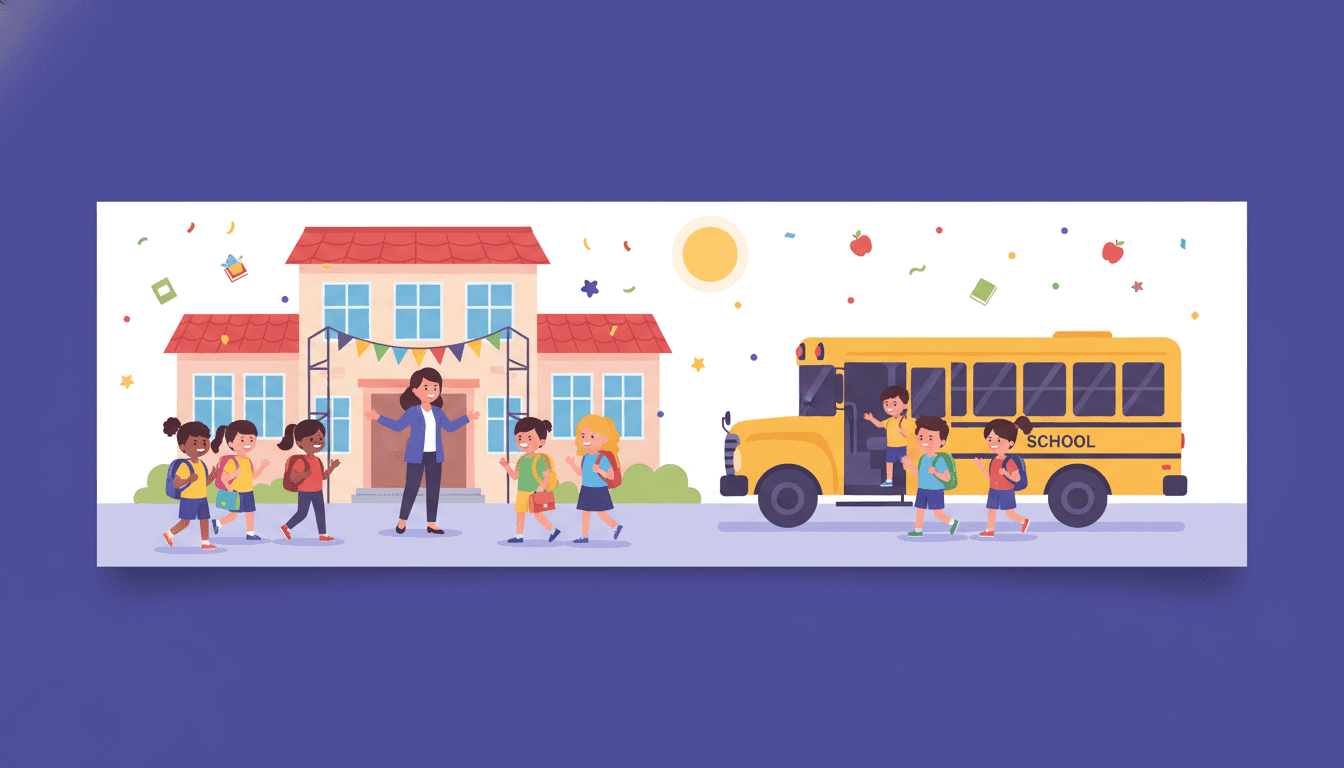
Elementary Teacher Back-to-School Newsletter: What to Send Before and During Week One

The back-to-school newsletter is the most important communication an elementary teacher sends all year. Families are paying close attention. They want to know who you are, what your classroom is like, and how their child will experience the year ahead. What you send in the first week shapes the trust you will build with families for the next ten months.
Here is what to include, when to send it, and how to set the right expectations from the start.
Send something before the first day
The best time to send your first newsletter is one week before school starts. Not the night before. Not the morning of. One week out, while families still have time to prepare.
A pre-first-day newsletter reduces anxiety for both families and students. When a child knows in advance that their new classroom has a pet hamster, a morning meeting routine, and a teacher who loves science experiments, they walk in the door with something to look forward to rather than a blank unknown.
The pre-first-day newsletter does not need to be long. A brief introduction to you, one or two things the child can expect on day one, and the essential logistics: where to go, what time, what to bring. That is it.
What to include in the week-one newsletter
The first full week of school newsletter is where you set expectations for the year. Cover these areas:
- A warm introduction. Tell families something real about who you are as a teacher. Your teaching philosophy in one sentence. Something you are genuinely excited to teach this year. Not a formal bio, a human introduction. Families respond to authenticity.
- Daily schedule highlights. Families want to know what a typical day looks like. Reading time, math block, specials, lunch, recess. You do not need every minute, but a rough sketch of the day helps families answer their child's questions and know what to expect when they ask "how was school."
- Classroom norms and expectations. What does your classroom community value? How do you handle conflict? What does respect look like in your room? Sharing your classroom culture in the first newsletter tells families a lot about the environment their child is entering.
- Communication expectations. How will you communicate with families throughout the year? How often will newsletters arrive? Where should families direct questions? What response time should they expect? Set this clearly in the first newsletter so you are not managing ad hoc communication all year.
- One thing families can do this week to help. A single, concrete action. Read together for fifteen minutes. Ask your child one specific question about day one. Label everything in the backpack. One thing is actionable. Ten things get ignored.
What to leave out of the back-to-school newsletter
Do not put everything in the first newsletter. It feels efficient to share the supply list, the classroom behavior policy, the homework expectations, the reading log procedures, the volunteer sign-up, and the PTA meeting schedule all in one communication. It is not.
A first newsletter that tries to cover everything guarantees that families remember nothing. The information you most need them to know gets buried.
Save secondary information for the second and third newsletters of the year. A drip of focused, short updates over the first month of school is far more effective than one comprehensive document that overwhelms.
Tone matters more than format in the first newsletter
Elementary families are emotionally invested in this newsletter. Their child is starting a new year with a new teacher. They want to feel that their child's teacher is warm, organized, and genuinely cares about students as people.
Write like a person, not like a policy document. "I cannot wait to meet your child on Tuesday" lands differently than "Students are expected to arrive by 8:15 AM." Both can be true. One builds trust. Lead with warmth, then follow with logistics.
Making the first newsletter look as good as it reads
Families form impressions quickly. A newsletter that looks professional and well-organized signals that the classroom operates the same way. A plain text email or a PDF scan of a handout signals something else.
Daystage was built for this. Set up your classroom name, school colors, and section structure once before the school year starts. When you sit down to write your first newsletter, the framework is already there. You fill in the content, preview how it looks in a real email, and send. Families receive a formatted, branded newsletter that reflects the quality of your classroom. The back-to-school newsletter you send in September will look exactly as polished as the one you send in May.
The first newsletter sets the tone for the whole year
Elementary families form their initial impression of their child's teacher in the first two weeks of school. The back-to-school newsletter is a major part of that impression. A clear, warm, organized first newsletter tells families: this teacher is on top of things, communicates well, and cares about keeping us in the loop.
That impression compounds over the year. Families who start the year trusting their child's teacher are easier to communicate with, more likely to volunteer, more forgiving of difficult moments, and more supportive of the learning. It starts with the first newsletter.
Get one newsletter idea every week.
Free. For teachers. No spam.
Frequently asked questions
When should elementary teachers send their back-to-school newsletter?
Send the first newsletter one week before school starts, while families still have time to prepare. A pre-first-day newsletter reduces first-day anxiety for both students and families by giving kids something specific to look forward to.
What should an elementary back-to-school newsletter include for families?
Cover a warm personal introduction, a rough sketch of the daily schedule, your classroom norms and expectations, how you will communicate throughout the year, and one concrete action families can take in the first week. That is enough for the first newsletter.
How long should a back-to-school newsletter be for elementary families?
Keep the first newsletter short: 300 to 400 words across four or five sections. Families are paying close attention to this one, so every word counts. Save secondary information like supply lists and volunteer sign-ups for weeks two and three.
What are common mistakes elementary teachers make in the first newsletter of the year?
Trying to cover everything in one newsletter is the most common mistake. A first newsletter packed with homework policies, reading logs, supply lists, and PTA reminders guarantees families remember nothing. Choose the three things families most need to know and save the rest.
What tool helps elementary teachers send a polished first newsletter before the school year starts?
Daystage lets you set up your classroom name, school colors, and section structure before the year begins, so the framework is ready when you sit down to write. The back-to-school newsletter you send in September will look exactly as polished as the one you send in May.

Adi Ackerman
Author
Adi Ackerman is a former classroom teacher and curriculum writer with 8 years in K-8 schools. She writes about school communication, parent engagement, and what actually works in real classrooms.
More for Elementary
Ready to send your first newsletter?
3 newsletters free. No credit card. First one ready in under 5 minutes.
Get started free