

Elementary Math Newsletter: How to Explain What Students Are Learning in Math
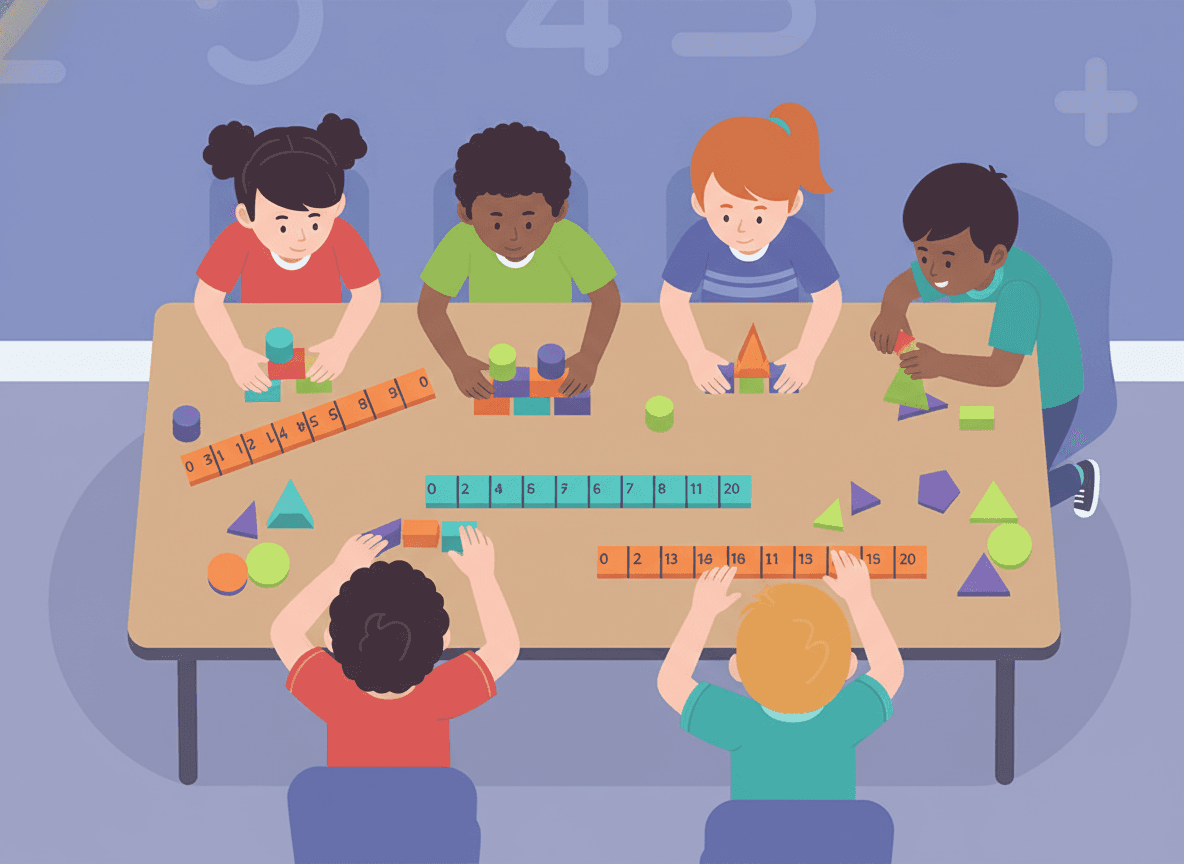
Math is the subject where parent misunderstanding causes the most problems. A family who sees their child using a number line or drawing an area model to solve multiplication does not always recognize what they are looking at. They learned a different method. They try to teach their method. The child gets confused. Homework becomes a conflict.
A clear, consistent math newsletter prevents this. Here is how to write one that actually helps.
Explain the method before explaining the concept
Most math newsletters make the mistake of explaining what concept students are learning without explaining how they are learning it. Families who do not see the method cannot support it at home.
Flip the order. Start with the method or tool. "This week students are using ten frames to understand addition within 20. A ten frame is a grid with ten boxes arranged in two rows of five. Students place counters in the boxes to see how numbers relate to ten." Then explain what this is building toward. "Ten frames help children develop mental math fluency by making it easy to see how close a number is to the next group of ten. That mental picture becomes automatic, which speeds up all future arithmetic."
Now families know what they are looking at and why it matters.
Address the "that's not how I learned it" moment directly
Modern elementary math instruction often looks different from how today's parents learned math. Partial quotients division, the lattice method, base ten blocks, drawing multiplication as an array. Families who did not encounter these methods may find them confusing or unnecessarily complex.
Your newsletter is the right place to address this directly. "You may notice that the way we teach multiplication this year looks different from the standard algorithm you learned in school. We teach visual and conceptual methods first because research shows students who understand what multiplication means before they memorize a procedure are more flexible and accurate in later math. The standard algorithm comes later and builds on this foundation."
That explanation, once in the fall and once in the spring, prevents most of the confusion.
One home practice per newsletter
Every math newsletter should include one specific practice activity that families can do at home using the same method taught in class. Not a worksheet. Something that takes five minutes and uses everyday materials or familiar situations.
Some examples that work well:
- For addition and subtraction: ask your child to help calculate the change from a small purchase at a store. What strategy did they use?
- For multiplication: set the table and ask your child to figure out how many forks are needed if each person gets one fork and there are five people. How did they get that answer?
- For fractions: split a pizza or a sandwich and ask your child to name what fraction each person gets. What happens if one person wants two pieces?
- For geometry: go on a shape hunt during a walk. Name every rectangle, cylinder, and triangle you find and discuss what makes each one that shape.
Explain what mastery looks like at this point in the year
Families often do not know whether their child is where they should be in math. They may see that their child can do something, but not know if they are doing it at the expected level of fluency or accuracy.
A few times a year, include a brief description of what mastery looks like at this point in the unit. "By the end of this unit, students should be able to add two-digit numbers mentally or with a few steps on paper, without needing manipulatives or drawings. Students who still need counters or drawings for every problem may need extra practice at home or support through our intervention schedule." Families who can identify where their child is in that progression can advocate for the right support.
Math vocabulary families should know
Elementary math instruction introduces a lot of vocabulary that families may not recognize: addend, sum, difference, quotient, factor, product, numerator, denominator, place value, regrouping. Families who do not know these terms cannot help their child with homework that uses them.
A small vocabulary spotlight in the newsletter, just two or three terms with plain-language definitions, builds the shared vocabulary that makes home support possible. Keep it conversational. Not a dictionary entry. A sentence that sounds like something a teacher would say.
Making math newsletters sustainable
A math newsletter does not need to be separate from your weekly classroom newsletter. It can be one section within a broader update. If you teach a self-contained classroom, a math section alongside reading, reminders, and a classroom moment is a complete and manageable format.
Daystage makes it easy to maintain a consistent structure across newsletters. Your math section is already in the template. You fill in the concept, the method, and the home activity each week. Families know where to look for math information and they trust that it will be there.
What good math communication builds
Families who understand elementary math methods are less likely to undermine classroom instruction, more likely to support homework effectively, and more confident talking to their child about math. Over a school year, that consistent support makes a measurable difference in student confidence and fluency.
The newsletter is the simplest tool available to make it happen. Use it.
Get one newsletter idea every week.
Free. For teachers. No spam.
Frequently asked questions
When should elementary teachers explain math methods to parents in a newsletter?
Address the 'that's not how I learned it' moment once in the fall and once in the spring. These two explanations, placed in the newsletter before confusion becomes conflict, prevent most of the homework tension families experience with modern math instruction.
What should an elementary math newsletter include for families?
Start with the method or tool, not just the concept. Give families a plain-language description of how students are learning the skill, one specific home practice activity that uses the same approach taught in class, and two or three vocabulary terms with conversational definitions.
How often should elementary teachers include math content in the classroom newsletter?
Every week. A math section does not need to be a separate newsletter: one focused paragraph alongside reading and reminders gives families the context they need to support homework without accidentally teaching conflicting methods at home.
What are common mistakes elementary teachers make when communicating about math to parents?
Explaining what concept students are learning without explaining how they are learning it is the most common mistake. Families who do not see the method cannot support it at home and often default to the algorithm they learned in school, which confuses students mid-unit.
How does Daystage help elementary teachers maintain a consistent math section in their newsletter?
Daystage keeps your template structure consistent from week to week. Your math section is already in the layout, so you fill in the concept, the method, and the home activity each week without rebuilding the newsletter from scratch.

Adi Ackerman
Author
Adi Ackerman is a former classroom teacher and curriculum writer with 8 years in K-8 schools. She writes about school communication, parent engagement, and what actually works in real classrooms.
More for Elementary
Ready to send your first newsletter?
3 newsletters free. No credit card. First one ready in under 5 minutes.
Get started free