

Government Elementary Newsletter: Learning Updates for Parents
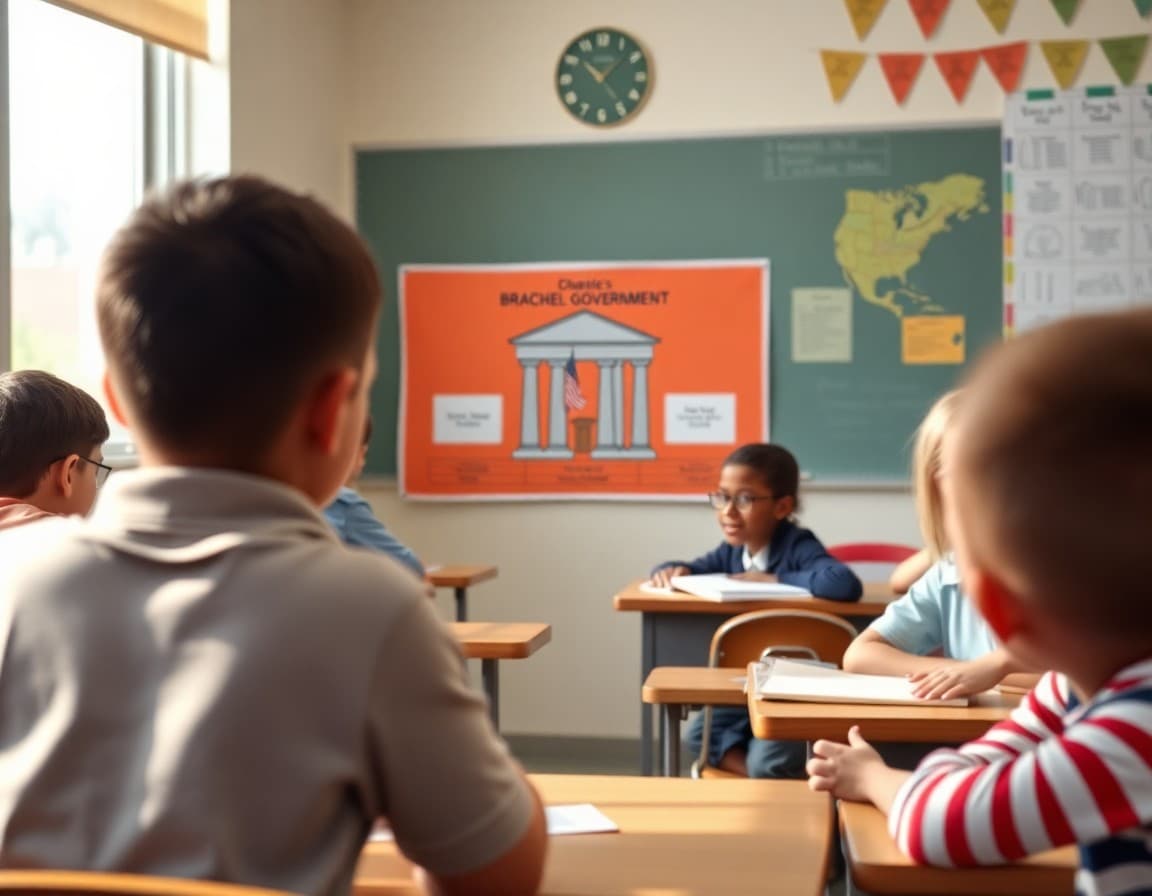
Civics and government instruction in elementary school builds the foundation for a lifetime of civic participation. Students who understand how laws are made, why rules exist, and what it means to be a citizen are better prepared for middle school, high school, and adult civic life. A government newsletter that helps families extend these concepts at home makes a genuine difference in how deeply students engage with the material.
Name the Concept and the Grade-Level Context
Start with the specific concept students are studying and why it matters at this grade level. "This month, third graders are learning about the three branches of the federal government: legislative, executive, and judicial. We are focusing on why the founders designed a system with three separate branches, and what each branch does to check and balance the others." That framing gives parents a clear picture of both the content and the reasoning behind it.
Describe Classroom Civic Practice
The best civics classrooms are mini-democracies. Share what that looks like: "Students created our classroom rules at the start of the year by proposing ideas, discussing them as a class, and voting on which rules to adopt. This month, we used the same process to decide how to run our reading groups. Students understand from direct experience that rules and governance work better when everyone has a voice in making them." That description makes civics feel like a lived practice, not an academic subject.
Connect Government Concepts to Family Life
Democratic participation starts at home. A brief connection helps families see this: "Your family practices governance every day: deciding on household rules, resolving disagreements through discussion, and making decisions about shared resources. When you involve your child in those discussions, even at a small scale, you are modeling civic participation. Ask your child how they think a family decision should be made. Their answer will reflect what they are learning in class."
A Family Civic Activity Template
Here is a template section you can adapt for a government newsletter:
"This week, try a Family Rule Review with your child. Pick one household rule and discuss three questions together: Why does this rule exist? What would happen without it? Is it fair to everyone in the family? There are no required conclusions. The goal is practicing the kind of reasoning that underlies all good governance: identifying purpose, considering consequences, and evaluating fairness. Your child will recognize these questions from class immediately."
Explain the Vocabulary Students Are Learning
Government vocabulary is specific and needs clear definitions: "Legislative branch: the part of government that makes laws (in the US, this is Congress: the Senate and the House of Representatives). Executive branch: the part of government that carries out laws (the President and the cabinet). Judicial branch: the part of government that interprets laws (the Supreme Court and lower federal courts). Checks and balances: the system that prevents any one branch from becoming too powerful." These definitions help parents have accurate conversations about homework and classroom discussions.
Invite Families to Share Civic Experiences
Many families have direct experiences with government and civic life. Extend an invitation: "If anyone in your family has voted in an election, served on a jury, worked for a government agency, or participated in local community decisions, we would love to hear about it. These firsthand accounts bring civics to life for students in a way that textbooks cannot. You are welcome to share your experience at a classroom visit, or your child can share it as a brief story during morning meeting."
Address the Concept of Civic Responsibility
Civics is not just about understanding government structures. It is about participation and responsibility. A brief paragraph on civic responsibility connects the academic content to character: "Part of our civics unit focuses on what it means to be a responsible citizen: voting, following laws, contributing to the community, and speaking up when something is unfair. These habits start long before students can vote. They start with following classroom rules, contributing to group projects, and standing up for classmates who are treated unfairly."
Preview Local Government Connections
For upper elementary students, connecting federal government concepts to local government makes the abstract concrete: "After we study the federal structure, we will look at how our own city and county government mirrors that structure. Your city has an executive (the mayor), a legislative body (city council), and a local court system. Knowing your city council representative's name and attending a public meeting, even once, makes those structures real in a way that classroom study alone cannot."
Get one newsletter idea every week.
Free. For teachers. No spam.
Frequently asked questions
What should an elementary government and civics newsletter include?
A government newsletter should describe the specific concepts students are studying, such as rules and laws, the three branches of government, voting and elections, or community helpers and civic roles. Include how students are actively practicing civic skills in the classroom, such as creating rules, holding class votes, or studying local government. Connect the concepts to family conversations about community and citizenship.
What government topics do elementary students study?
Kindergarten through second grade focuses on rules, community helpers, and local government structures. Third grade introduces state and national government basics, the concept of citizenship, and the purpose of laws. Fourth and fifth graders study the three branches of the federal government, the Bill of Rights, elections, and civic participation. State-specific government and history are common additions in fourth grade across many state curricula.
How can families support government and civics learning at home?
The most powerful civics education happens through participation. Bringing children to vote if your state allows it, watching local council meetings, discussing news stories about local government decisions, or visiting the state capitol all make government real. Even reading the local newspaper together and identifying which branch of government a headline involves reinforces classroom learning in an engaging, real-world way.
How do I communicate about political topics in civics without taking partisan positions?
Focus on processes, not outcomes. Explain how elections work without discussing which candidates or parties are better. Describe how laws are made without advocating for specific laws. When students study the First Amendment, focus on what it protects and why the founders included it, not on current debates about its application. Process-focused civics education builds civic capacity without political indoctrination.
What tool makes it easy to send government and civics newsletters to elementary families?
Daystage lets you send civics newsletters with classroom activity descriptions, civic participation ideas, and vocabulary lists directly to families. You can build a template for social studies newsletters and update the specific civics concept each unit. Families receive it directly by email without needing to log into a separate platform.

Adi Ackerman
Author
Adi Ackerman is a former classroom teacher and curriculum writer with 8 years in K-8 schools. She writes about school communication, parent engagement, and what actually works in real classrooms.
More for Elementary
Ready to send your first newsletter?
3 newsletters free. No credit card. First one ready in under 5 minutes.
Get started free