
Elementary STEM Newsletter: Science Technology Engineering Math
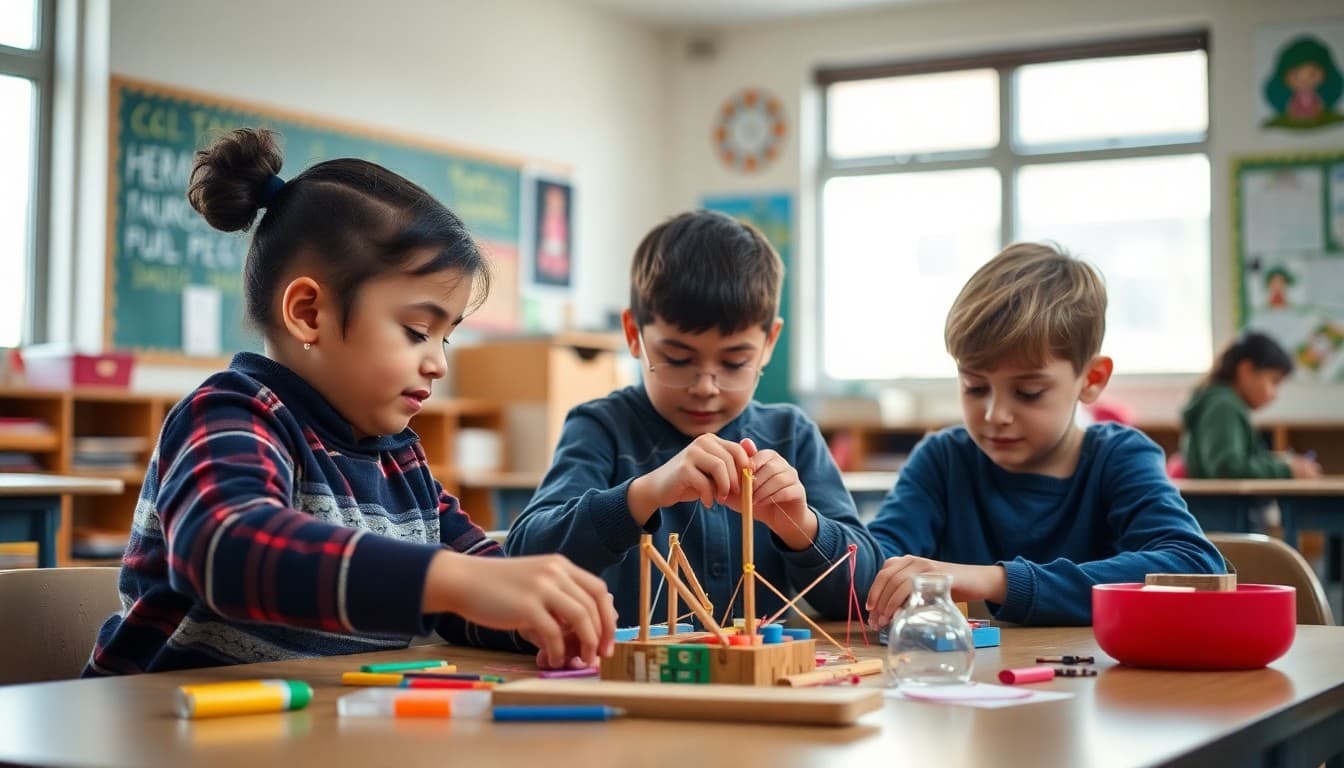
STEM newsletters generate more family enthusiasm than almost any other elementary communication. Parents who might skim a reading skills update will read every sentence of a description of their child's bridge engineering challenge. The combination of hands-on learning, real problem-solving, and visible outcomes is inherently compelling. The challenge is matching that compelling content with clear communication about what students are actually learning and why it matters beyond the excitement of building things.
Connecting STEM Activities to Academic Standards
Every STEM activity in your classroom is connected to specific academic standards, and the newsletter is where you make those connections visible. A bridge engineering challenge is not just fun. It applies understanding of forces and structures from the science standards, requires precise measurement from the math standards, involves writing a design justification from the language arts standards, and develops the iterative design process from the engineering standards. When families see these connections named explicitly, they treat STEM time as core instruction rather than enrichment extras.
The Engineering Design Process: Explain It Once
In the first STEM newsletter of the year, explain the engineering design process because you will reference it all year. The process has five stages: ask (define the problem), imagine (brainstorm solutions), plan (choose a solution and diagram it), create (build the prototype), and improve (test, evaluate, and revise). Students go through this cycle repeatedly throughout the year. Families who know the process recognize it when their child describes it at home and can ask better questions. "What did you improve in your second design and why?" is a question that requires a real answer and reinforces the most important part of the process.
This Month's STEM Challenge
Describe the current challenge in specific terms. Not just "we built towers" but:
November Challenge: The Earthquake-Proof Building
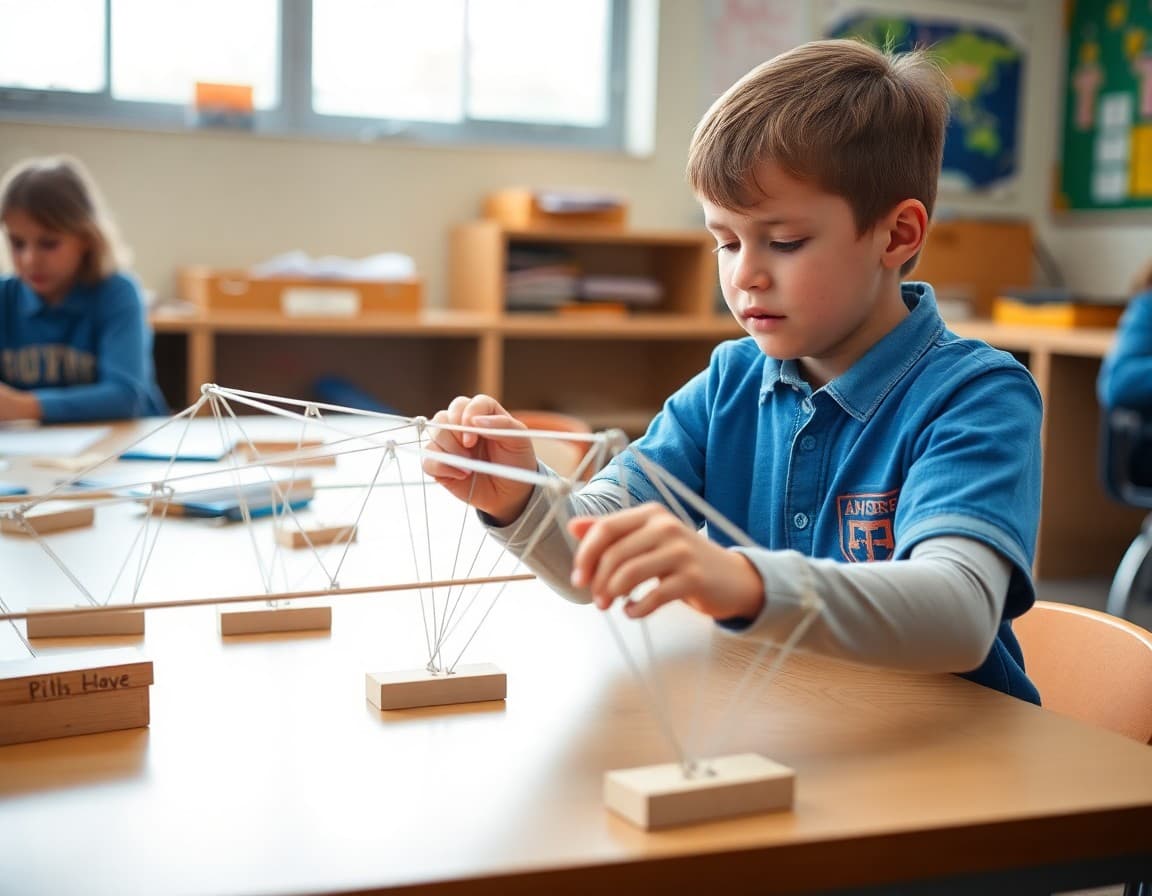
Students were given 20 marshmallows, 15 spaghetti noodles, and 30 seconds of simulated earthquake (shaking the table). Their challenge: design a building that stays standing. The constraint: it must be at least 10 inches tall. Round 1 designs crashed for nearly every team. Students documented what went wrong (too top-heavy, no diagonal bracing, not enough base width) and redesigned. Round 2 buildings had a 70 percent survival rate. Students wrote a design journal entry explaining their improvement decisions. Ask your child to draw their Round 2 building and explain what they changed.
STEM at Home: Activities That Require Nothing Special
The best STEM home activities require nothing but household materials and a question. Try this one this week: give your child a handful of everyday objects (coin, paperclip, eraser, marble, crayon, button) and ask them to predict which ones will sink and which will float in a bowl of water. Have them test each one and record the results. Then ask: is there a pattern? What do the sinkers have in common? What do the floaters have in common? Does size matter? Does shape? This is genuine scientific investigation. It takes 15 minutes, costs nothing, and produces exactly the kind of observation and pattern-recognition thinking your class STEM activities develop.
Celebrating STEM Fair and Showcase Events
If your school hosts a STEM fair, science fair, or engineering showcase, build anticipation through the newsletter starting three months early. Describe what past projects have looked like, explain the judging criteria, and walk families through the project process timeline. Students who start their projects in October and get feedback along the way produce significantly stronger work than students who start in the week before the fair. The newsletter is the primary tool for getting families to support an early start rather than a last-minute scramble.
Featuring Real STEM Role Models
Include a brief "STEM Person of the Month" feature in every newsletter. Choose someone whose work connects to what students are studying: a climate scientist during an Earth science unit, a structural engineer during a building challenge, a data analyst during a graphing unit. Include their name, their work, and one sentence about how their job connects to the classroom activity. After a full year of these features, students have encountered 9 or 10 real professionals in STEM fields. That breadth of exposure shapes career imagination in ways that abstract encouragement does not.
Get one newsletter idea every week.
Free. For teachers. No spam.
Frequently asked questions
What should an elementary STEM newsletter cover?
Cover the current science or engineering challenge students are working on, the STEM skills and concepts being developed, any upcoming STEM fair or showcase events, and a simple at-home STEM activity families can try. Including a photo of students in the middle of an engineering challenge or a science investigation increases engagement dramatically. Families who see their child doing real hands-on STEM work are more likely to support STEM activities at home.
How do I communicate STEM goals in terms families can understand?
Replace curriculum jargon with observable outcomes. Instead of 'students are developing engineering design process skills and understanding of structural integrity,' write 'students are designing bridges from index cards and masking tape, testing how much weight they can hold, figuring out why some designs failed, and rebuilding with improvements. This is exactly how real engineers work.' That description is immediately understandable and far more engaging than abstract skills language.
What STEM activities work well for home practice with no special supplies?
Kitchen science is the most accessible: mixing baking soda and vinegar to observe chemical reactions, testing which surfaces water beads up on versus absorbs, measuring the distance a paper airplane travels with different wing designs. These activities require no special materials, take 10 to 20 minutes, and directly connect to classroom STEM concepts. Specificity matters: recommend a specific activity rather than suggesting families 'explore science at home.'
How do I support STEM engagement for girls specifically in the newsletter?
Feature female scientists, engineers, and mathematicians in your newsletter regularly, especially when the scientist's work connects to what students are studying. Name specific women: Katherine Johnson's orbital mechanics calculations, Ellen Ochoa's engineering work before becoming an astronaut, Shirley Ann Jackson's physics research. These names and contexts matter more than general statements about STEM being for everyone. Representation in newsletter content sends a message that general encouragement cannot.
Can Daystage handle STEM newsletters with images of hands-on activities?
Yes. Daystage supports image embedding so you can include photos of students doing STEM challenges, engineering tests, and science investigations directly in the newsletter body. Images of children engaged in hands-on learning are among the highest-engagement content in any school newsletter. The platform optimizes images for email so they load quickly on phones, which is where most parents read their school communications.

Adi Ackerman
Author
Adi Ackerman is a former classroom teacher and curriculum writer with 8 years in K-8 schools. She writes about school communication, parent engagement, and what actually works in real classrooms.
More for Elementary
Ready to send your first newsletter?
3 newsletters free. No credit card. First one ready in under 5 minutes.
Get started free