
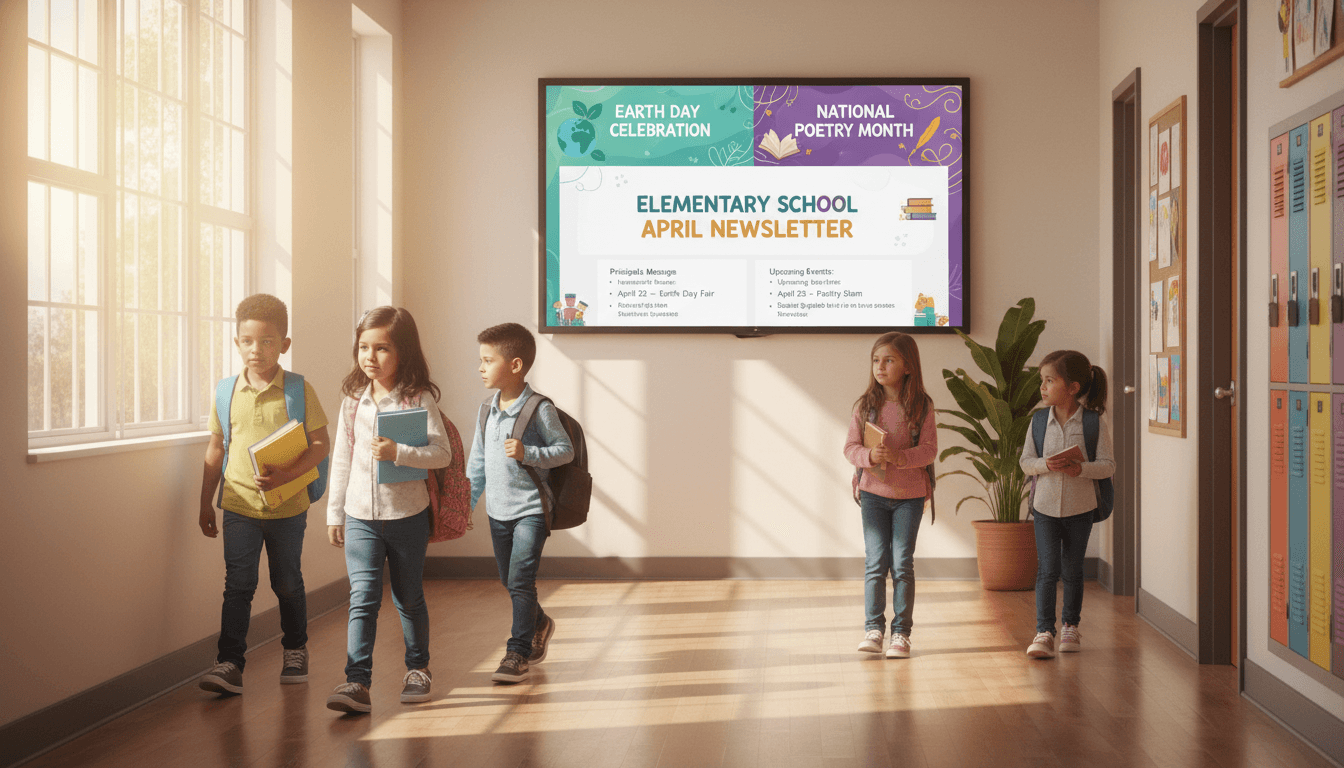
April Newsletter Template for Elementary School Parents
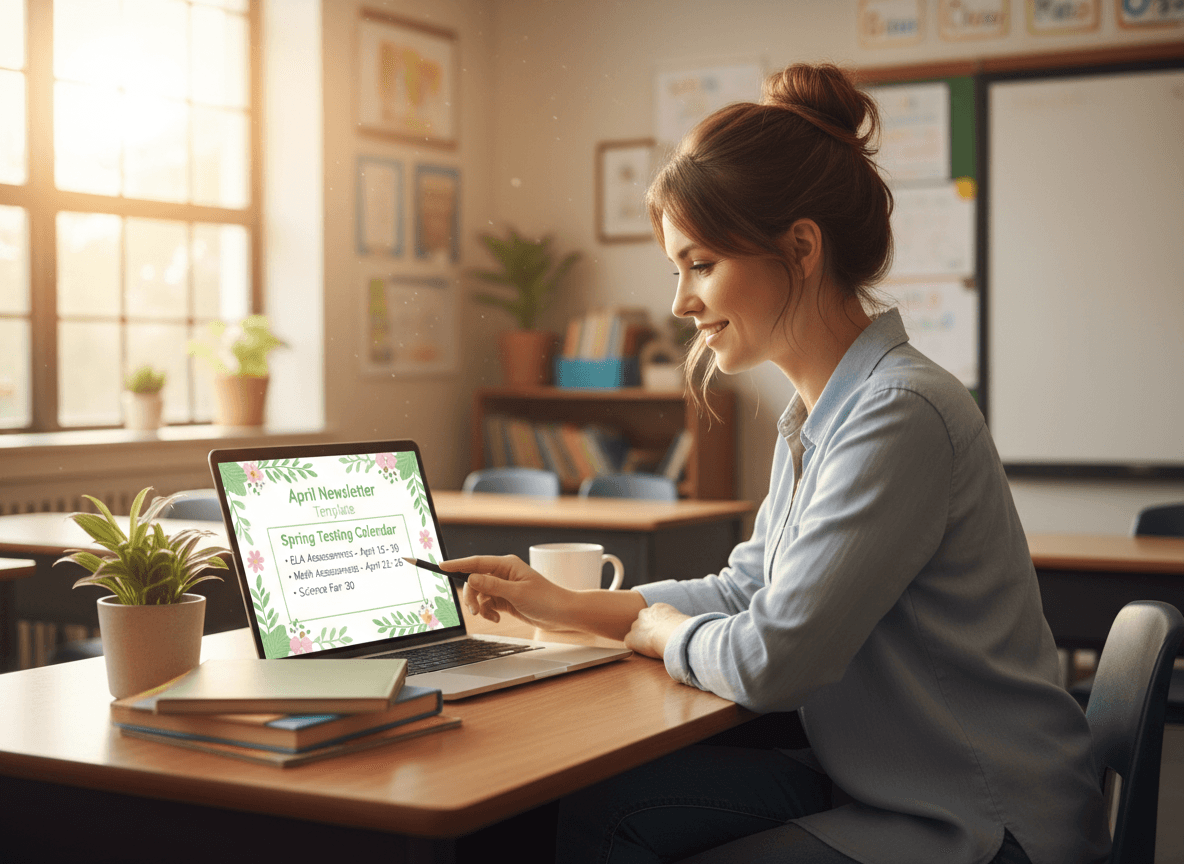
April brings spring testing, Earth Day on the 22nd, National Poetry Month, and the first real awareness that the school year is winding down. Parent engagement often dips in April as spring sports and activities pick up. A focused newsletter keeps families connected to what is happening in school during the months that matter most for end-of-year progress.
This template covers the sections that make a difference in April. Adjust the dates and specifics to match your school calendar.
Opening: April at a Glance
Lead with the two or three items that need family action. Testing windows, Earth Day projects with material needs, and poetry performances are all worth flagging in the first paragraph so families know to read the rest carefully.
Sample opening: "April is full. State testing continues through April 10th, we have our class poetry reading on April 25th, and Earth Day is April 22nd. All three have something that requires your attention. Details below."
Spring Testing: Final Reminders for Families
If your school started testing in late March, April is when most of the testing actually happens. Families need a clear window, subject-by-subject breakdown if applicable, and a specific ask from you.
Example: "Our state math assessment runs April 7-9 in the morning session. Science testing for fourth and fifth grade is April 14-15. During testing weeks, please make sure your child arrives by 8:15 AM (before the 8:30 start), has eaten breakfast, and has had a full night of sleep. If your child is sick during a testing day, contact the front office immediately to discuss rescheduling options. Please do not schedule appointments during testing mornings."
National Poetry Month: What We Are Writing and Reading
April is National Poetry Month, and most elementary teachers tie it to both reading and writing standards. Let families in on what you are working on and what they will see as a final product.
Tell families: which poet or poems you are studying, what type of poem students are writing, and how families can see the finished work. For example: "This month we are studying Shel Silverstein and Langston Hughes. Students are writing their own free verse poems about a place that matters to them. On April 25th, we will hold a class poetry reading in the library at 2:00 PM. Parents are welcome to attend. Students will also bring home a poetry booklet with all their April writing at the end of the month."
Earth Day: What Our Class Is Doing on April 22nd
Earth Day is one of the clearest opportunities all year to connect science, writing, and social responsibility in a way families find meaningful. Be specific about what your class is doing so families can support at home and, if needed, contribute materials before the day.
Example: "For Earth Day on April 22nd, our class is doing two things: a school grounds litter cleanup during morning recess and a persuasive writing piece on one local environmental issue students chose themselves. Topics include local park litter, food waste in the cafeteria, and single-use plastic in our school store. If your child wants to bring in a relevant news article or photo to support their essay, we would love to include it."
Spring Curriculum: Where We Are Academically
April sits in a productive academic zone. Reading units are often in nonfiction research or literary analysis. Math is typically in measurement, fractions, or geometry depending on grade. Writing is usually opinion or informational. Give families a two or three sentence update on each core subject so they can ask informed questions at home.
April curriculum snapshot example: "Reading: We are in our research unit. Students chose an animal in danger of extinction and are reading multiple nonfiction sources to gather evidence. Math: We are finishing fractions and beginning decimals. This week we are focused on comparing fractions with unlike denominators. Writing: Students are using their research notes to write a five-paragraph informational essay."
End-of-Year Countdown: What Families Should Know Now
April is the right month to give families a first look at the end-of-year timeline. May and June go fast, and decisions made in April (whether to take a family trip during a testing window, whether to attend promotion ceremonies) need advance notice.
A short paragraph does the job: "We have eight weeks of school left after spring break. Between now and June 12th, we have state testing wrap-up, field day on May 30th, promotion rehearsal June 9th, and our end-of-year portfolio review. I will send a full timeline in May, but wanted to flag those dates early so families can plan accordingly."
April Behavior and Classroom Culture Note
Spring fever is real. The combination of warmer weather, approaching summer, and sustained academic pressure creates behavior patterns teachers see every April. Let families know what you are noticing and what you need from them at home.
Keep the tone constructive: "We are working hard on transitions this month. When students come in from recess, the first two minutes of getting settled matter a lot. If your child mentions having trouble focusing after lunch, we are working on that together in class. One thing that helps at home is a consistent bedtime. Fourth graders do best with nine to ten hours of sleep, and we can tell the difference in April when sleep schedules start shifting."
April Events and Dates
Close with a clean list. April typically includes spring testing windows, Earth Day, class poetry performances, parent-teacher check-ins if any remain, and any spring field trip that families need to sign and return permission slips for.
Sample dates: April 7-9 (state math testing), April 14-15 (state science testing, grades 4-5), April 22 (Earth Day activities), April 25 (class poetry reading, 2:00 PM, library), April 30 (spring field trip permission slips due). Confirm all dates with your school calendar.
Get one newsletter idea every week.
Free. For teachers. No spam.
Frequently asked questions
What should go in an April elementary school newsletter?
April newsletters should address spring testing (if testing did not begin in March), Earth Day activities on April 22nd, National Poetry Month content, and a first mention of the end-of-year timeline so families are not caught off guard in May. April is also when parent engagement sometimes drops as families shift attention to spring sports and activities. A specific, practical newsletter keeps the school-home connection strong through the final quarter.
How do I communicate spring testing details in the April newsletter?
Be precise about dates, subjects, and what you are asking of families. List the testing window, which grades are tested, and what parents can do to support students. The most effective ask is simple: regular sleep schedule, breakfast before school, and no early pickups during testing mornings. Families who receive that request in writing are far more likely to follow through than families who hear it mentioned once at a meeting.
How do I incorporate National Poetry Month into the newsletter?
Share one specific poem your class is working on, explain the skill it teaches, and give families a short activity to try at home. Even something as simple as 'ask your child to read you their favorite poem from our classroom anthology this week' creates a home connection. If students are writing original poems, tell families what the final product will look like and when they will get to see it, whether that is a class poetry reading, a bulletin board display, or a take-home booklet.
What Earth Day content works well in an elementary newsletter?
Describe the specific activity or project your class is doing for Earth Day, not just that you are 'celebrating.' Are students doing a school grounds cleanup? Planting a garden? Creating recycling posters? Writing persuasive essays about a local environmental issue? Specific details make the newsletter meaningful. If families can contribute materials, supplies, or volunteer time, list the request with a clear deadline.
What is the best newsletter tool for elementary schools sending April updates?
Daystage helps elementary teachers send monthly newsletters that cover spring testing, Earth Day projects, and poetry month activities in one clean, organized message. You can include event dates, attach a testing schedule, and format the newsletter so the most important information lands at the top. Parents receive it directly in their email inbox, which means testing window dates are not lost in a backpack.

Adi Ackerman
Author
Adi Ackerman is a former classroom teacher and curriculum writer with 8 years in K-8 schools. She writes about school communication, parent engagement, and what actually works in real classrooms.
More for Elementary
Ready to send your first newsletter?
3 newsletters free. No credit card. First one ready in under 5 minutes.
Get started free