
Elementary Reading Buddies Newsletter: Cross-Grade Connections
Reading buddies programs are among the most research-supported and least complicated interventions in elementary education. They require no special materials, no training beyond a brief orientation, and no budget. They produce measurable reading gains for both the younger and older students in the pair, build cross-grade relationships that strengthen school community, and give older students a legitimate leadership role that many of them have not had before. The newsletter is how you make these benefits visible to families who might otherwise see it as a gap in instruction.
How the Program Works: The Basics
Explain the logistics completely in the first newsletter. Which grades are paired (typically fifth grade with first grade, or third grade with kindergarten)? How often do they meet? Where? What does a session look like? Is the older student always reading to the younger, or does it alternate? Is there a structured activity, or is it open-ended shared reading? Families who understand the structure can support their child's participation rather than being confused about why their fifth grader is coming home with picture books or their first grader is talking about their "big buddy."
What the Older Student Gains
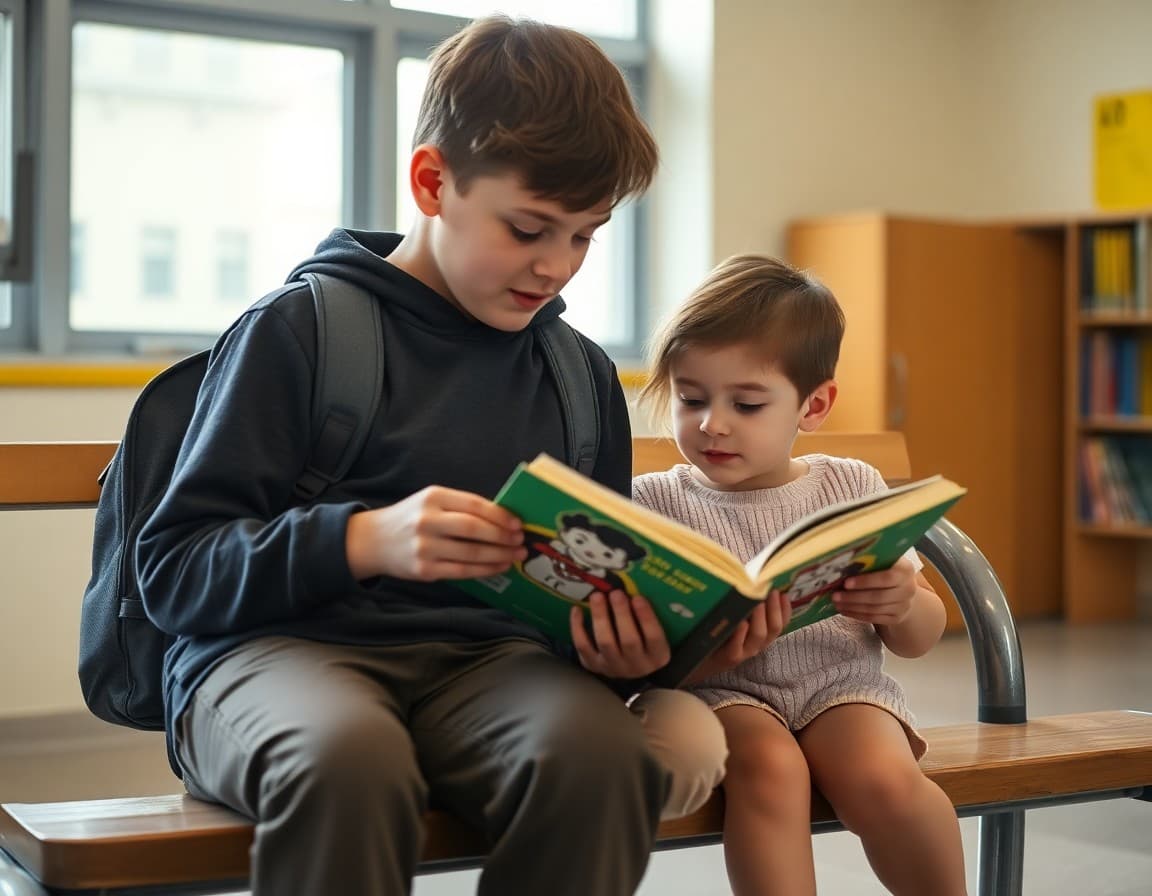
The benefits for younger students are obvious. The benefits for older students are less intuitive to families and worth explaining specifically. When a fifth grader reads a picture book aloud to a first grader, they practice: reading with expression and intonation, adjusting their vocabulary and explanation to their audience's developmental level, managing pace and engagement, handling unexpected questions and redirections, and building a relationship with a younger child over time. These are communication skills that transfer directly to academic presentations, collaborative projects, and eventually to workplace communication. Older students who mentor younger ones also show higher academic engagement and school attachment than peers who do not have a mentoring role.
A Sample Session Description
Paint a picture of what reading buddies looks like in practice:
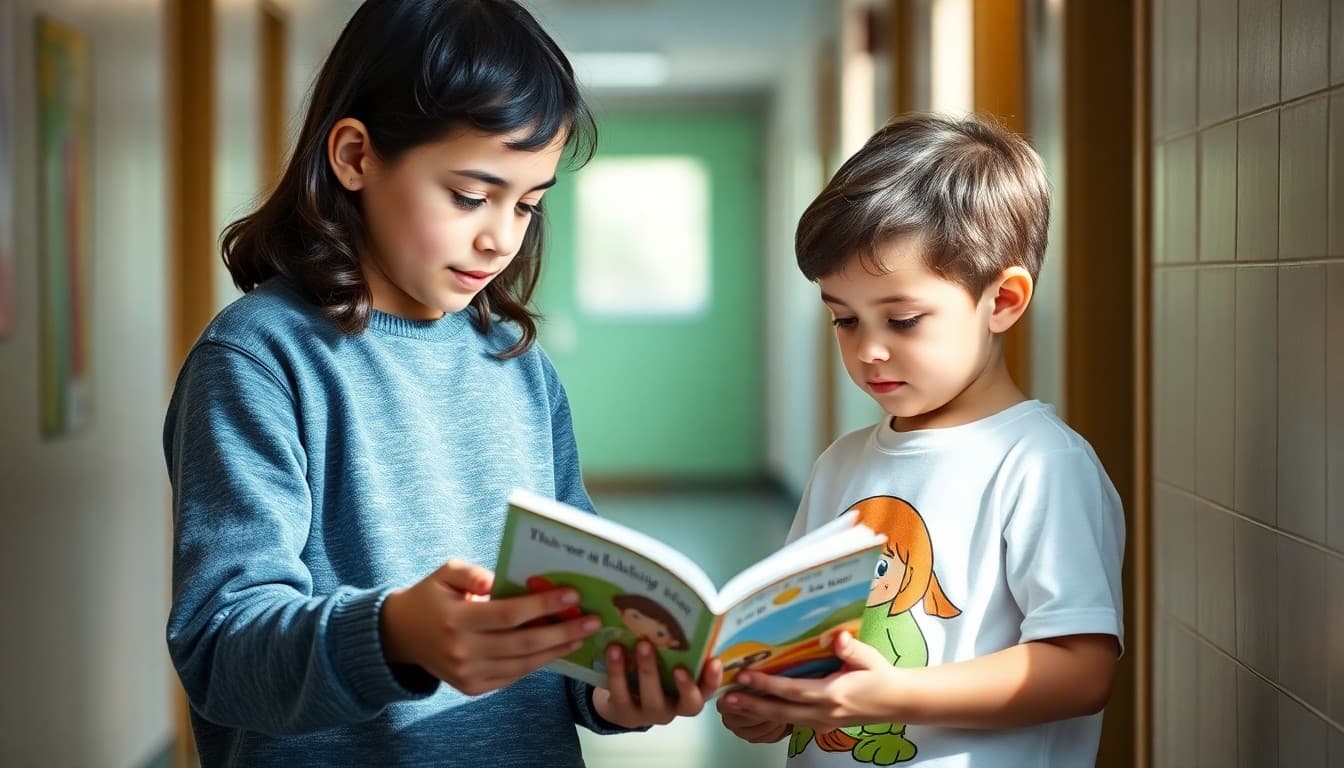
Every Thursday at 1:15 PM, Ms. Johnson's fifth graders walk down the hall to Ms. Park's first-grade classroom. Each fifth grader finds their first-grade partner and they settle into a quiet spot together, on the rug, in a hallway corner, at a small table. The fifth grader brings a book they selected and practiced ahead of time. They read aloud to their buddy, pausing to ask questions and let the younger student look at pictures. After 15 minutes, they switch to an activity: matching letters to sounds, retelling the story using three pictures, or drawing the main character. At 1:45, there is a sharing circle where buddy pairs tell the group one thing that happened in their book. Fifth graders and first graders wave goodbye until next week.
What Families Can Do to Support the Program
For families of older students: ask your child which book they chose for this week's session and why. Ask them to practice reading it aloud at home, paying attention to how they make the story interesting for a young listener. Ask them what questions they are planning to ask their buddy. For families of younger students: ask your child to tell you about their big buddy and what they read together. Ask which part of the book was their favorite. Ask if their buddy asked them any questions. These conversations reinforce the session's content and signal to both age groups that reading buddies matters at home as well as at school.
Celebrating Reading Buddies Milestones
Feature reading buddies milestones in the newsletter throughout the year. When a pair has read together 10 times, mention it. When a first grader achieves a reading benchmark that their buddy helped practice, celebrate it with permission. When a fifth grader writes an end-of-semester reflection on what they learned from teaching reading, include an excerpt. These celebrations reinforce the program's importance and give both older and younger students visibility that most school activities do not offer. Students who feel seen in school communication are more engaged students.
Get one newsletter idea every week.
Free. For teachers. No spam.
Frequently asked questions
What is a reading buddies program and what does it accomplish?
A reading buddies program pairs older students with younger ones for regular shared reading sessions. The younger student benefits from one-on-one reading exposure and a near-peer model. The older student reinforces their own comprehension and reading fluency skills through repeated reading, practices leadership and communication skills, and develops a sense of contribution to the school community. Research consistently shows both groups benefit academically and socially from the pairing.
How often do reading buddy sessions happen and how long are they?
Most elementary reading buddy programs meet once or twice per week for 20 to 30 minutes. This frequency is enough to build genuine relationships between partners while fitting into the school schedule without displacing significant instructional time. Consistency is more important than frequency: partners who meet every Thursday at 1:30 build a different quality of relationship than partners who meet irregularly.
How do I explain the reading buddies program to families of older students?
Emphasize that reading to younger students directly improves the older student's reading skills through repeated reading practice and vocabulary reinforcement. Older students also develop patience, communication, and leadership skills. Research shows that student tutors gain as much academically as the students they tutor, sometimes more. Families of fifth graders sometimes worry their child is missing instructional time. Show them what instructional value the older student gains from the program.
How do I match reading buddies effectively?
Match based on complementary needs rather than random pairing. A fifth grader who reads confidently but rushes benefits from the slower pace of a first grader who needs time to process. A fifth grader who struggles with expression benefits from animated picture books that reward expressive reading. A shy older student often blossoms with a younger buddy who is not yet aware of adolescent social hierarchies. The newsletter can explain your matching process briefly so families understand there is intention behind the pairings.
Can Daystage help me send reading buddies updates to two different grade-level families at once?
Yes. Daystage lets you send to multiple family groups simultaneously or with tailored content for each group. You can send a shared reading buddies newsletter to both grade levels, or send a version for fifth-grade families that emphasizes the leadership and academic benefits, and a version for first-grade families that focuses on the reading support benefits. Each group receives information relevant to their child's specific role in the program.

Adi Ackerman
Author
Adi Ackerman is a former classroom teacher and curriculum writer with 8 years in K-8 schools. She writes about school communication, parent engagement, and what actually works in real classrooms.
More for Elementary
Ready to send your first newsletter?
3 newsletters free. No credit card. First one ready in under 5 minutes.
Get started free