

Elementary Math Newsletter: Building Number Sense at Home
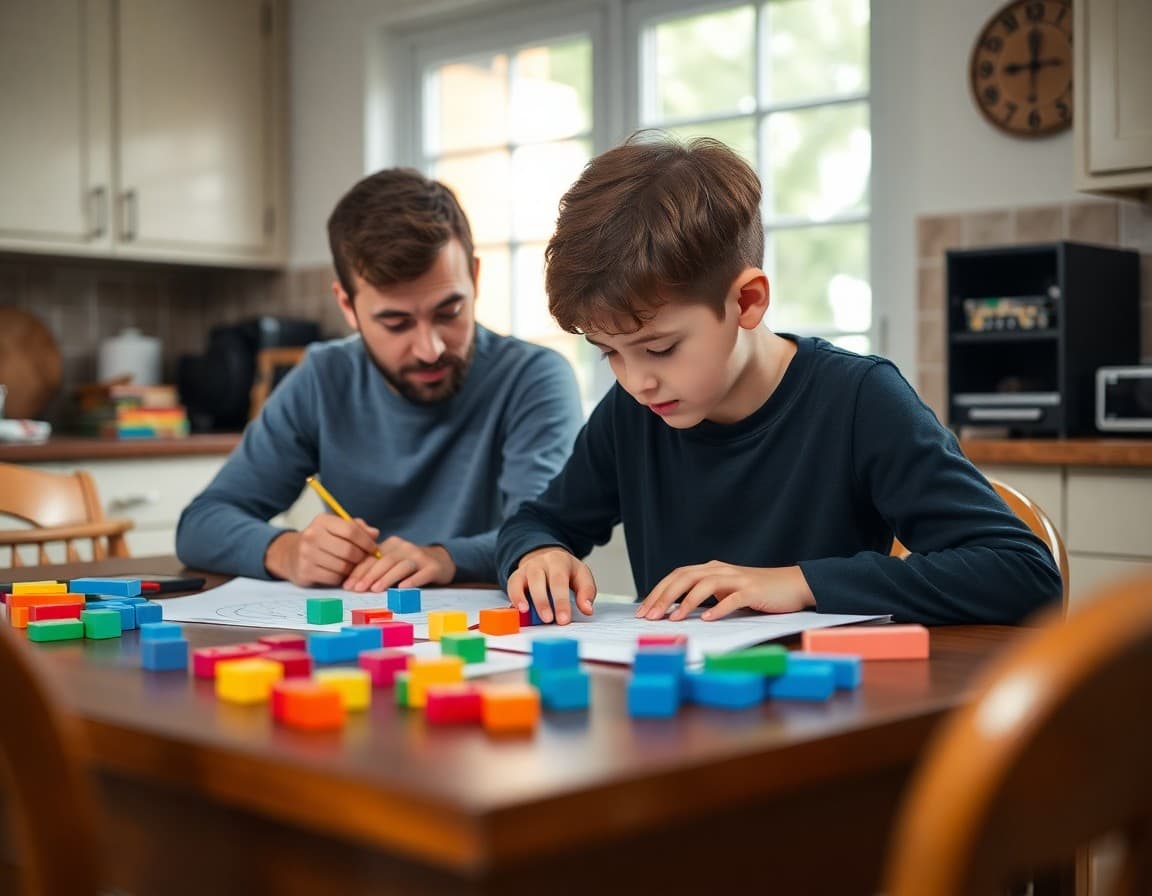
Math is the subject that most often creates friction between home and school. Parents learned one method, schools teach another, and the child is caught in the middle trying to reconcile two conflicting approaches at the homework table. An elementary math newsletter resolves this friction before it starts. It tells parents what their child is learning, how they are learning it, and how to support it at home without accidentally undermining the classroom instruction.
Why Math Newsletters Matter More Than Most
Reading, social studies, and science are subjects where most parents feel comfortable helping at home. Math is different. The shift to standards-based instruction over the past 15 years means many parents are encountering methods they did not learn: the area model for multiplication, the open number line, partial sums addition, and number bonds. Without context, these methods look like unnecessary complication. With context, they look like what they actually are: tools for building genuine number sense rather than just procedural fluency. Your newsletter provides the context.
Grade-Specific Content: What to Cover Each Month
The content should match exactly where students are in the curriculum. In September, explain the major math domains you will cover for the year and what the state standard expects by June. Each month after that, name the unit, the key strategy being taught, what proficiency looks like, and when the unit assessment falls. In November for a third-grade class, this might look like: "This month we are working on multi-digit multiplication using the partial products method. Students should be able to multiply a 2-digit number by a 1-digit number using this strategy by November 20." That level of specificity gives parents a clear picture without requiring them to understand the full curriculum map.
Explaining the Methods Parents Did Not Learn
Pick one method per newsletter and show parents what it looks like. A short worked example with a visual goes further than any written explanation. For partial products: show that 34 x 6 is solved by calculating (30 x 6) + (4 x 6) = 180 + 24 = 204. Explain that this approach builds place value understanding that transfers directly to algebra. Invite parents to try it before judging it. Most parents who work through one example understand both the method and its purpose well enough to support homework rather than contradict it.
A Sample Home Practice Section
Here is a home practice block that takes about 5 minutes and requires no materials:
Math at Home This Month: The Multiplication Squeeze
On the way to school or during dinner, give your child a multiplication problem like 24 x 3. Ask them to estimate first: is the answer closer to 60 or 75? Then ask them to calculate. Check the answer together. Ask whether their estimate was a good one. This three-step process (estimate, calculate, evaluate) mirrors exactly what we practice in class. Do two or three problems per week. The conversation about whether the estimate was close is often more valuable than the calculation itself.
Connecting Math to Upcoming Assessments
Parents want to know when assessments are coming so they can provide appropriate support at home. Include a simple timeline: "We have a unit assessment on November 22. I will send home a review sheet on November 18. If your child is struggling with any of the concepts before then, please reach out." This is not teaching to the test. It is giving families the information they need to be partners in preparation. Families who receive this kind of heads-up consistently report feeling more confident and less anxious about math assessments than families who find out about tests from their child the night before.
What to Do When a Child Says "I Don't Get It"
Include a section specifically for families navigating homework frustration. When a child says "I don't get it," the most effective response is usually not to re-explain the problem. It is to ask the child to re-read the problem aloud, explain what they do understand, and show what they tried. These three steps help children locate their own confusion, which is more useful than a parent jumping in with an explanation. If confusion persists after 10 minutes, the homework should stop and a note should go to school. Help that reinforces incorrect methods is worse than no help at all.
Math Vocabulary That Helps at Home
End each newsletter with a short vocabulary list of the math terms students are using in class. "Addend," "sum," "factor," "product," "partial product," "regrouping," and "place value" are terms that mean specific things in math contexts and that parents may use differently in casual conversation. A brief definition of each term currently in use helps parents speak the same mathematical language as their child's classroom. This is a small thing that has a larger effect on homework conversations than most parents expect.
Get one newsletter idea every week.
Free. For teachers. No spam.
Frequently asked questions
What should an elementary math newsletter include?
Cover what math concept students are working on this month, one or two specific activities families can do at home to reinforce the concept, any upcoming math assessments or benchmark tests, and a note about what to expect in the next unit. For grade-specific content, explain why the method being taught may look different from the way parents learned math. This is one of the most common sources of homework confusion and a short explanation in the newsletter prevents it.
How do I explain new math methods to parents who learned differently?
Use a concrete example. Show the old algorithm and the new strategy side by side and explain what the new approach is developing in students' mathematical reasoning. For example, explain that the partial products method for multiplication builds place value understanding that makes later algebra more accessible. Parents who understand the why behind a method are far less likely to tell their child 'that's not how you do it' at the homework table.
How do I make math home practice suggestions that families will actually use?
Suggest activities that happen during daily life rather than requiring extra time. Counting change at the grocery store, estimating how many minutes until a show ends, doubling a recipe, calculating the change from a $20 bill. These suggestions require no materials and no scheduled time. They fit into what families are already doing. A structured worksheet activity sounds more educational but generates far more resistance than a 5-minute conversation during a car ride.
Should the math newsletter be grade-specific?
Yes. A third-grade math newsletter should describe third-grade content specifically. Do not send a general elementary math newsletter when you can send one that names the exact standard, the specific strategy being used, and the milestone coming up this month for the exact grade your families have children in. Grade-specific content demonstrates that the teacher knows each child's actual academic context, which increases family trust and engagement.
Can I use Daystage to track which math newsletters families are reading?
Yes. Daystage shows you open rates and click-through rates for each newsletter you send. If a newsletter explaining a new multiplication method gets low open rates, you know to follow up at conferences or with a separate home note. If a newsletter with a family game suggestion gets unusually high engagement, you know that format works for your community. This feedback loop makes your communication progressively more effective over the year.

Adi Ackerman
Author
Adi Ackerman is a former classroom teacher and curriculum writer with 8 years in K-8 schools. She writes about school communication, parent engagement, and what actually works in real classrooms.
More for Elementary
Elementary Math Newsletter: How to Explain What Students Are Learning in Math
Elementary · 7 min read
Elementary Teacher Back-to-School Newsletter: What to Send Before and During Week One
Elementary · 7 min read
Elementary Art Teacher Newsletter: How to Share Visual Learning With Families
Elementary · 6 min read
Ready to send your first newsletter?
3 newsletters free. No credit card. First one ready in under 5 minutes.
Get started free