
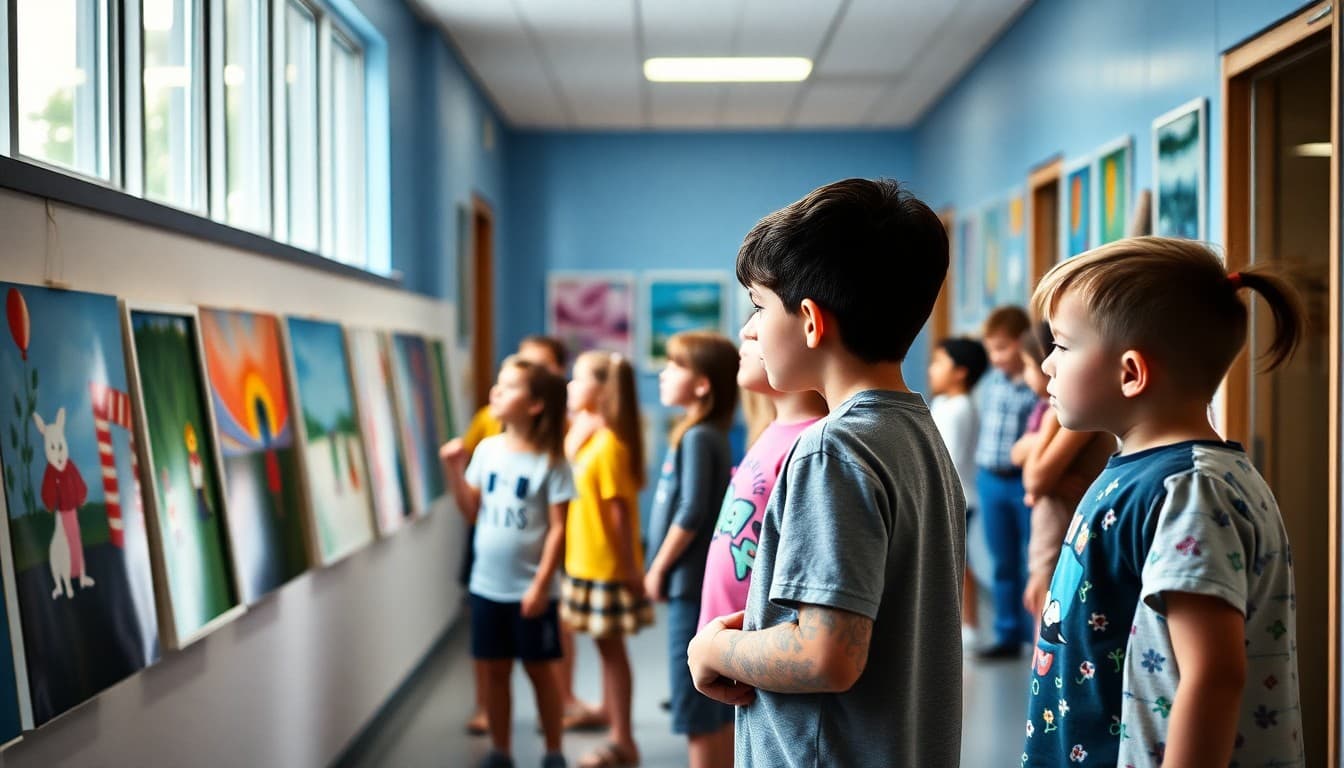
Elementary Art Newsletter: Creative Projects and Gallery Show
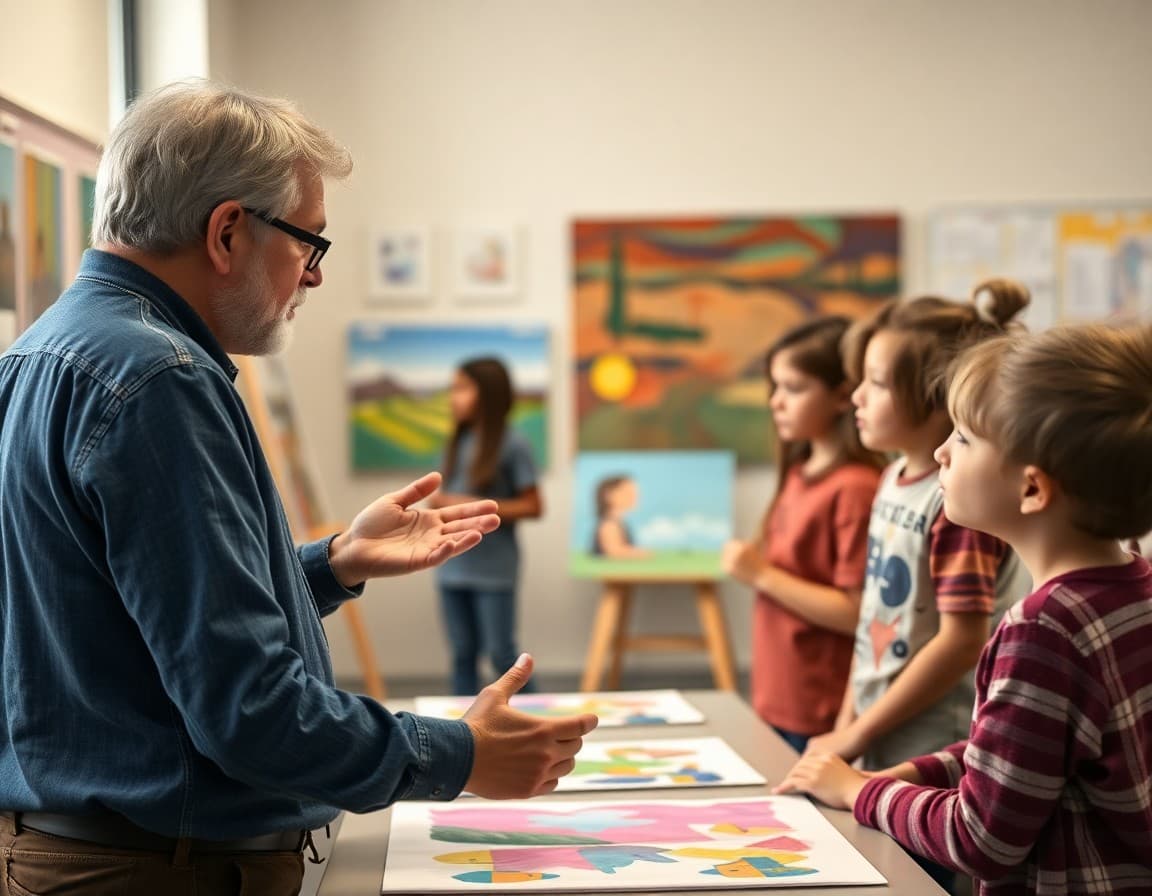
Art newsletters do something that most school newsletters cannot: they give families a visual window into their child's school day. A photo of a student's painting in progress, an image of the completed project mounted for the gallery show, a close-up of a detail that shows the technique being practiced. These images create a connection that words alone rarely achieve. If you are writing an elementary art newsletter and not including images, you are leaving the most powerful part of your communication unused.
What Art Curriculum Actually Teaches
Start the year by explaining what art class covers. Many families assume art is free drawing time. When they understand that students are learning the elements of art, the principles of design, how to use specific tools and materials safely, how to analyze other artists' work, and how to articulate what makes their own work effective, they treat art class differently. They ask better questions after school. They support studio time at home. They attend the gallery show with genuine interest in what their child accomplished rather than politely looking at pictures.
Monthly Project Updates
Each month, describe the current project in specific terms. Not just "students are making prints" but "students are learning relief printing using foam carving tools. They carved original designs into foam plates and are pulling prints with water-based ink. The project focuses on the concept of positive and negative space and the principle of repetition." A parent who reads this goes home and asks a completely different question than a parent who was told "we're doing printmaking." Specificity converts the newsletter from announcement to education.
A Sample Project Description Block
This Month in Art: Watercolor Landscapes
Students in grades 3 and 4 are completing watercolor landscape paintings inspired by Georgia O'Keeffe's New Mexico landscapes. The focus skills are wet-on-wet technique, color mixing to create gradients, and compositional choices about horizon line placement. Each painting shows the student's interpretation of a natural space they find interesting. Some students chose their backyard, some chose a park, and several chose imaginary landscapes. We will display finished paintings in the main hallway starting November 18.
[Photo of three in-progress paintings showing different color approaches]
Art Show Communication That Drives Attendance
Gallery shows deserve a three-step communication plan. First send: three weeks before, explaining the show concept, the work that will be displayed, and the event details. Second send: one week before, with a personal note about what each family's child contributed and where to find it in the show. Third send: day before or day of, with a brief reminder and any last-minute logistics. This sequence consistently produces show attendance 20 to 30 percent higher than programs that send a single announcement. The personal note in the second send is the most important element. It signals that the teacher knows each child's work specifically.
Home Art Connection Activities
Keep home connection activities accessible and material-light. Looking at a famous painting together and asking the child to point out where the artist used contrast is a 5-minute activity that requires no supplies. Drawing the same object with your eyes open versus closed and comparing the results demonstrates observation skills. Making a collage from old magazines practices compositional thinking. These activities do not require art supplies or artistic skill from parents. They require curiosity and a few minutes of attention, both of which most families can provide.
Celebrating All Student Work, Not Just the Best
Art newsletters sometimes slip into featuring only the most technically accomplished work, which signals to families of less advanced students that their child's work is not worth celebrating. Deliberately feature work at different skill levels and explain what each piece demonstrates. A drawing that shows strong observational skill is worth featuring even if the proportions are off. A collage that shows thoughtful color choices is worth featuring even if the cutting is rough. The newsletter is a communication tool, not a portfolio competition.
Connecting to Famous Artists
When students study a specific artist's work as inspiration, include a sentence or two about that artist in the newsletter with a suggestion for families. "We are looking at the work of Frida Kahlo this month. Her paintings often show personal experiences and Mexican cultural symbols. If you have 10 minutes, a Google Image search for 'Frida Kahlo self portraits' will show you the kind of work we are discussing, and your child will probably enjoy explaining what they notice." This invitation turns the newsletter into a starting point for a genuine conversation rather than just an announcement of what happened at school.
Get one newsletter idea every week.
Free. For teachers. No spam.
Frequently asked questions
What should an elementary art newsletter include?
Cover what art techniques or elements students are learning this month, a brief description of the current project including materials being used, any upcoming shows or events, and one home activity that connects to the classroom work. Including a photo of student work in progress or a finished piece dramatically increases newsletter engagement. Families who can see what their child is making are far more interested than families who only read about it.
How do I communicate about the art show in the newsletter?
Send a save-the-date at least three weeks before the show. Include the date, time, location, and any setup information families need. A week before, send a reminder with the specific piece their child will be displaying and where to find it in the show. Day-of or day-before, send a brief final reminder with parking information and any last-minute changes. Three touchpoints consistently produces better attendance than a single announcement.
How do I explain art curriculum to parents who think art is just free drawing?
Use the newsletter to explain the actual skill progression. Art education covers elements of art (line, shape, color, value, texture, form, space), principles of design (balance, contrast, rhythm, emphasis), and technique vocabulary (shading, perspective, composition). When families understand that art class has as much technical content as math class, they take it more seriously and encourage their children to engage with it more deeply.
How do I handle families who are disappointed their child's art is not being displayed?
Address display selection proactively in the newsletter. Explain your selection criteria transparently and, if possible, send every family at least one communication that includes a photo of their child's work whether or not it is selected for the public show. Families who feel their child was overlooked in an art show are usually reacting to a sense that their child's effort went unacknowledged. A personal photo of the work being completed or a note about what the child did well goes a long way.
Can I use Daystage to send art newsletters with images of student work?
Yes. Daystage handles image embedding well, which is particularly important for art newsletters. You can include in-progress shots, finished pieces, and art show invitation graphics in the same newsletter. The platform optimizes images for email delivery so they load quickly on phones. Several art teachers use Daystage specifically because it makes sharing visual content much easier than a plain text email with an attached PDF.

Adi Ackerman
Author
Adi Ackerman is a former classroom teacher and curriculum writer with 8 years in K-8 schools. She writes about school communication, parent engagement, and what actually works in real classrooms.
More for Elementary
Ready to send your first newsletter?
3 newsletters free. No credit card. First one ready in under 5 minutes.
Get started free