
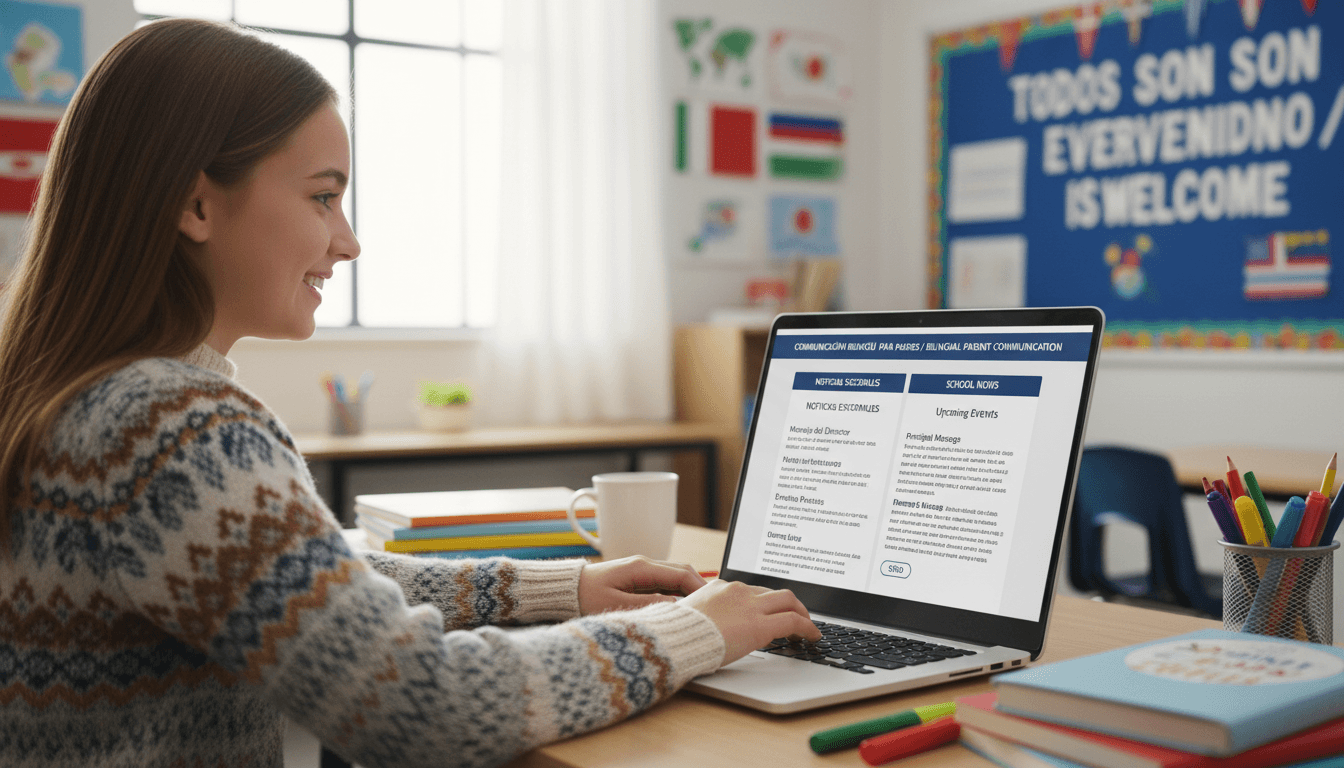
Spanish Speaking Parent Newsletter: Effective Communication Guide
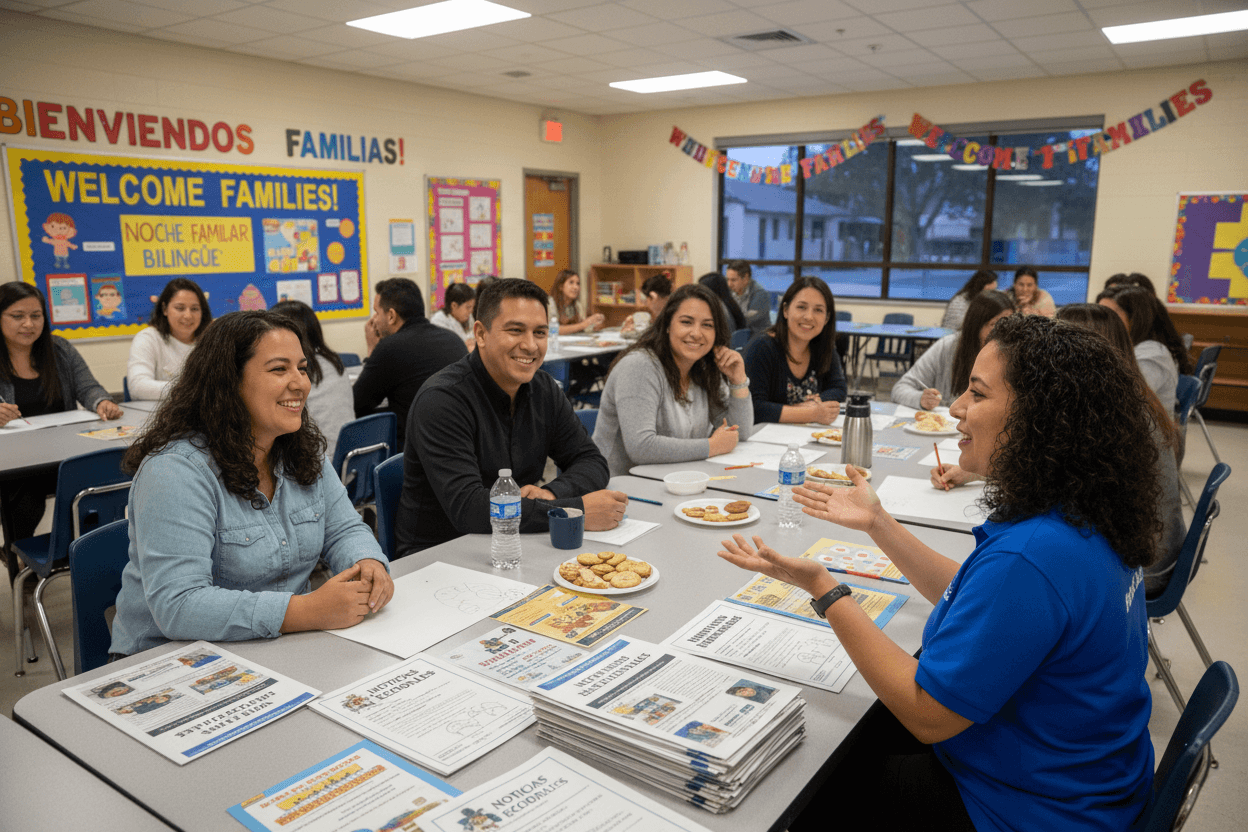
Spanish is the second most spoken language in the United States, with over 42 million native speakers. In many school districts, Spanish-speaking families represent the largest non-English-speaking group, and in some schools, they are the majority. Despite this, Spanish-speaking family engagement remains one of the most consistently underperforming areas of school communication.
The gap is not usually about language alone. It is about the quality of translation, the cultural relevance of content, and whether the school's communication practices signal genuine inclusion or minimum compliance. This guide covers how to close that gap.
Treat translation quality as a non-negotiable
Spanish-speaking families notice translation quality immediately. A newsletter with machine translation errors, awkward phrasing, or inconsistent use of accent marks signals that the school did not invest serious effort in communicating with them. The cumulative effect of receiving poorly translated newsletters over months and years is a clear message: you are an afterthought.
The minimum standard is human review of any machine translation draft. A bilingual staff member, a community liaison, or a professional translation service reviewing the Spanish version before it is sent catches the errors that automated tools do not. Schools with significant Spanish-speaking populations should invest in professional translation services or dedicated bilingual communication staff. The investment is small compared to the relationship damage of consistent low-quality translation.
Match the visual hierarchy in both languages
A common newsletter formatting problem is that the English version has a clear visual hierarchy -- bold headlines, section headers, prominent call-to-action boxes, large date announcements -- and the Spanish version presents the same information in a single block of text at the bottom of the page. Spanish-speaking families reading the Spanish version cannot find key information as quickly as English-speaking families can. Important dates, deadlines, and action items must have the same visual prominence in both versions.
If the enrollment deadline is in a red box in the English version, it should be in a red box in the Spanish version. If the school calendar is a graphic in English, the Spanish version should have the same graphic. Visual equality is part of genuine communication equity.
Understand the diversity within "Spanish-speaking families"
Spanish-speaking families in American schools come from Mexico, Puerto Rico, the Dominican Republic, Cuba, El Salvador, Guatemala, Honduras, Colombia, and dozens of other countries and regions, each with distinct cultural norms, vocabulary preferences, and historical experiences. A newsletter written for a predominantly Mexican American community may use vocabulary and cultural references that feel unfamiliar to Dominican or Salvadoran families. When your school has Spanish-speaking families from multiple national backgrounds, this diversity matters for communication quality.
Working with community liaisons who reflect the specific communities in your school gives you access to the cultural and linguistic knowledge that professional translators alone cannot provide.
Feature Spanish-speaking family voices and contributions
A newsletter that is translated into Spanish but features only English-speaking staff members, only English-speaking family voices, and only cultural content relevant to mainstream American families is linguistically accessible but culturally absent. Spanish-speaking families benefit from seeing themselves reflected in the newsletter: a quote from a Spanish-speaking parent, a story about a Spanish-speaking student's accomplishment, a recommendation from a Spanish-speaking teacher or community member.
This is not tokenism if it is done consistently. A newsletter that features Spanish-speaking family voices in multiple issues across the school year, as a normal part of school community coverage rather than as a special Hispanic heritage month feature, communicates that Spanish-speaking families are central members of the school community.
Address the value of bilingualism explicitly
Spanish-speaking families frequently receive implicit or explicit messages from schools that their home language is a problem to be overcome rather than an asset to be developed. A newsletter that explicitly affirms the value of bilingualism -- that children who maintain strong Spanish skills while developing English proficiency have cognitive advantages and future opportunities -- gives families a clear and research-grounded message. Many Spanish-speaking families are uncertain whether to speak Spanish at home with their children. The research answer is clear: yes. Say it clearly.
Use community-centered framing, not deficit framing
Deficit framing in Spanish-language school newsletters positions Spanish-speaking families as families who are struggling, who need help, or who do not adequately support their children's education. Community-centered framing positions Spanish-speaking families as communities with strengths, values, and contributions that enrich the school. A newsletter that asks Spanish-speaking families what they know and what they can share, rather than only explaining what the school is doing for their children, builds a different kind of relationship.
In practice this means: invite Spanish-speaking families to contribute to events and programs, not only to attend them. Ask for their perspective on school decisions. Feature their cultural knowledge and community assets in the newsletter, not only their children's school performance.
Send Spanish-language newsletters through the channels families actually use
Sending a Spanish-language newsletter is only useful if it reaches families in a format they can access. Many Spanish-speaking families, particularly recent immigrants, rely primarily on mobile phones rather than desktop computers. WhatsApp is often the primary communication channel in Spanish-speaking immigrant communities. Paper newsletters sent home in backpacks remain important for families with limited smartphone access. Knowing how Spanish-speaking families in your specific school community receive information is as important as producing high-quality Spanish-language content.
Get one newsletter idea every week.
Free. For teachers. No spam.
Frequently asked questions
What is the most common mistake schools make when communicating with Spanish-speaking families?
The most common mistake is using Google Translate or basic machine translation for the full newsletter without human review. Machine translation produces grammatical errors, awkward phrasing, and occasionally serious mistranslations that undermine family trust and create confusion. Spanish-speaking families notice translation quality immediately. A newsletter with obvious translation errors signals that the school did not invest serious effort in reaching them. Even a single bilingual staff member reviewing a machine translation draft improves quality significantly.
Should schools use formal or informal Spanish in family newsletters?
The register depends on your community. Mexican, Puerto Rican, Colombian, Dominican, Central American, and other Spanish-speaking communities have different norms around formal versus informal address. In most school newsletter contexts, respectful but accessible formal Spanish (using 'usted' rather than 'tu' for address) is the safest default. However, if your school has strong relationships with a specific community, a community member or cultural broker from that community can advise on the register that will feel most natural and respectful.
How do schools communicate important deadlines to Spanish-speaking families effectively?
Important deadlines need to be prominent in both the English and Spanish versions. In translated newsletters where the Spanish is at the bottom or in smaller text, Spanish-speaking families may miss critical dates. Use the same visual hierarchy in both versions: if a deadline is bold and large in English, it should be bold and large in Spanish. For the most critical communications (enrollment, immunization deadlines, testing dates), a separate targeted Spanish-language notice is more effective than a buried section in a longer newsletter.
How do schools make Spanish-speaking families feel culturally valued, not just linguistically included?
Linguistic inclusion means providing translated content. Cultural inclusion means content that reflects and respects Spanish-speaking families' values, experiences, and contributions. A newsletter that references only mainstream American cultural touchpoints, that features only English-speaking staff and families in photos and quotes, or that presents Spanish-speaking families as recipients of services rather than contributors to the community is linguistically translated but not culturally inclusive. Feature Spanish-speaking family perspectives, celebrate Hispanic heritage throughout the year, and invite Spanish-speaking families into leadership roles.
How does Daystage help schools maintain consistent bilingual communication with Spanish-speaking families?
Daystage provides a consistent newsletter structure that can support parallel English and Spanish versions with the same layout and section order. A stable structure reduces the translation workload from month to month because recurring sections stay familiar. Schools can build Spanish-language templates that maintain the same visual design and section hierarchy as the English version, so Spanish-speaking families receive a newsletter that looks and feels equal to what English-speaking families receive.

Adi Ackerman
Author
Adi Ackerman is a former classroom teacher and curriculum writer with 8 years in K-8 schools. She writes about school communication, parent engagement, and what actually works in real classrooms.
More for Diversity & Equity
Ready to send your first newsletter?
3 newsletters free. No credit card. First one ready in under 5 minutes.
Get started free